Skip to content

List of Ideas to Engrave On a Knife

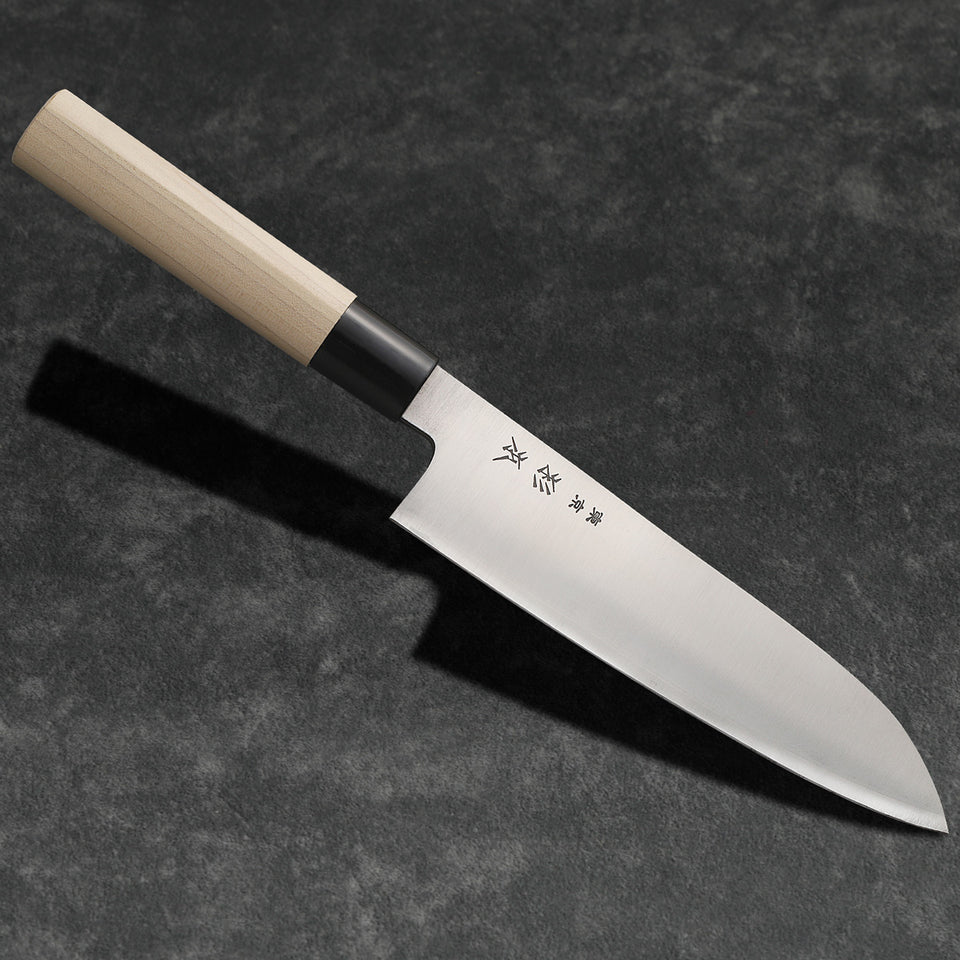
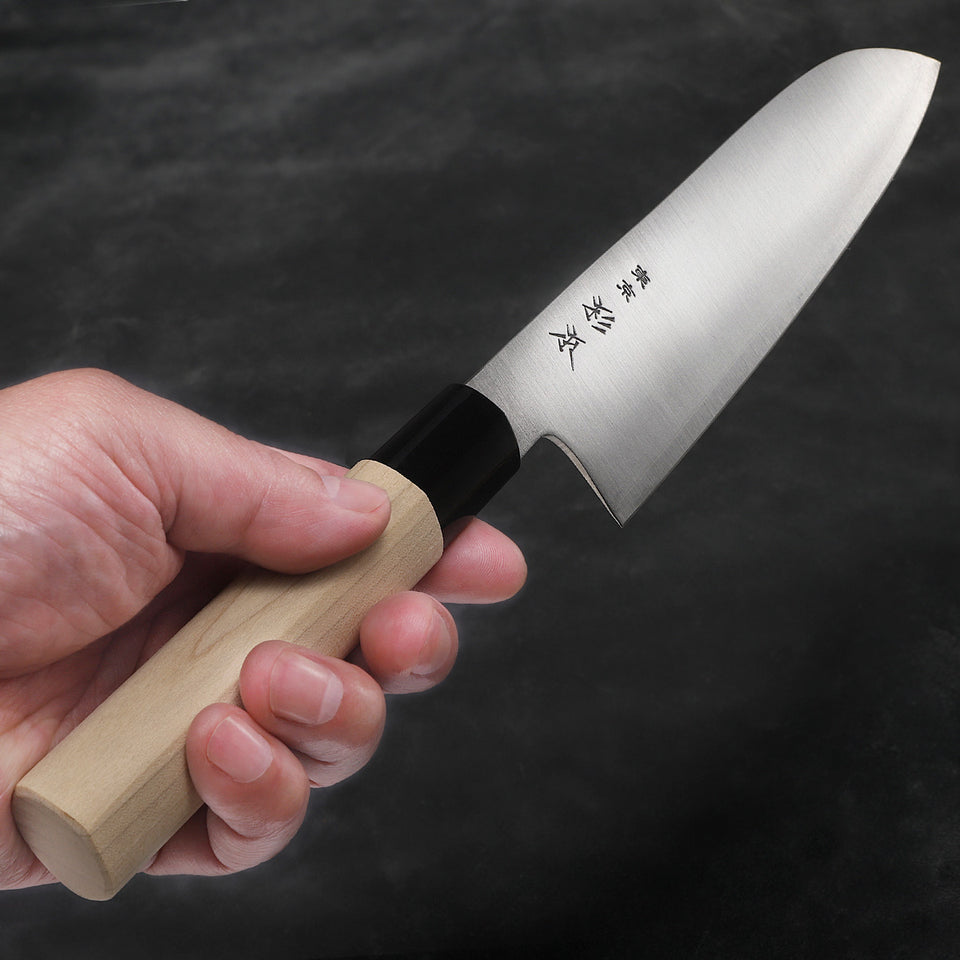
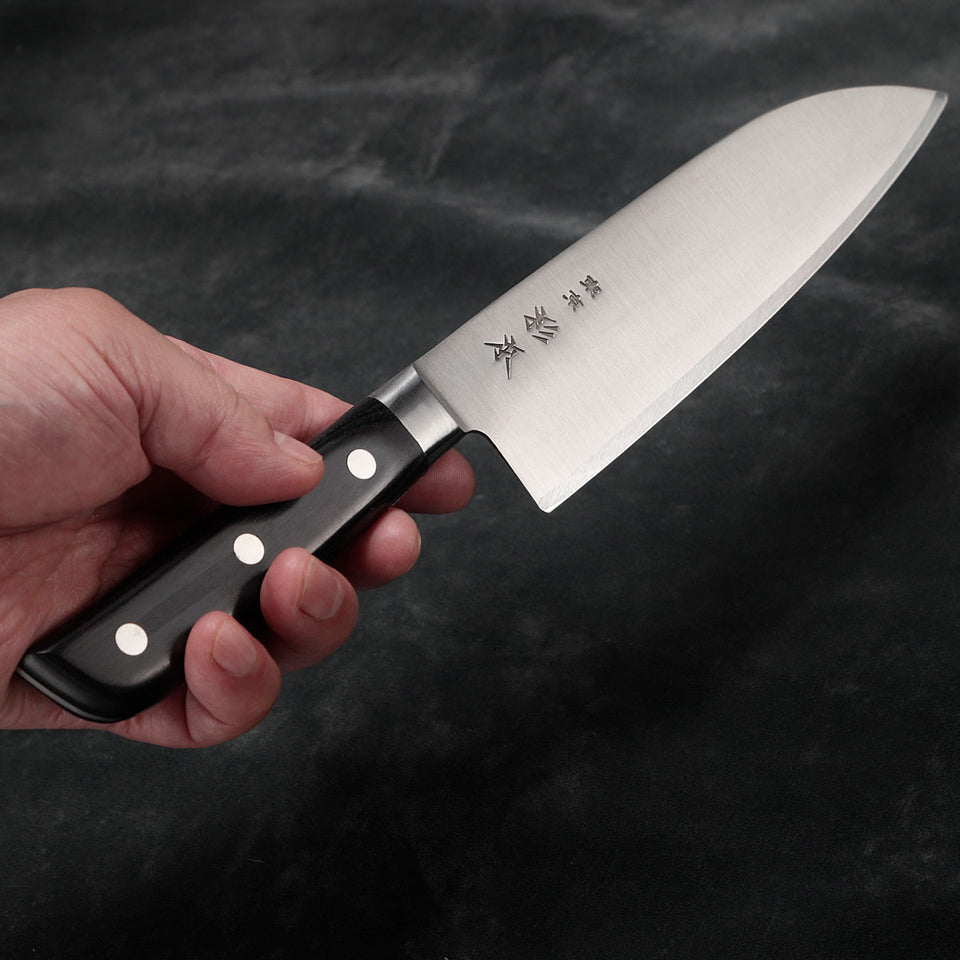
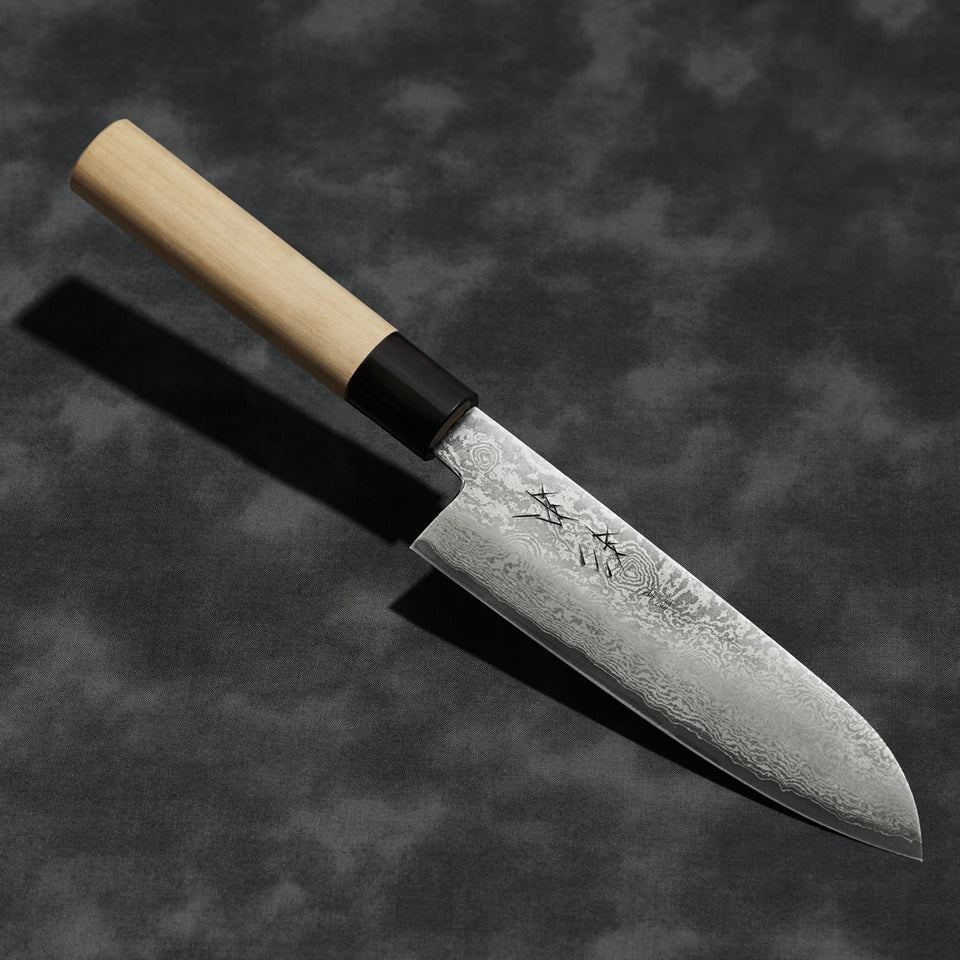
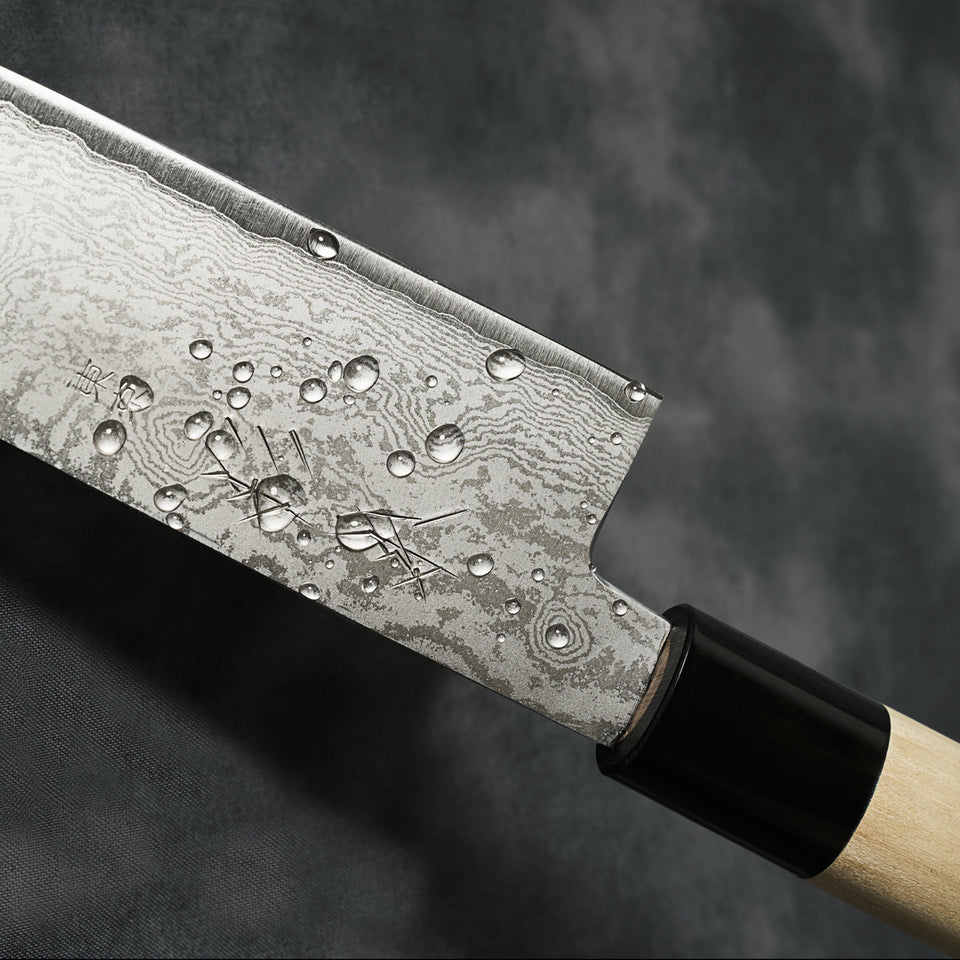
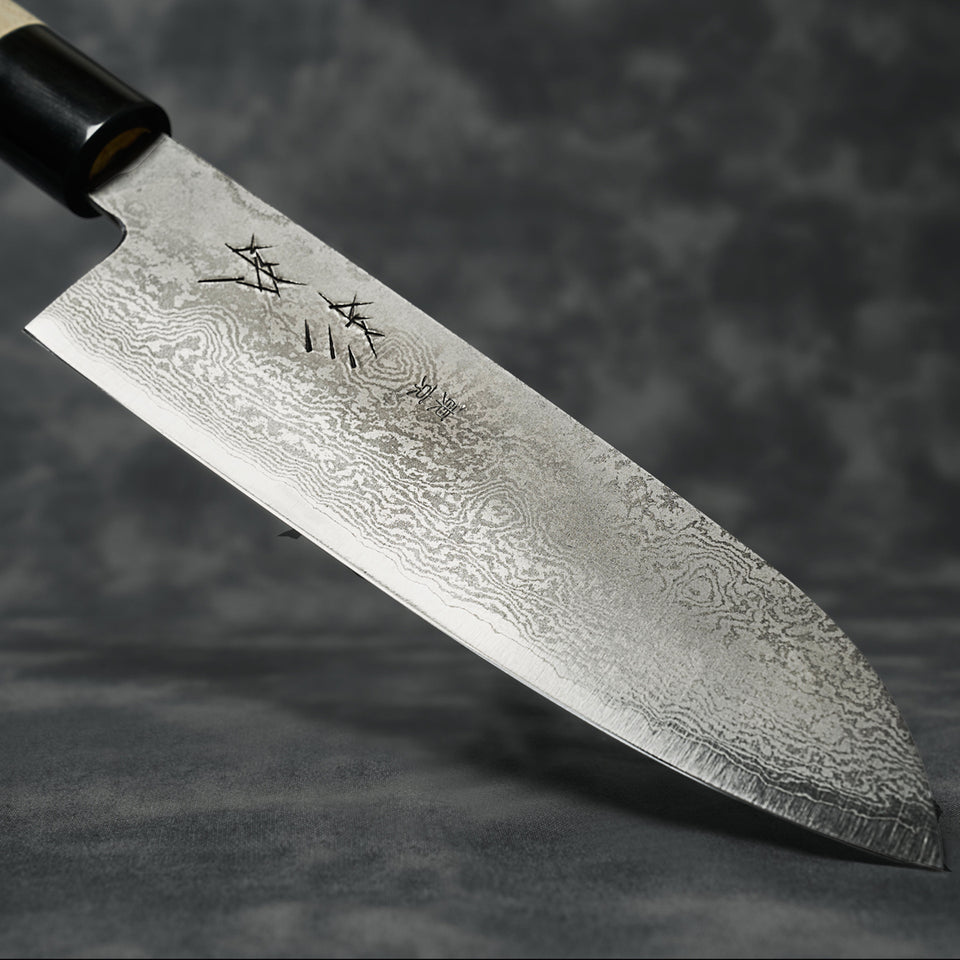
Having your knife engraved is a great way to make it uniquely yours. It can also be practical for identifying your knife in a professional kitchen (where someone is bound to borrow your beautiful Japanese knife when you aren't looking). But sometimes, it's challenging to come up with a good idea, especially for a gift. Well, don't worry! Because here are some ideas to get your creative juices flowing.

Name and Commemorate

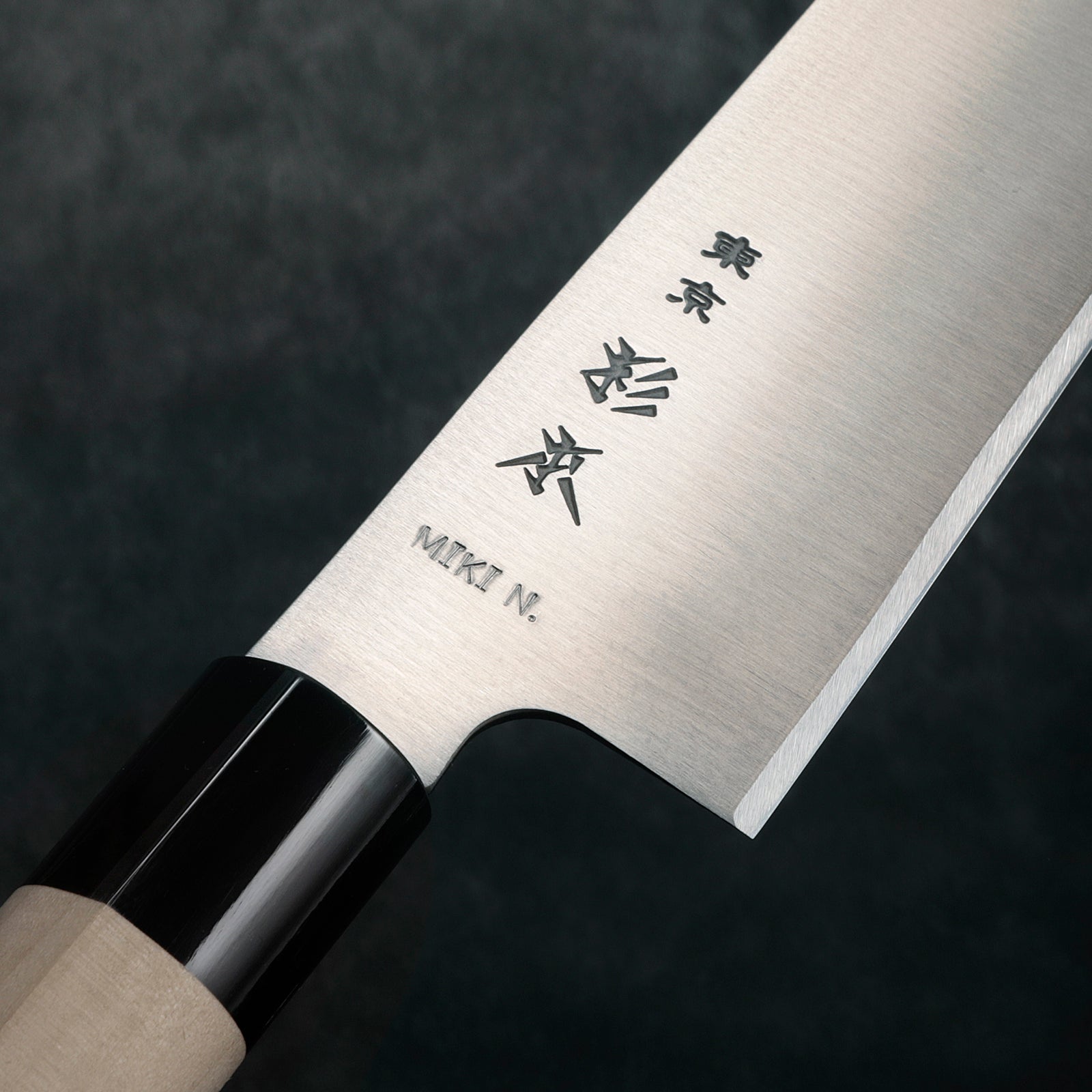
I’ll begin with several different ideas for name engravings because they are the most practical engraving you can choose. For these, we can suggest a translation into Japanese when you purchase your knife - but you could also have it written in alphabetical characters. Check out the bottom of the article for an explanation of the Japanese writing systems hiragana, katakana, and kanji. For now, let’s look at some name ideas and then a few more that are out-of-the-box.
Knife Engrave Ideas


1. First Name

For many people, whether they've bought the knife for themselves or someone else as a gift, a first name will be the way to go. It's not only a great way to personalize a knife but also convenient for identifying it. It'll also deepen your connection to the knife, increasing your appreciation of its intricate design.

2. Family Name

Have you ever wanted something you could hand down to the next generation? Getting your family name engraved rather than your first name is a great way to share your knife with your children. When the time comes, you can pass the knife on to them. 

3. Initials & Acronyms

Keep it short and sweet with some written initials. For example, it could be your initials and a loved one's together to commemorate a special event. Or, what about an acronym to represent your company or something important to you? NASA space knife, anyone?

4. The Artisan or Province Name

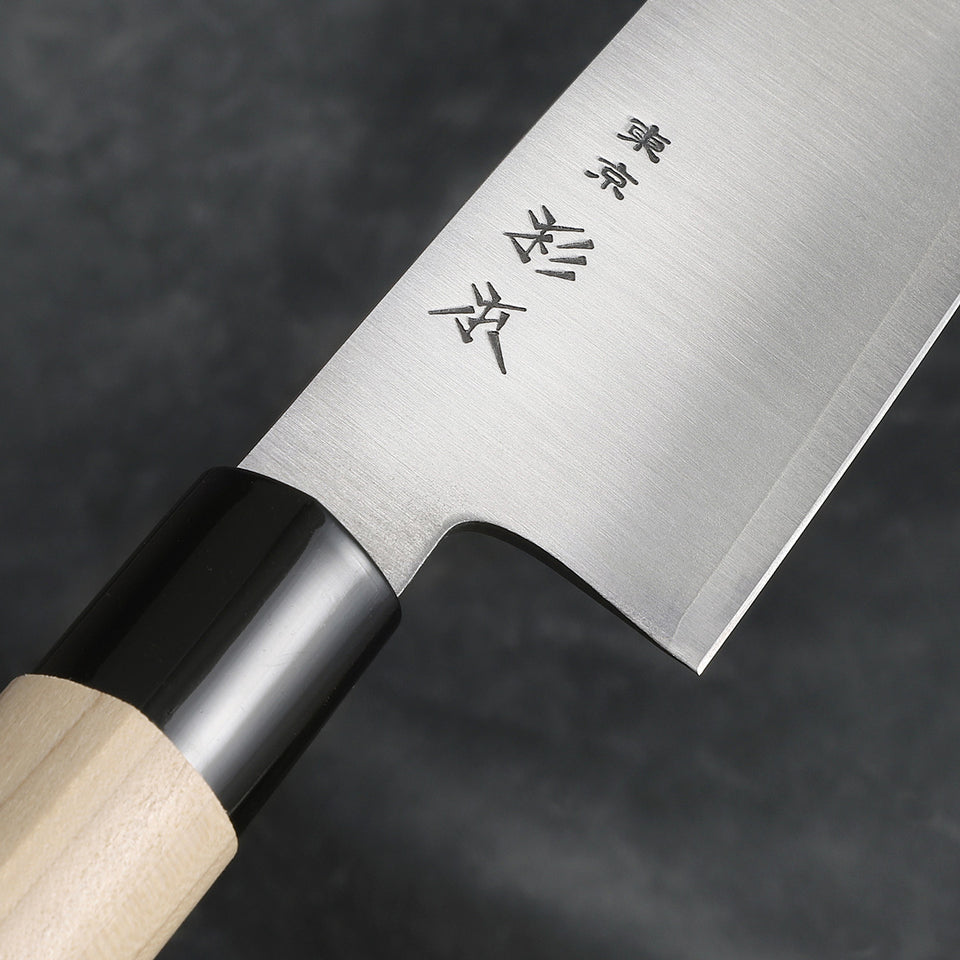
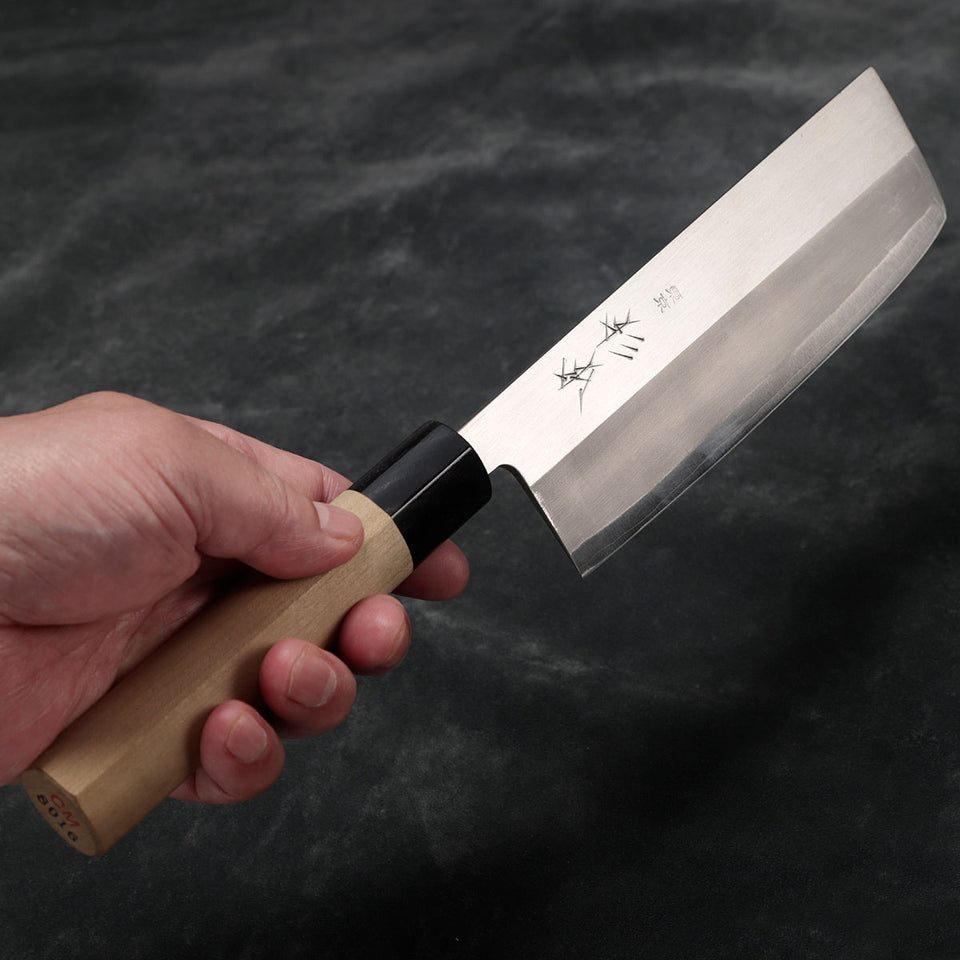
A more traditional engraving would be the bladesmith's name who made the knife - or even the name of the province in Japan it comes from. Your imagination will run wild whenever you think about the person who put their love into making your knife. It'll encourage you to keep improving your cooking just as they always strive to improve their craft.

5. Memorial

Sometimes when a beloved person or pet passes away, it can feel nice to keep them with you in some way as a reminder. So, consider imbuing your knife with a little piece of their spirit, so they're always with you.

6. Name Your Knife

It can be fun to build a "relationship" with your knife. Give it its own name for some extra personality. People do this with all sorts of inanimate objects like cars, boats, and other precious things. So, why not a knife? Just don't let anyone catch you talking to your knife; they might get worried!

7. Mark an Occasion

Something as simple as marking an important date on your knife is a great idea. It could be an anniversary gift, birthday gift, or graduation present. Or it could celebrate any other fantastic day that has been life changing.

8. Favorite Words

It doesn't need to be serious just because it's an engraving. You could get your favorite word etched into your knife. It might be the name of a dish you love cooking or an inside joke between you and your friends. Have fun with it - it's not like you're getting a tattoo!

9. Astrological Sign

For the stargazers out there, engraving the name of your astrological sign onto your knife can feel incredibly satisfying. Or look around online for the animal associated with your Japanese zodiac.

10. Religious Passages & Meaningful Texts

Okay, you probably can't fit a whole bible verse on your knife, but you can certainly put the number of your favorite passage. The same goes for the Torah, Quran, or any other holy text. Engraving a small word or number that represents virtues you live by, whether religious or not, can be a great reminder of your values or the things you strive for.

Understanding Japanese Writing Systems

If you've been to any of our knife product pages, you may have noticed that you can choose between having your name engraved in katakana, hiragana, or kanji, which might leave you wondering what this means. Well, Japanese has three different writing systems - or "alphabets." So yes, if you ever decide to learn Japanese, you must learn all three! But what's the difference between them? Let me explain.

Hiragana (ひらがな)

The most iconic Japanese writing system and the one you will encounter the most in written Japanese, as it is used to write most Japanese words. It is a cursive and beautiful writing system.

Katakana (カタカナ)

Katakana has the same sounds as hiragana, except that it is used only for writing foreign words, onomatopoeia, or other words that don't translate well into Japanese. It is blocky with straight lines rather than rounded like hiragana.

● Kanji (漢字)

Kanji may appear very similar to written Chinese - well, that's because it's (almost) the same thing. The writing system was adopted from China hundreds of years ago. It is typically used for nouns, verbs, adverbs, and adjectives.

Which System Should I Choose?

All three systems are used together to break up sentences, as written Japanese doesn’t use spaces between words. Here’s an example taken from internationally renowned Japanese author Haruki Murakami's book Kafka on the Shore:

トルストイが指摘しているようにね。 幸福とは寓話であり、不幸とは物語である。

(Translation: As Tolstoy points out. Happiness is a fable, misfortune a story.)

The first sentence utilizes all three writing systems. The word at the start (トルストイ) is the foreign name 'Tolstoy' written in katakana (pronounced 'To-ru-su-to-i'). Then followed by kanji and hiragana. However, when choosing a writing system for your engraving, you don't need to worry about these distinctions so much. Instead, choose whichever writing system you think is the most beautiful, and let us sort out the details for you.

Conclusion 

Knife Engraving Ideas

Traditional engraving is an essential element in an authentic Japanese knife; that's why it's a service we're proud to offer. When done for someone else, it adds that special touch to a gift. When done for yourself, it brings you closer to the people and place where the knife came from. Like you, your knife should be unique.

List of Ideas to Engrave On a Knife — Frequently Asked Questions

Does engraving weaken the blade in any way?

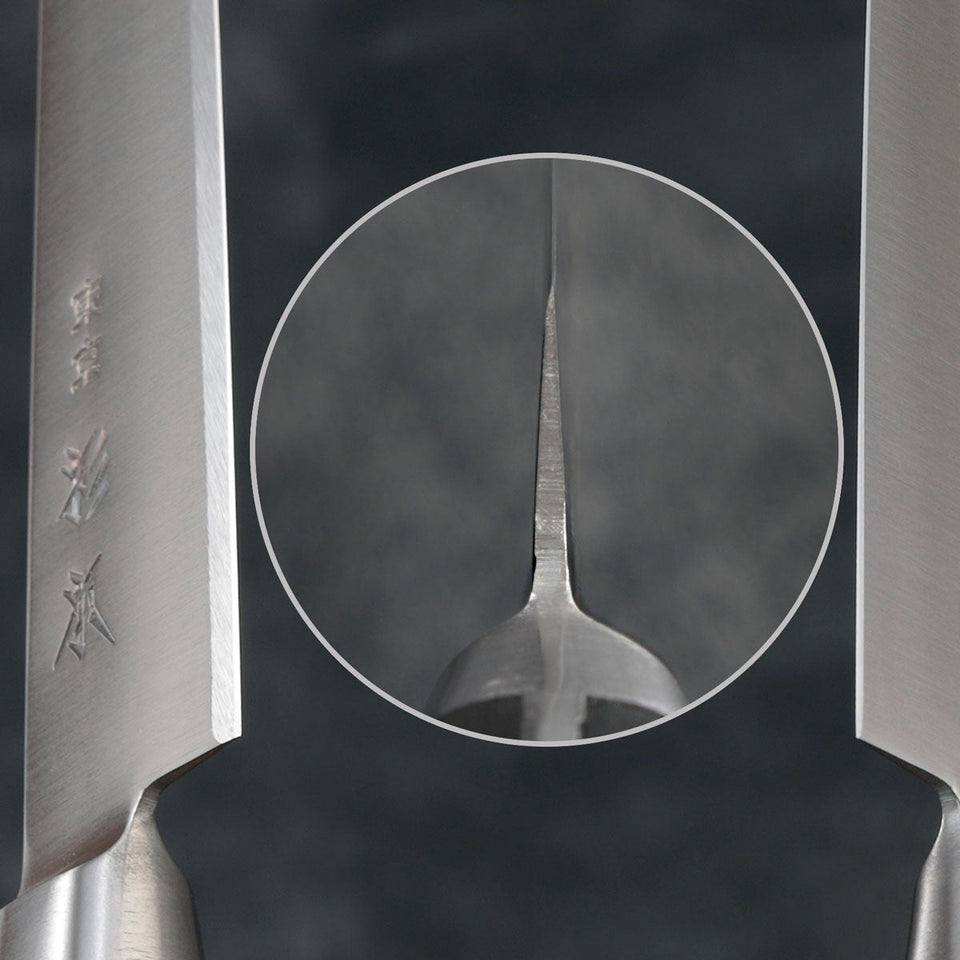
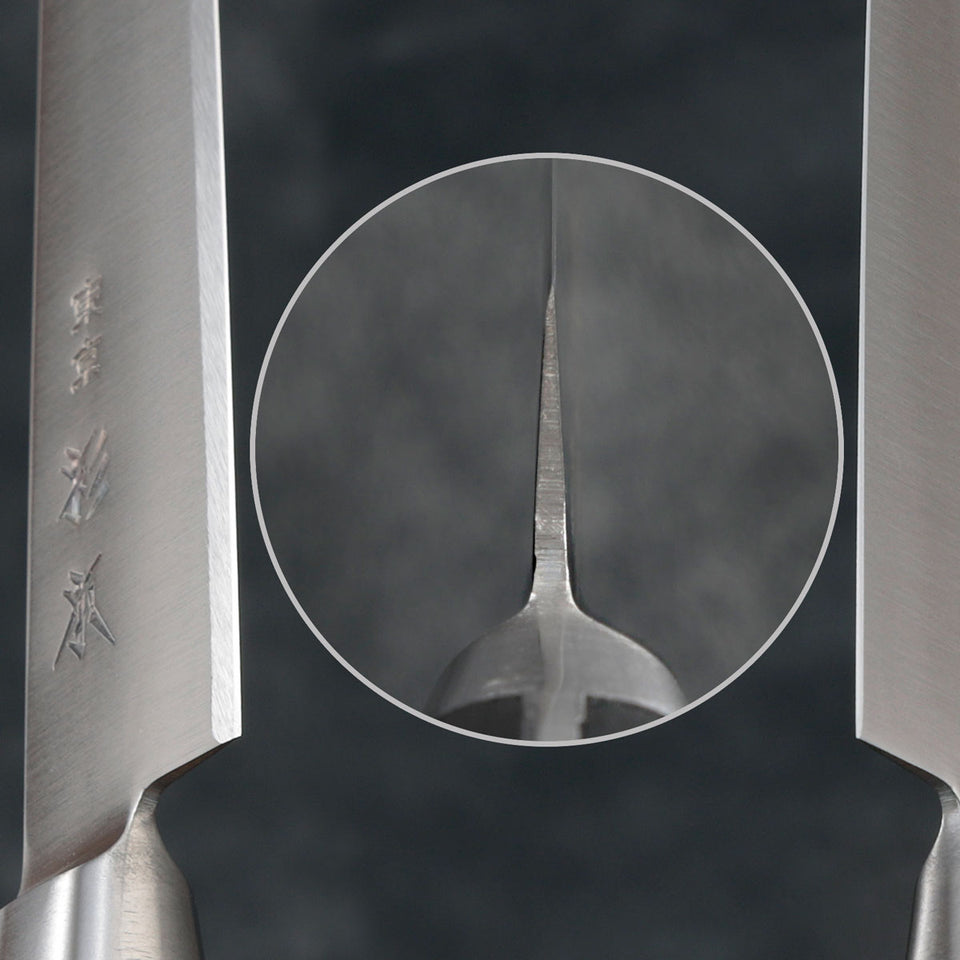
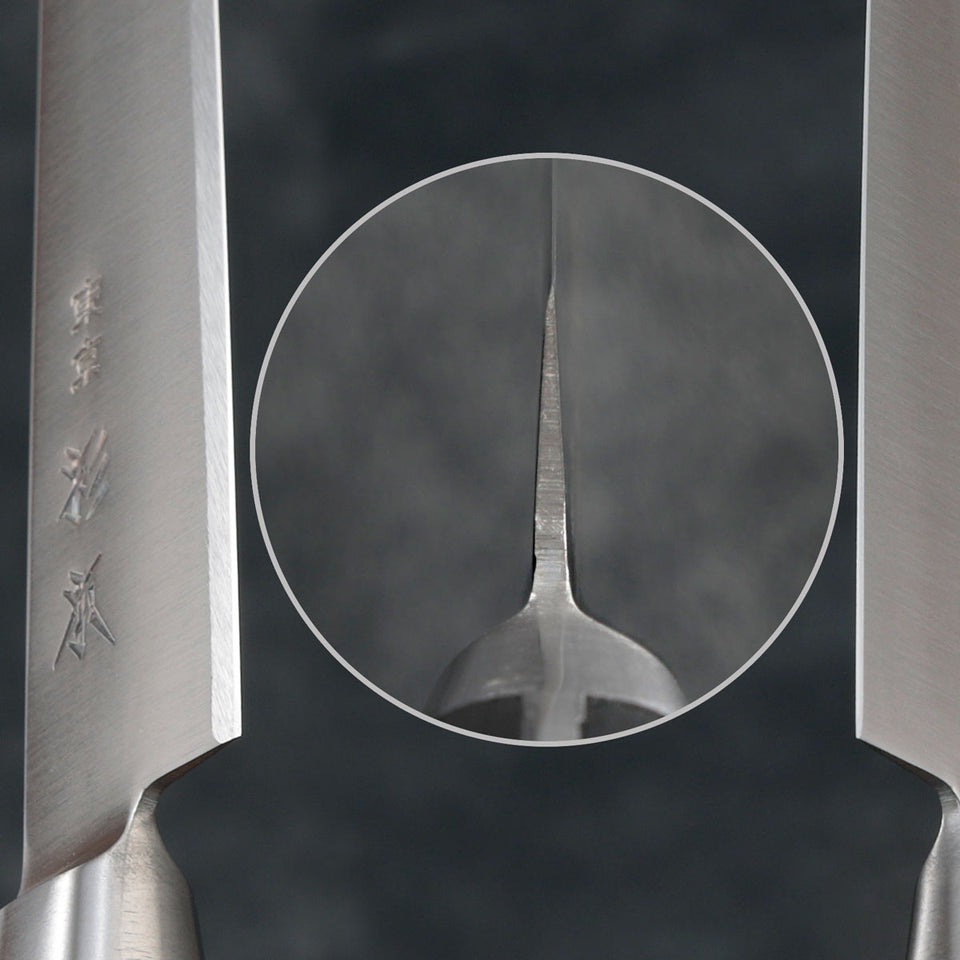
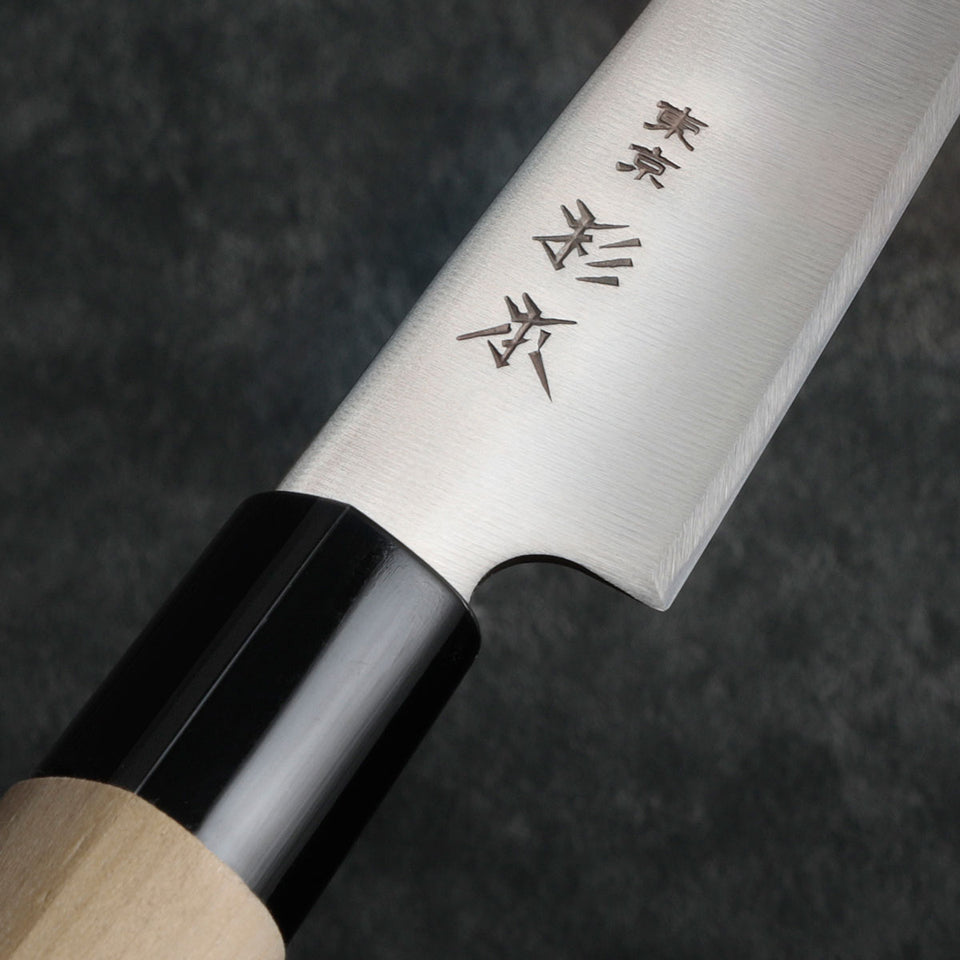
No, when it's done in the right place. Engraving is a shallow surface mark on the wide flat (the hira) of the blade, usually a millimeter or two deep at most. The cutting edge, the spine, and the hardened core steel are completely untouched. What you should not do is engrave near the heel or anywhere on the bevel itself — that's the part of the blade that does the cutting and that you'll grind down over years of sharpening. A reputable engraver knows to keep the mark high on the blade, well away from where it matters.

How much does engraving usually cost?

For a name or short kanji line, expect $15–40 USD on top of the knife price. Longer phrases or custom logos cost more. Hand-engraved work by a Japanese craftsman runs higher — sometimes $60+ for a few characters — because it's done with a chisel and hammer rather than a machine. Machine engraving is faster and cheaper; hand engraving is deeper, sharper, and lasts essentially forever. If the knife is a gift for someone who will use it daily for decades, hand engraving is worth the difference.

Where on the blade does the engraving usually go?

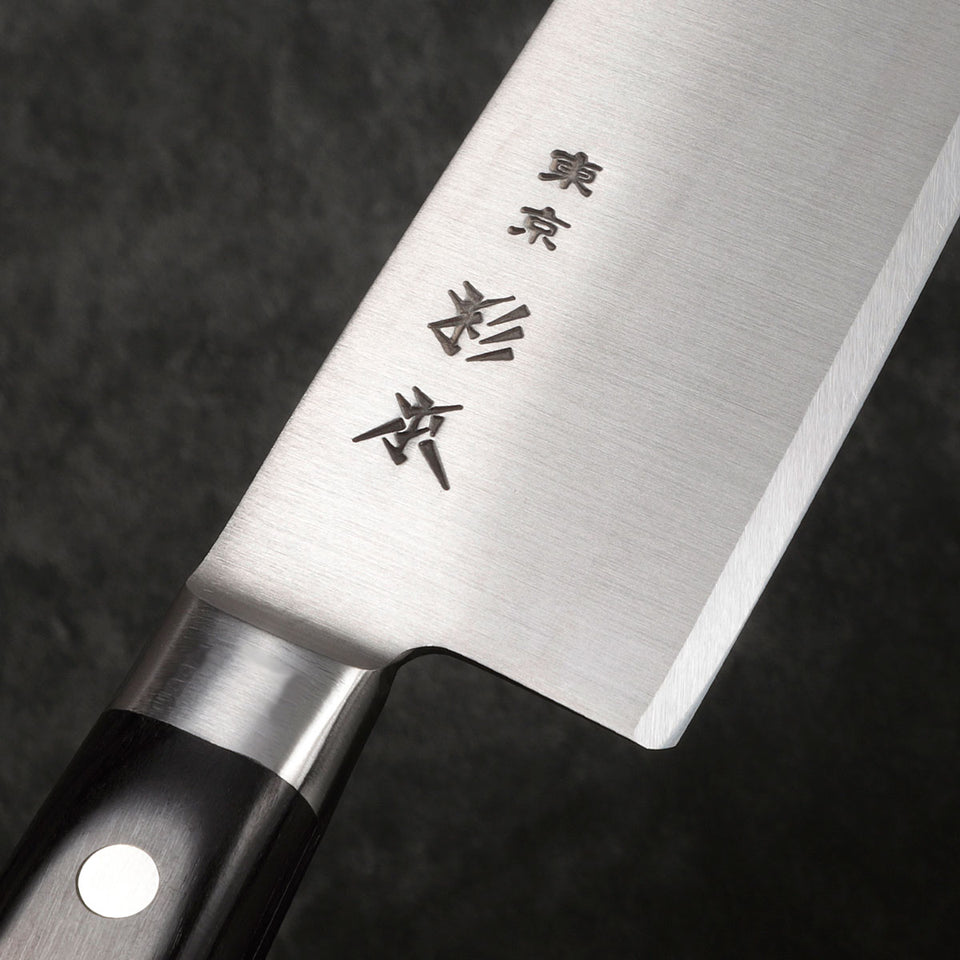
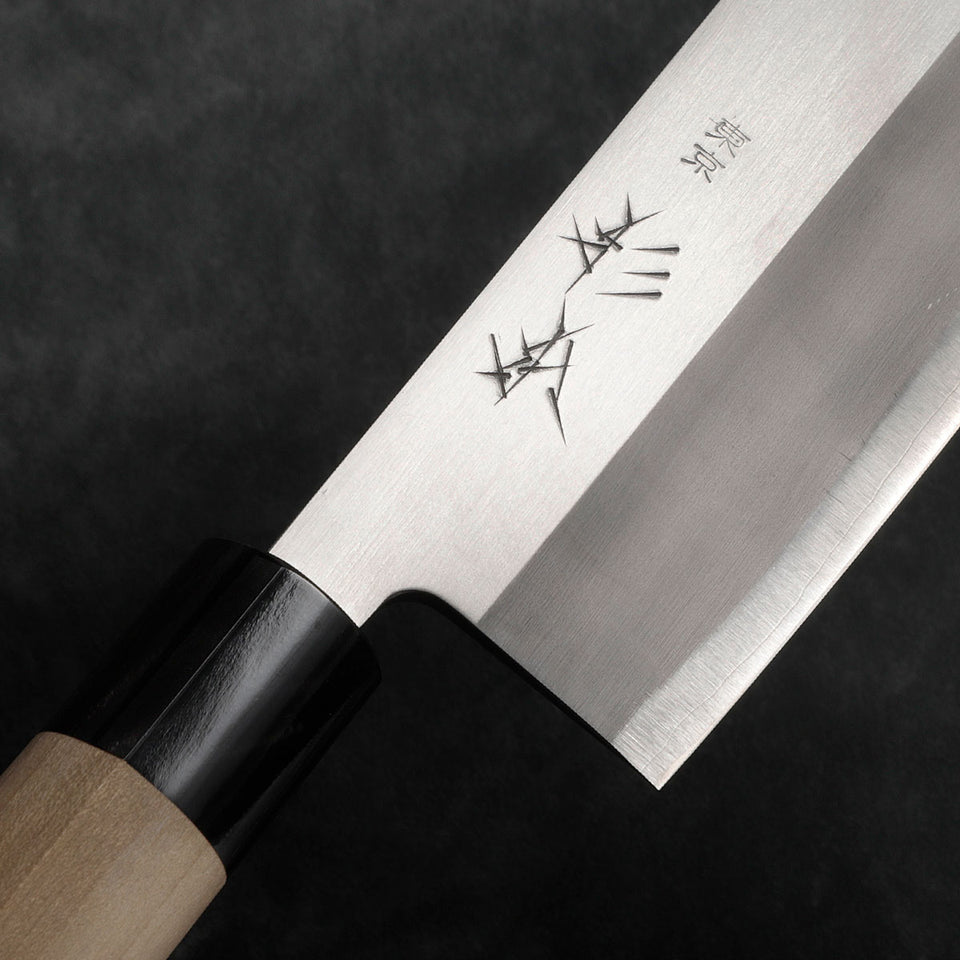
High on the wide flat of the blade, on the right side (the side that faces up when the blade rests on the cutting board with the edge facing the user). This keeps the engraving visible when the knife is in normal use and well clear of the cutting edge. The opposite side — the back — is sometimes used for the maker's signature, the steel type, or a date. If the knife already has a kanji signature from the maker, the personal engraving usually goes below it without overlapping. Ask the engraver to show you the planned placement before they cut.

Can I engrave a knife that already has the maker's signature on it?

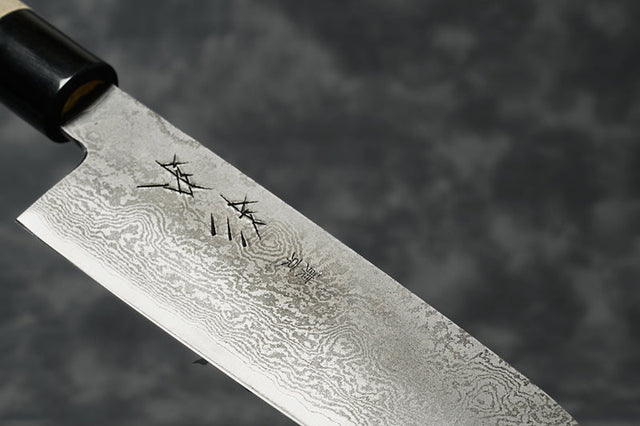
Yes, and it's a normal practice — the maker's mark and a personal engraving sit happily on the same blade. The maker's name (mei) is usually high on the blade or near the heel; your personal engraving goes below it on the wide flat with enough space that the two marks don't crowd each other. A skilled engraver will lay out the placement first and show you a mockup. If the knife has heavy decorative engraving across the whole blade (some Damascus pieces do), there may not be space — check with the engraver before ordering.

What's the etiquette around engraving a knife as a gift?

In Japan, knives as gifts have a small superstition — a sharp blade is sometimes seen as cutting the relationship between giver and receiver. The traditional fix is for the recipient to give the giver a small coin in return, which symbolically converts the gift into a purchase and breaks the cut. It's a thoughtful gesture to mention this when handing over the knife. For the engraving itself, names, family names, dates, and short phrases like "to my father" are all welcome; politically charged phrases or other people's mottos are best avoided. If it's a first knife for someone, they may also want our Knife Club signup for the 10% first-purchase discount.

Related products
1 review

Gyuto Knife with Japanese Handle - All-purpose Premium Japanese Artisanal Knife

$360.00
Quick view

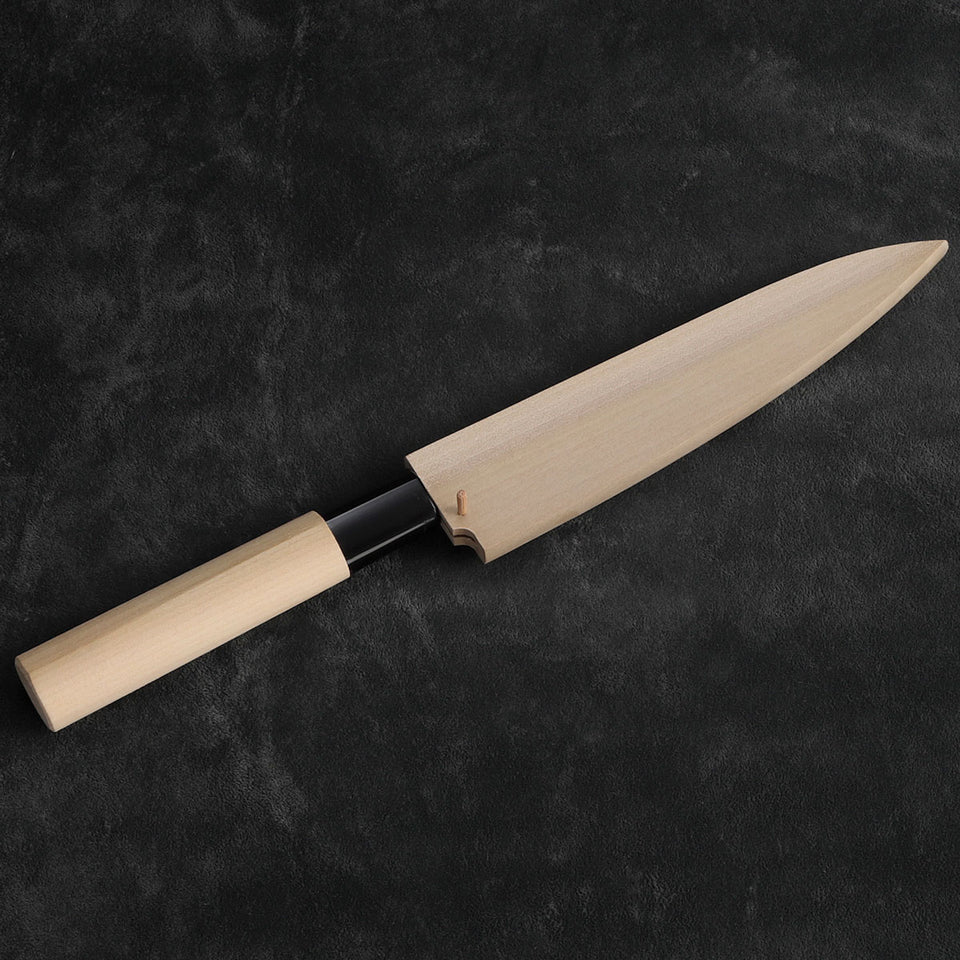
The Japanese Gyuto knife is the ultimate multi-purpose blade, perfect for everyone from beginner home cooks to seasoned chefs. As the Japanese counterpart to the Western chef’s knife—only thinner, lighter, and sharper—it excels at chopping, slicing, and dicing almost anything in the kitchen with effortless precision. This variation features a beautiful maple-wood handle that not only adds a natural, elegant aesthetic but also provides a smooth, earthy texture for enhanced control and comfort. Crafted with CM stainless steel, it offers exceptional sharpness, durability, and rust resistance, ensuring years of effortless slicing. With a blade length of 180mm (7.1 inches) and a double bevel edge, this handmade, hand-braided, and hand-sharpened Gyuto is a versatile and essential tool that elevates both the appearance and taste of your culinary creations. This product is available for shipping within the USA only.

Santoku Knife - Premium Japanese Artisanal Knife

$250.00
Quick view

The Santoku knife is revered for its control, precision, and sharpness, making it the master of slicing, mincing, and dicing in both professional and home kitchens. Traditionally favored for high-precision tasks like sushi and sashimi preparation, its versatility extends to cutting meat, fish, and vegetables with ease, supported by a comfortable, easy-to-control handle. Handmade by master bladesmiths using techniques passed down through generations, each Santoku offers extraordinary quality that elevates every slice. Named after the "Three Virtues"—meat, vegetables, and fish—the Santoku’s shorter, thicker, straight-edged blade with a sheep foot-shaped tip enhances the appearance, taste, and texture of your food while delivering exceptional performance with minimal maintenance, thanks to its CM stainless steel and Western-style handle. With a blade length of 170mm (6.7 inches), it is the ultimate daily knife for any cooking enthusiast.

1 review

Nakiri Knife - Vegetable Cutting/Slicing/Mincing Premium Japanese Artisanal Knife

$290.00
Quick view

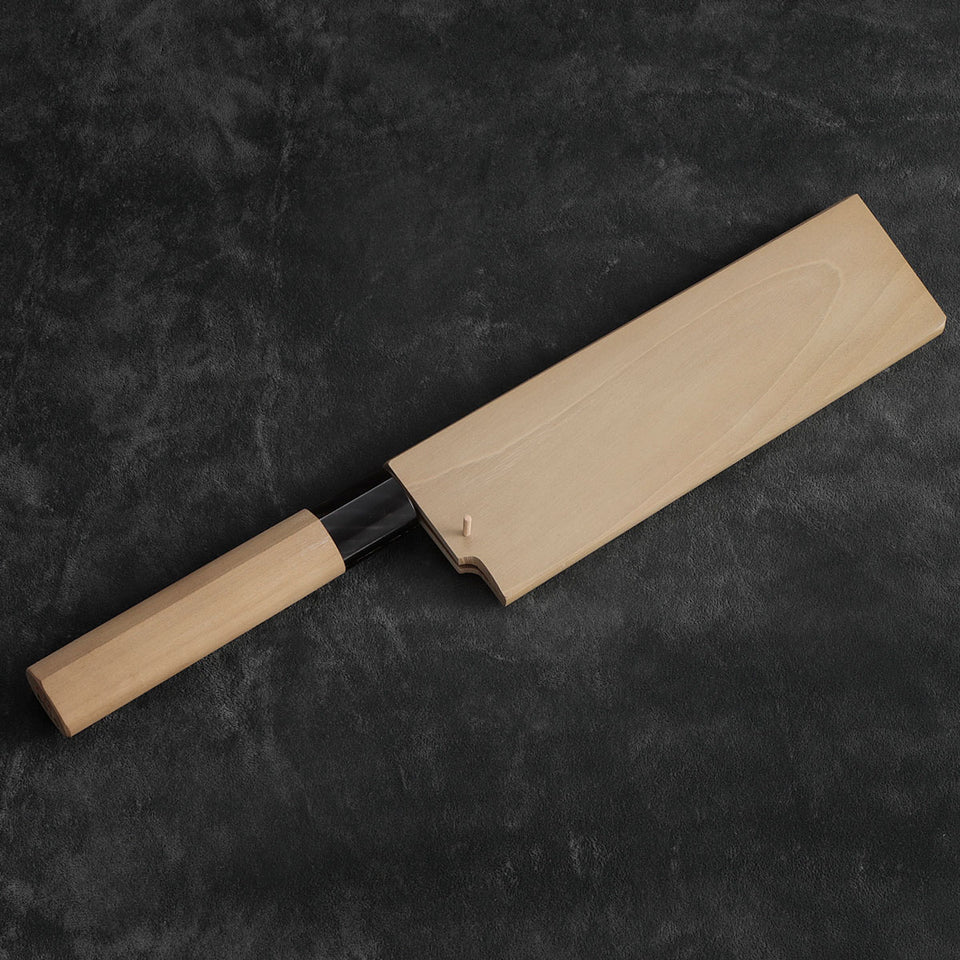
The Nakiri knife (菜切包丁) is a highly versatile and efficient tool, traditionally used in Japan for cutting vegetables with supreme speed and precision. Its thin, lightweight rectangular blade allows for quick, clean, and effortless slicing without the need for a rocking motion, keeping your knuckles safely away from the cutting board while delivering beautifully thin, even slices every time. Perfect for delicate vegetables and even light filleting tasks, the Nakiri offers incredible control and minimizes damage to ingredients, preserving their flavor and texture. Handmade and sharpened by master bladesmiths, this 165mm (6.5 inches) knife features a traditional Japanese magnolia wood handle with a plastic collar and is available with either CM Stainless for easy maintenance or Kasumi Superlative Carbon Steel for a more traditional sharpening experience. With its unparalleled usability from tip to tail, the Nakiri is an invaluable asset for anyone seeking speed, consistency, and elegance in their kitchen work.

1 review

Petty Knife with Japanese Handle - Premium Artisanal Knife

$179.00
Quick view

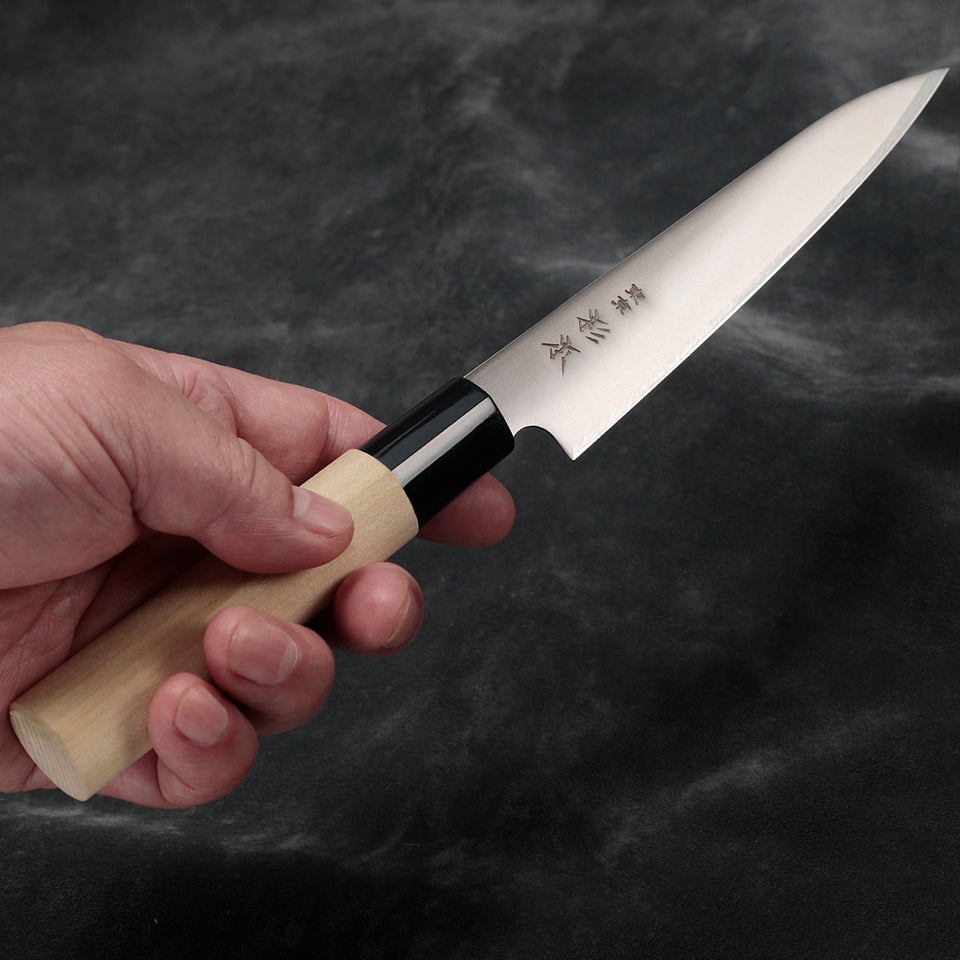
The Japanese-style Petty Knife is a premium artisanal blade designed for maximum control and precision, perfect for peeling, slicing, shaping, and trimming in tight spaces. Its fine-tipped 150mm (5.9 inches) blade unlocks new levels of creativity in shaping and presentation, helping elevate the beauty of every dish you create. Featuring a traditional maple-wood handle, it offers a smooth, natural texture that feels as good as it looks, making it a joy to use. Handmade and sharpened by master bladesmiths, this knife guarantees prolonged sharpness, durability, and effortless slicing for years, making it an essential tool for passionate home cooks and professional chefs who take pride in every cut. Crafted from CM stainless steel for rust resistance and low maintenance, the Japanese Petty Knife blends beauty, functionality, and lasting performance into one exceptional kitchen companion.

Damascus Santoku Knife with Japanese Handle - All-purpose Premium Japanese Artisanal Knife

$1,199.00
Quick view

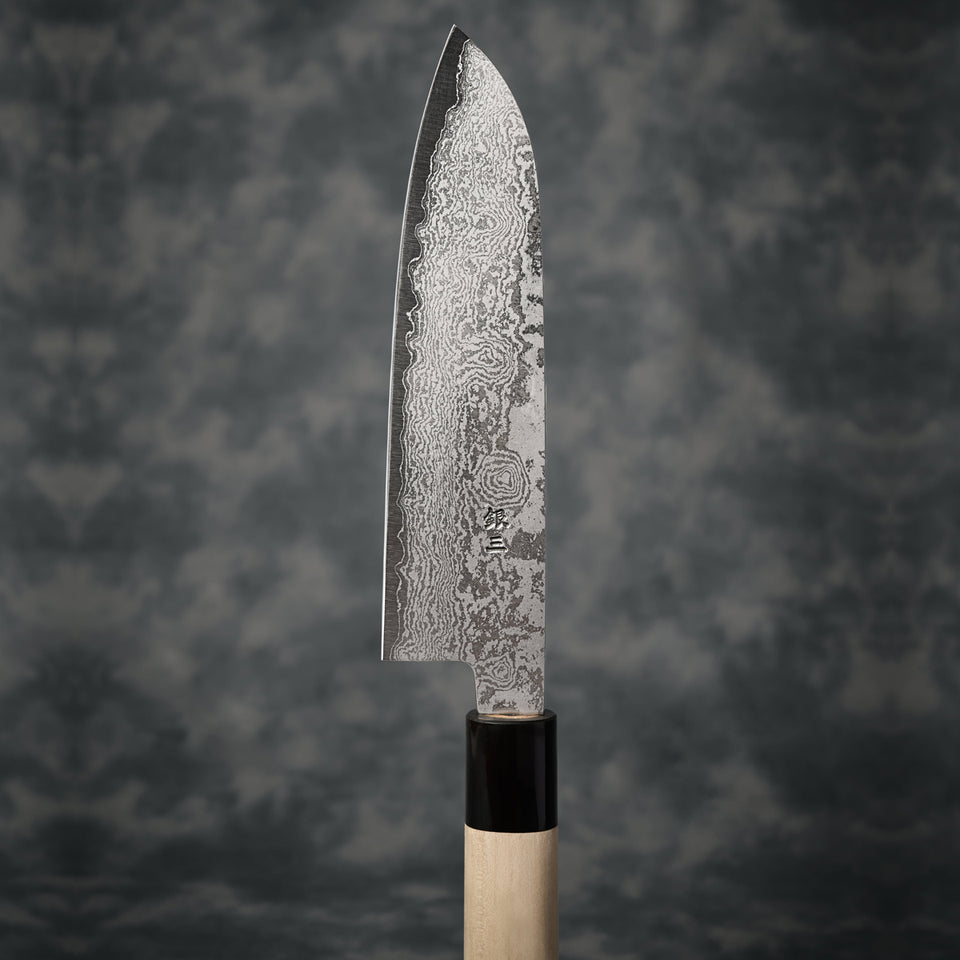
A true masterpiece of craftsmanship, our Japanese Damascus Santoku knife beautifully unites exquisite patterns with exceptional performance. Crafted entirely in Japan by skilled artisan bladesmiths, each blade showcases the iconic wave-like Damascus patterns, symbolizing timeless Japanese aesthetics and superior quality. Unlike mass-produced imitations with printed patterns, our genuine Damascus blade is meticulously forged through the traditional layering and folding process, requiring over 200 hours of expert dedication to create a knife of remarkable strength, flexibility, and beauty.

This premium Santoku, embodying the revered "three virtues," excels at slicing vegetables, meat, and fish with precision and ease, making it the perfect daily companion for both home cooks and professional chefs. Made from CM stainless steel for rust resistance and low maintenance, the knife features a high-quality magnolia wood handle, available with either a plastic or buffalo horn collar. With a blade length of 180mm (7.1 inches) and a double bevel edge, this limited-production Santoku offers unmatched versatility, durability, and artistry—bringing both function and tradition to your kitchen.


Related Articles You May Be Interested
The Science Behind Why Knife Quality Matters for Food Taste
What is Carbon Steel?
Houchoushiki (庖丁式) - A Ceremony that Celebrates the Art of Japanese Knives
Japanese Knife Co. to introduces Premium Japanese Scissors
Why You Should Not Use Dishwasher to clean Japanese knives?
Liquid error (snippets/blog-post-banner line 58): invalid url input

Get Free Bonus Books
Join Japanese Knife Club

Sign up for free to the Japanese Knife Club to get advice and exclusive articles about how to choose Japanese Knives, and tips and tricks for using Japanese knives.

Unsubscribe anytime. It’s free!

About the author

Kei Nishida

Author, CEO Dream of Japan

info@dreamofJapan.com

Certification: PMP, BS in Computer Science

Education: Western Washington University

Kei Nishida is a passionate advocate of Japanese craftsmanship, a writer, and the founder and CEO of Japanese Knife Co., Japanese Green Tea Co., and Japanese Coffee Co., all part of Dream of Japan.

His journey began with a mission to introduce the world to the exquisite flavors of Japanese green tea. Through Japanese Green Tea Co., he pioneered the import of premium tea grown in nutrient-rich sugarcane soil, earning multiple Global Tea Champion awards. He then expanded into the world of coffee, launching Japanese Coffee Co., the first company to bring Sumiyaki charcoal-roasted coffee to a global audience.

With a deep appreciation for Japanese artistry and tradition, Kei turned his attention to one of Japan’s most revered crafts: bladesmithing. Through Japanese Knife Co., he made handcrafted katana-style knives, created by a renowned katana maker, available outside Japan for the first time. These exceptional knives embody centuries of samurai sword-making expertise, blending tradition with modern functionality for chefs and collectors alike.

Kei’s journey continues as he uncovers and shares Japan’s hidden treasures—one sip, one blade, and one legacy at a time.

Related Posts

Japanese Single Bevel Knife vs Thai Cleaver

Uncover the legacy behind Japan and Thai`s finest blades—crafted with centuries‑old secrets and passion. Discover each u

Read More
Japanese Single Bevel Knife vs. Chinese Cleaver (Cai Dao) – 5 Battles You Don’t Want to Miss

Japanese Single Bevel vs. Chinese Cai Dao: Which blade reigns supreme? We compare sharpness, strength, and style to help

Read More
Everything You Need to Know about Damascus Japanese Knives

Discover the secrets of Japanese Damascus knives! Uncover their rich history, unique features, and the latest trends. Cl

Read More
Leave a comment

Your email address will not be published..

Your cart is currently empty.

Start Shopping

Select options