Santoku Knife
If there's one knife you've already used without knowing that it has Japanese roots, it's bound to have been the Santoku. That's right, the semi-familiar oddity you keep seeing in everyone's kitchens these days is an invention of Japan. You'll find them in domestic and professional kitchens everywhere, with most Western knife manufacturers having a Santoku as part of their line of products.
The Ambassador of Japanese Knives: The Structure of This Article
The Santoku has been a trailblazer for Japanese knives. But how did a Japanese-style design suddenly become globally ubiquitous in the last fifteen years? In this article, I want to take you through the history of the Santoku and its unique features that have led to it becoming one of the most popular designs of knives on the market today.
The History of the Santoku
It All Began With the Introduction of All-Purpose Knives in Japan
All-purpose knives have only existed in Japan since the 1860s, during the Meiji period (1868 - 1912 CE). It all began with the Gyuto. Until then, the Japanese had used specific knives for fish or vegetables (but not yet for other meat, as this was taboo before the Meiji period). But, when the Japanese started interacting with the West, they were intrigued by the all-purpose European Chef's Knife. Hence, the creation of the Gyuto or 'beef knife' as its name translates to.
But, Many Japanese Still Continued to Use Traditional Knives
When the Gyuto was invented, it was mainly used in professional kitchens and often specifically for cutting beef, as its name implies, rather than as an all-purpose knife. Many Japanese home cooks still used the three main knives or equivalents: the Deba, Nakiri, and Yanagiba. And in many ways, it was the vegetable-cutting Nakiri that was considered the primary knife of the three, as vegetables tend to be the bulk of what knives are used for in the kitchen.
The Santoku Appeared Almost a Century Later
The Santoku wasn't invented until around eighty years after the Gyuto, in the 1940s. While many Japanese still preferred the Nakiri day-to-day, they could see the benefits of multi-purpose knives. So, the Bunka is thought to have been created between the 1860s and World War 2 as a more Japanese-style all-purpose knife in the style of the Nakiri. Then, after World War 2, the Santoku emerged.
However, the Santoku's Design Origins Require Some Speculation
When it comes to the Santoku's true origins, it's a chicken and egg problem. One line of thinking is that the Santoku is simply a Bunka with a more rounded spine at the tip. Which, in appearances, is a compelling argument. Lending even more credence to this theory is that the Bunka was created first, we think. The other view is that the Santoku is simply a Nakiri with a sharp tip added to it for versatility. But then again, one could have led to the other, from Nakiri to Bunka to Santoku.
To Make Matters More Confusing, They Aren't Distinguished in Japan
In Japan, they use the words Bunka and Santoku interchangeably to refer to either knife. So they could have been invented around the same time by competing bladesmiths, both based on the Nakiri rather than one off the other, eventually merging into a similar shape.
Regardless of Origins, Both Knives Have Been Successful
The Japanese cooks were already very used to the Nakiri. So, having an all-purpose knife that was familiar in shape and cutting action (push-cutting rather than the Gyuto's typical rock-chopping) was undoubtedly a huge factor in the initial popularity of both the Santoku and Bunka.
Today the Santoku is One of the Most Popular Designs Worldwide
In almost any country, you can find a cheaply made Santoku at your local supermarket (buyer beware, you get what you pay for!). The Santoku knife has become commonplace in kitchens, and for a good reason: many beginners instinctively push-cut with knives, which the Santoku is exceptionally good at; the Santoku also looks friendly and unintimidating, and its rounded tip makes it feel safer. And, some of the features below will give you more of an idea of why this design has caught on.
Features
A Wide and Short Blade
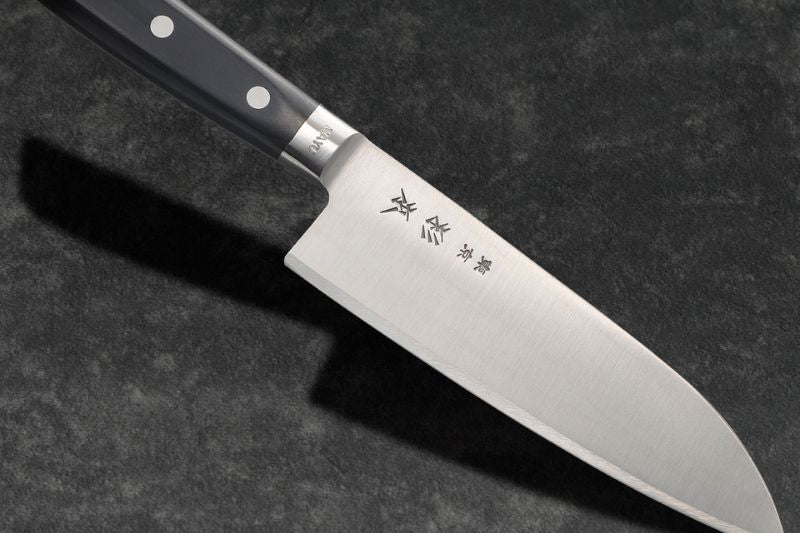
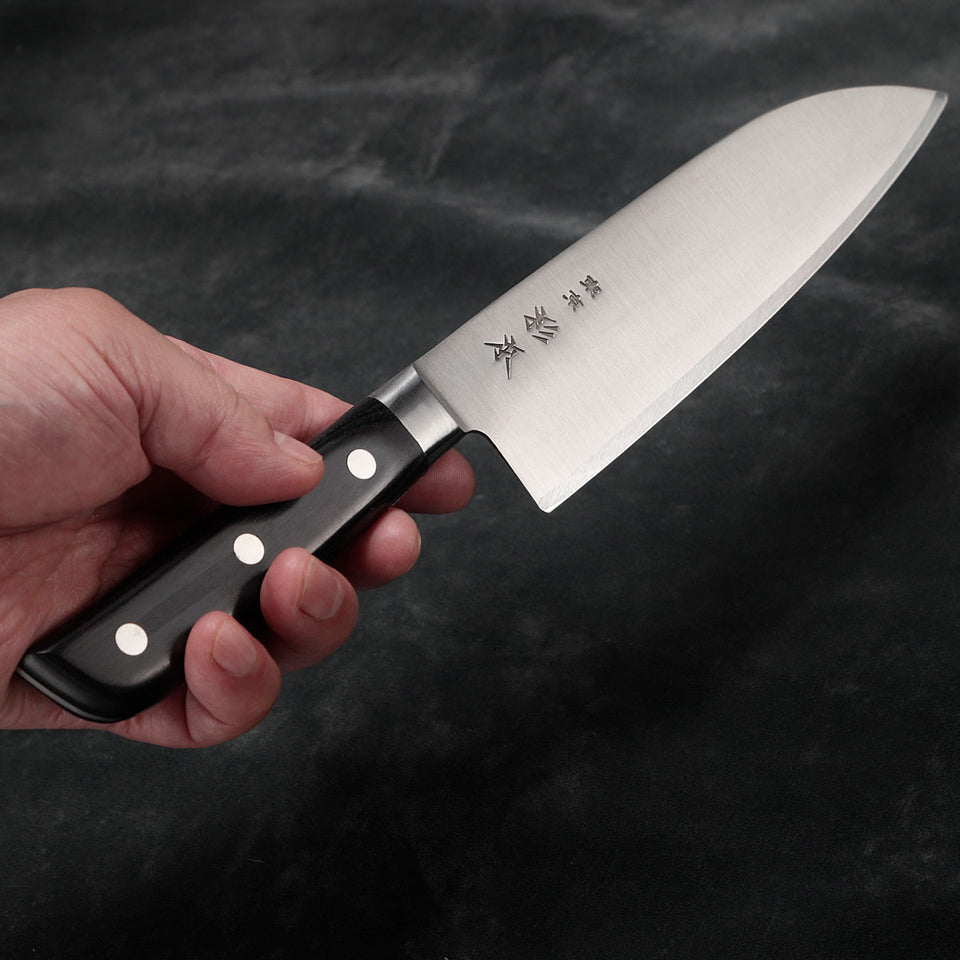
The Santoku's wide blade is ideal for scooping chopped vegetables. It also prevents vegetables from creeping too far up the spine as you chop because the pieces tend to fall off the sides before they become an issue. And for the most part, because of the added weight from its width, it's wise to choose a shorter Santoku than you would a Gyuto. The benefit of this is that it makes the Santoku easily controllable without feeling too light.
Rounded Down Tip
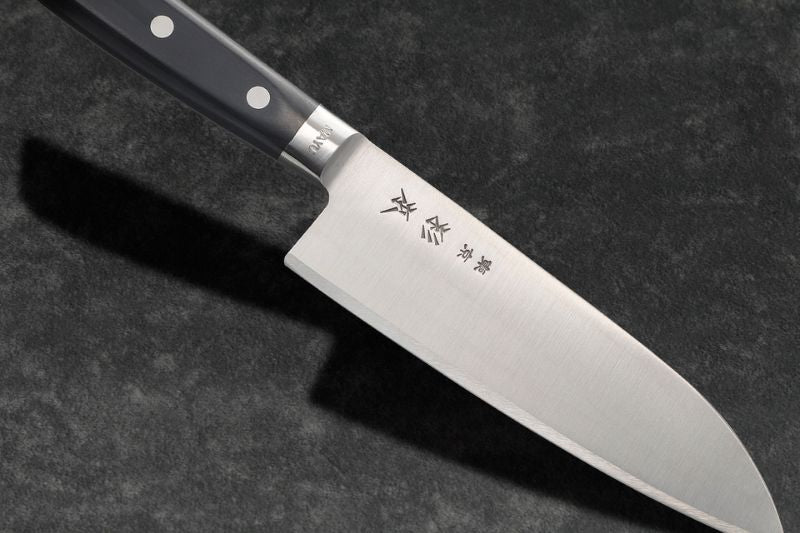
A benefit and detriment to the Nakiri is that it has no tip - it makes it much safer to carry around the kitchen but more challenging to do fine cutting. The Santoku, on the other hand, features a rounded-down tip. As a result, it's safer than the sharp point on a Gyuto or Bunka but is capable of precision tip work.
Flatter Edge for Maximizing Push-Cuts
Most all-purpose knives can be used with a push-cut, but they're not necessarily designed for it. The Santoku is, and it shows. The flat, long edge makes good contact with the cutting board, allowing for push-cuts without risking pieces of food, only half-cutting off. But it still features a slight curve toward the end, preventing the tip from getting stuck in the board and allowing for rock-chopping
How to Use a Santoku
Best at Push-Cutting Vegetables
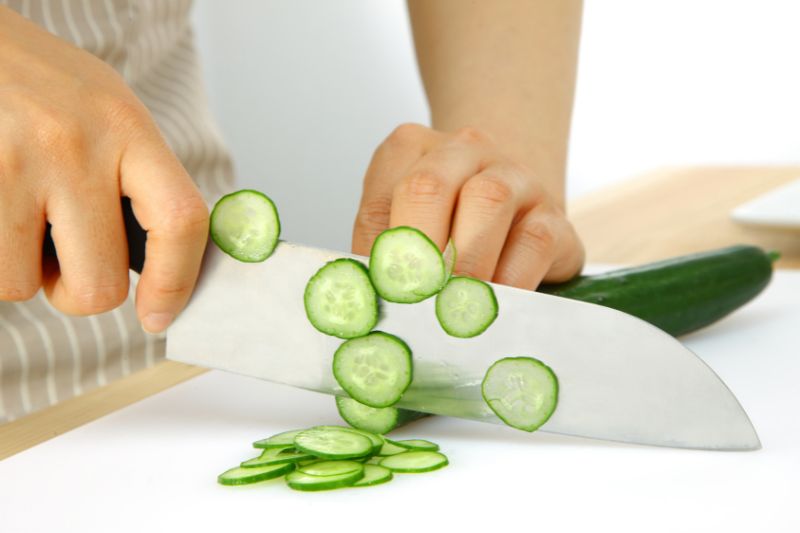
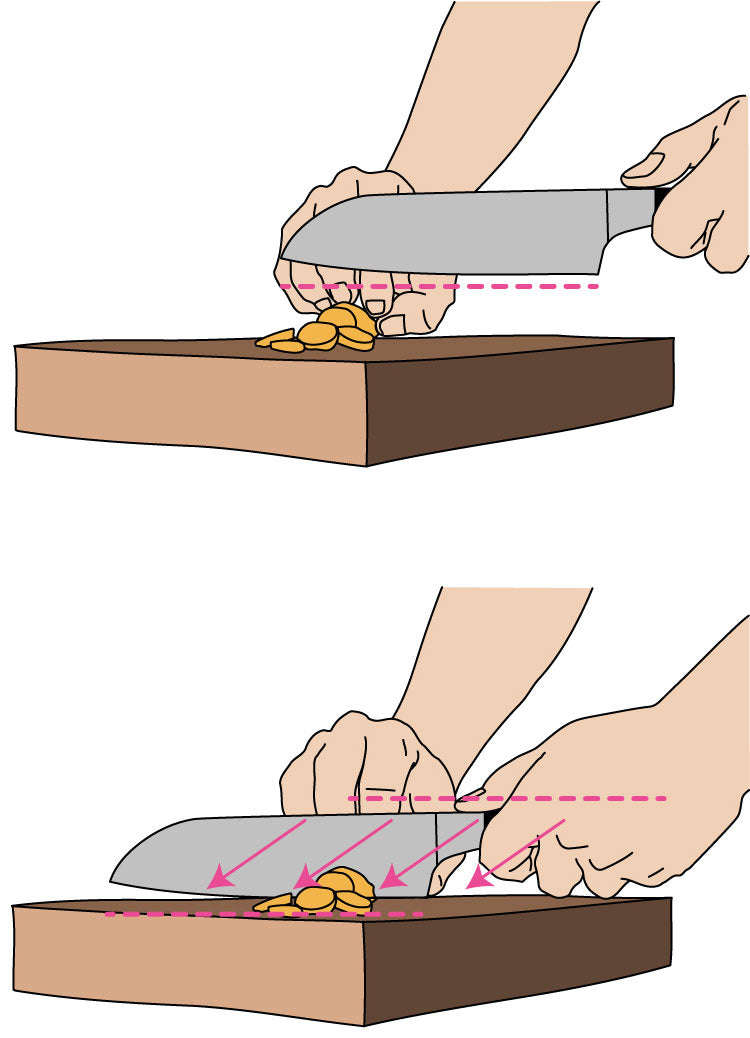
The best and fastest way to utilize the Santoku is with quick up-and-down push-cuts. Using the Santoku in this way will drastically reduce your preparation time. It is also far more accurate than rock-chopping, so you'll have more uniformly cut pieces of food. Take it slow at first to be safe, but as you get better with your Santoku, you'll become a chopping machine!
Push Cutting:
Rock-Chop Herbs and Small Vegetables
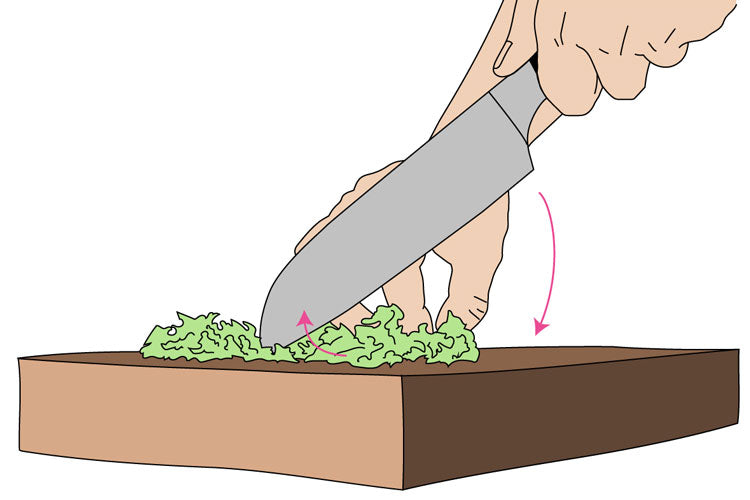
Due to its flatter edge, the Santoku could be better at rock-chopping, especially with larger vegetables. However, you'll have no trouble with herbs and smaller objects like garlic. Use it exactly like a Western Chef's knife or Gyuto with the tip against the board, sliding the heel up and down through the food.
Rock Chopping
Draw-Cut for Perfectly-Portioned Meat
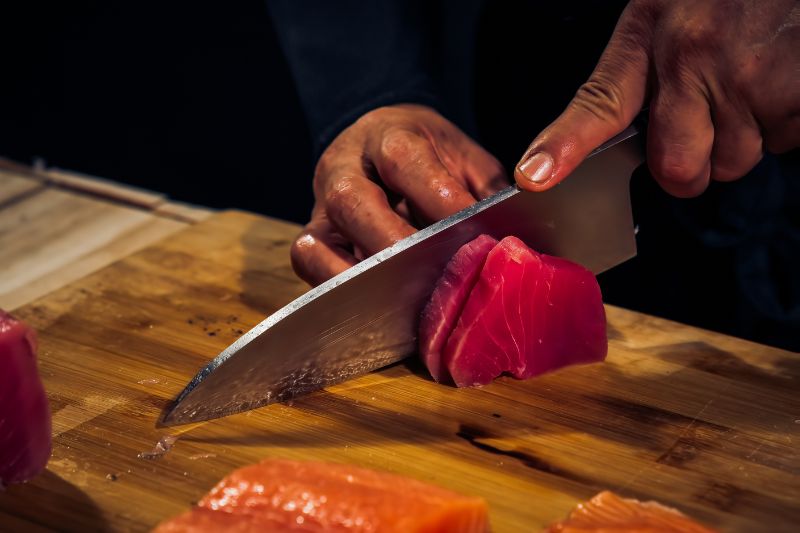
The Santoku may not be a meat specialist, but that doesn't mean it struggles with cutting meat. Rather than using the above two techniques, draw-cut to glide through beef, chicken, or fish. So long as you keep your Santoku sharp, it will easily slice through any meat. Place the blade's heel where you want to cut and move it down and backward toward yourself. For tougher meats, a gentle sawing motion will do the trick.
Should I Buy a Santoku?
The Perfect Beginner Knife
The Santoku is perfect if you're starting your journey with Japanese knives. It's all-purpose and easy to use. It's a crowd-pleaser that's good for both beginners and pros. Its ease of use and maneuverability continue to make it one of the most popular knives worldwide. There isn't much else to say. Unless you prefer the slightly more meat-focused Gyuto or something in-between like a Bunka, the Santoku will be suitable for most people.
Buy Santoku Knife



Get Free Bonus Books
Sign up for free to the Japanese Knife Club to get advice and exclusive articles about how to choose Japanese Knives, and tips and tricks for using Japanese knives.
About the author

Kei Nishida
Author, CEO Dream of Japan
Certifications: PMP, BS in Computer Science
Education: Western Washington University