Table of contents
This article is designed to be the most comprehensive English-language resource about swordsmith Kawashima Kazuki. It will be updated regularly as we release new interview videos with Kawashima-san. Last Updated: 04/23/2026
April 2026 Update: The crowdfunding campaign for the documentary film "Yuragi no Koe" (揺らぎの聲), which follows Kawashima-san forging a sword for Shinto dedication, ended successfully on April 16, 2026 — raising ¥2,043,000 from 85 backers, more than doubling its ¥1,000,000 goal. The film is now moving into post-production. (see the trailer here) We also have a multi-part interview series with Kawashima-san in the works — stay tuned!
Introduction
We are so excited to share this article with you.
Kawashima Kazuki (川島一城, かわしま かずき) is a swordsmith — yes, a real, working swordsmith — based in Osafune, the historic heart of Japanese sword-making in Okayama Prefecture.
I haven't met Kawashima-san in person yet, but learning about his philosophy has left a deep impression on me. His belief that the maker's emotional state directly shapes the quality of their work — that a sword made with love becomes a guardian, while one made with aggression becomes a weapon — really made me think about how I approach my own work.
But more on that later. Allow me to tell you everything about this remarkable craftsman.
This article is meant to be the most comprehensive English-language resource about Kawashima-san on the internet. We've gathered information from his official profile on the All Japan Swordsmith Association (全日本刀匠会, Zen Nihon Tōshō Kai), interviews, news reports, and our own research — in both English and Japanese — to put it all together in one place.
We will also be releasing our own multi-part interview series with Kawashima-san. This article will be updated each time a new episode is published, so please bookmark it and check back!

Who Is Kawashima Kazuki?
Kawashima Kazuki is a 15th-generation bladesmith.
Let that sink in for a moment. Fifteen generations.
His father, Kawashima Masahide (川島正秀), was the 14th-generation head of a blacksmithing lineage in Aki City, Kochi Prefecture. His family has been working with steel for centuries.
Today, Kawashima-san operates his own forge — the Kawashima Masaki Nihontō Tanrenjo (川島正城日本刀鍛錬場) — in Osafune-chō, Setouchi City, Okayama. He specializes in the Bizen-den (備前伝) tradition, one of the five major schools of Japanese sword-making, and his life's pursuit is to recreate the gorgeous Fukuoka Ichimonji (福岡一文字) style of hamon — the tempering pattern along the blade's edge.
His swordsmith name — the name he signs on his blades — is Masaki (正城).
His personal motto is "Kenshin Tandō" (剣心鍛道), which roughly translates to "Forging the Way of the Sword Heart." He believes that making a sword and forging yourself as a person are the same thing.
And here's what fascinates me most: Kawashima-san doesn't consider himself a weapons maker. He sees every sword he creates as a mamori-gatana (守り刀) — a protective sword. Not a sword to harm, but a sword to guard.
Quick Facts at a Glance
| Detail | Info |
| Full Name | Kawashima Kazuki (川島一城, かわしま かずき) |
| Swordsmith Name | Masaki (正城, まさき) |
| Born | 1970, Aki City, Kochi Prefecture |
| Family | 15th-generation bladesmith (father: Kawashima Masahide, 14th-gen blacksmith) |
| Style | Bizen-den (備前伝), pursuing Fukuoka Ichimonji (福岡一文字) |
| Specialty | Jūka-chōji (重花丁子) — layered clove blossom hamon |
| Motto | Kenshin Tandō (剣心鍛道) — "Forging the Way of the Sword Heart" |
| Forge Location | Osafune-chō, Setouchi City, Okayama Prefecture |
| Makes | Japanese swords (tachi, katana, wakizashi, tantō), knives, paper knives |
| Current Wait Time | ~3 years (as of April 2026) |
Growing Up in a Blacksmith's Family
Kawashima-san was born in 1970 in Aki City (安芸市) in Kochi Prefecture — the heart of old Tosa country, on the southern coast of Shikoku Island.
His family's forge had been operating for generations. His father, Kawashima Masahide, was the 14th head of the family's blacksmithing lineage. Growing up around the forge wasn't optional — it was just life.
Fire and Sparks — A Childhood in the Forge
Kawashima-san has written beautifully about his childhood in an autobiographical essay titled "Watching Sparks and Growing Up!! — My Father and I" (火花を見て育つ!!-父と私―), published on his official Tōshō Kai profile. I want to share some of it here because it really paints a picture of how he was shaped.
As a boy, he would watch his father work, mesmerized by the sight of steel taking shape amid flying sparks. His father would grip the fire tongs in one hand and swing the hammer with the other, clenching his jaw so hard while working that it became square-shaped. When you looked inside his mouth, his back teeth were worn completely flat from decades of grinding them during work.
After school, young Kazuki would come straight home to serve as his father's mukōzuchi (向う槌) — the assistant striker who swings a large hammer in rhythm with the master smith. His father would actually ask him what time school ended so he could plan his work schedule around having his son's help.
It was serious work. When he missed a strike, his father would hit him without hesitation. After work, his father would have him warm sake and prepare snacks. His father loved drinking — "as all Tosa men do," Kawashima-san writes — and taught his son to fillet fish and cook during those evening sessions. Once, he messed up a tamagoyaki (rolled omelette) and got smacked with an iron spatula.
Strict doesn't begin to describe it. But it was in that environment — in the low forge, surrounded by sparks and the sound of hammer on steel — that something took root.

His Father and the Baseball Legend
Here's a detail I love. Kawashima-san once noticed that the legendary baseball player Oh Sadaharu (王貞治) had his teeth worn down from the force of clenching during his famous batting practice. Oh would put everything into each swing, grinding his teeth for hours during training sessions.
When young Kawashima-san learned this, he saw his father and Oh Sadaharu as the same kind of person — both pouring their entire being into every single swing.
That image stayed with him. And watching his father's finished blades — the way raw red iron was forged, quenched, and polished into something white and sharp and beautiful — made him think: "I want to express this world through swords."
His father has since passed away. But Kawashima-san says that when he works at the forge today, he sometimes feels as though something invisible is guiding his hands. He believes it's his father.
The Path to Becoming a Swordsmith
When asked during a recent talk whether he always planned to follow this path, Kawashima-san said simply: "From the time I was born, I intended to become a swordsmith."
His father had told him, "You will become a swordsmith," and he walked that path without resistance. He describes it as walking along rails that were laid out for him — but he never felt forced. He genuinely loved the work.

Apprenticeship in Seki Under Nakata Masanao
In 1989, right after graduating from Kochi Prefectural Aki High School (高知県立安芸高等学校), Kawashima-san moved to Seki City in Gifu Prefecture to apprentice under the swordsmith Nakata Masanao (中田正直).
Seki is one of Japan's most famous centers for blade-making — it's been producing swords since the Kamakura period and today is known worldwide for its knives and cutlery. It was a natural place to begin formal training.
The apprenticeship was traditional: you learn by watching, not by asking. Kawashima-san has said that the hardest part of his training was the never-ending cycle of failure. You watch the master. You try. You fail. You fail again. And again. And then, one day, something clicks in your mind, and you think, "Ah, so THAT'S what he meant." That's when the technique finally becomes yours.
He says this process never really ends. Even now, he still makes mistakes — and feels embarrassed calling himself a master swordsmith.
By 1994, five years into his training, he received his license to produce art swords (美術刀剣製作認可) from the Japanese government's Agency for Cultural Affairs. This is a required certification — you cannot legally forge a Japanese sword in Japan without it.
A Detour to Rebun Island — "Washing the Soul"
Here's something unexpected in his timeline.
In June 1995, between his two major apprenticeships, Kawashima-san traveled to Rebun Island (礼文島) — a remote island at the very northern tip of Hokkaido. He worked at a dairy farm there called Dōjō Dairy (道場乳業), which he describes as Japan's northernmost ranch.
His official biography describes this period as "inochi no sentaku" (命の洗濯) — literally "washing one's life," an expression that means taking time to refresh and restore the spirit.
I don't know exactly what brought him to a ranch in the far north between apprenticeships, but the fact that he includes it in his official timeline tells me it was important to him. Maybe he needed to step away from the forge to find clarity. Maybe he needed to reconnect with nature before the next phase. Whatever the reason, I think it says something about the kind of person he is — someone who takes the inner journey as seriously as the outer one.
Studying Bizen-den Under Yoshihara Kuniie
In November 1995, Kawashima-san began studying under Yoshihara Kuniie (吉原國家), one of the most respected swordsmiths in modern Japan.
To understand why this matters, you need to know a bit about the Yoshihara family. They are essentially the first family of modern Japanese sword-making. The first Yoshihara Kuniie was ranked as "East Yokozuna" — the highest rank — in a prewar popularity ranking of swordsmiths. His grandson, Yoshihara Yoshindo (吉原義人), became a Mukansa swordsmith (the highest rank a living swordsmith can achieve) at just 39, and his swords are in the collections of the Metropolitan Museum of Art and the Museum of Fine Arts, Boston. His brother, Yoshihara Shōji, inherited the name as the third Yoshihara Kuniie and also achieved Mukansa status. He even appeared in the 2003 film "The Last Samurai" as a swordsmith.
Under the Yoshihara family's guidance, Kawashima-san studied Bizen-den (備前伝) — the Bizen tradition of sword-making. This is what would characterize his career.
Independence at the Bizen Osafune Museum
In 1996, Kawashima-san became independent, setting up at the forge inside the Bizen Osafune Japanese Sword Museum (備前長船博物館鍛刀場) in Setouchi City.
That same year, he entered his first sword in the Shinsaku-tō Tenrankai (新作刀展覧会) — the annual new sword exhibition — and was selected on his first attempt.
In 2003, he established his own forge: the Kawashima Masaki Nihontō Tanrenjo (川島正城日本刀鍛錬場) in Osafune-chō — putting down permanent roots in the sacred ground of Japanese sword-making.
The Forge in the Mountains
If you visit Kawashima-san's forge, be prepared for a journey.
During a talk he gave at a festival, he described his daily environment with characteristic humor: "I live deep in the mountains. There are more wild boar and deer than people." He joked about being nervous appearing in front of a large audience because normally his only company is nature — "mountains, blue sky, and an old man picking his nose."
(Yes, he actually said that. Kawashima-san is known for being playful and warm. At our interview (see below), he reportedly showed up wearing an afro wig to put his interviewer (Makoto-san) at ease. When asked to take it off, he said, "But this is my favorite," and looked a little disappointed.)
The forge is located at 2123-1 Ii, Osafune-chō, Setouchi City, Okayama 701-4261. It's about a 20-minute taxi ride from Osafune Station on the JR Akō Line, and the road takes you deeper and deeper into the mountains until there are no more houses.
A novelist who visited described it perfectly: "A place where the only sounds are wind and trees. And there, amid the silence, sat the Kawashima Kazuki Nihontō Tanrenjo."
The local taxi drivers know exactly where it is. Visitors come from all over the world — one driver mentioned recently dropping off a family from Northern Europe.

The Bizen Tradition and Fukuoka Ichimonji
What Is Bizen-den?
The Japanese sword world recognizes five major traditions (五箇伝, Gokaden), each named after the region where it developed. Bizen-den (備前伝) is arguably the most important of all.
Here's why: of all the Japanese swords designated as National Treasures, roughly half are Bizen swords. That's an extraordinary number. The Bizen region — what is now eastern Okayama Prefecture — had everything needed for sword-making: iron sand in the rivers, clean water, and excellent charcoal from Japanese red pine trees.
The Osafune area within Bizen turned into the epicenter. During the Kamakura period (1185–1333), the Osafune School emerged and dominated Japanese sword production for centuries. At its peak, the area was said to have "a thousand smithing shops."
So when Kawashima-san chose to establish his forge in Osafune, he wasn't just picking a location. He was placing himself at the very source of the tradition he dedicates his life to.
Fukuoka Ichimonji — The Look He Pursues
Within the Bizen tradition, Kawashima-san has set his sights on one specific target: the Fukuoka Ichimonji (福岡一文字) style.
The Ichimonji school was founded by a swordsmith named Norimune (則宗) in the Kamakura period. The name "Ichimonji" (一文字, literally "one character") comes from the practice of carving the character "一" (ichi, meaning "one") on the tang of their blades.
What makes Ichimonji swords so distinctive is their hamon — the tempering pattern along the edge of the blade. Specifically, the chōji-midare (丁子乱れ) pattern, which looks like the flower buds of the clove plant, layered and cascading along the blade in gorgeous, irregular waves.
Kawashima-san specializes in jūka-chōji (重花丁子) — literally "layered flower clove blossom." This is one of the most complex and beautiful hamon patterns in existence. The flowers stack and overlap, rising high and falling low, creating something that looks almost like a natural landscape in steel.
When his swords were sent to Paris for exhibition, Kawashima-san described what he wanted Parisians to see: the way these clove-like patterns rise and fall along the blade, cascading like flowers. It's easy to forget you're looking at a weapon.

Yamatorige — The National Treasure He Aims For
In interviews, Kawashima-san has stated his ultimate goal: to recreate the spirit of the Yamatorige (山鳥毛) — widely considered the finest Fukuoka Ichimonji sword in existence.
Yamatorige is a National Treasure. It was the beloved sword of the legendary warlord Uesugi Kenshin, and its blade is famous for a wildly dramatic hamon that has been described as looking like "the feathers of a mountain bird" or "a mountain wildfire."
In 2018, the city of Setouchi — where Kawashima-san lives and works — launched the Yamatorige Homecoming Project, a massive crowdfunding campaign to raise ¥500 million (about $5 million) to purchase the sword and bring it home to Bizen Osafune. Kawashima-san himself spoke at the press conference for the project.
The crowdfunding succeeded in 2020, and Yamatorige now resides at the Bizen Osafune Japanese Sword Museum — just minutes from Kawashima-san's forge.
Having that National Treasure so close to home, as both inspiration and benchmark, must be extraordinary.
Philosophy: The Sword as Mamori-gatana
This is the section I've been most looking forward to writing. It's also where Kawashima-san gets really interesting.
"Is the Sword a Weapon?"
At a festival appearance, Kawashima-san opened his talk with a question for the audience: "What image do you have of swords?"
He acknowledged that most people think of something sharp, dangerous, scary — a tool for fighting. Movies and anime reinforce this image constantly.
Then he said: "But a sword has another aspect. It is a mamori-gatana (守り刀) — a protective sword."
He explained it through Japanese mythology. When the goddess Amaterasu sent her descendant to rule the terrestrial realm, she gave him the Three Sacred Treasures (三種の神器, Sanshu no Jingi): a mirror, a jewel, and a sword.
"Isn't it strange?" he said. "A weapon — included among the most sacred objects in Japanese creation mythology? That's because the sword is not merely a weapon. It is a guardian."
Traditionally, a mamori-gatana is a tantō (short blade) given to a newborn child or placed beside a bride as spiritual protection. But Kawashima-san's definition goes further: every sword he creates — from tantō to full-length tachi — is a mamori-gatana, because he forges each one with the intention of protection, not harm.

Vibration, Intention, and the Maker's Heart
This is where Kawashima-san's philosophy gets fascinating.
He explained to an audience that all matter, at its most fundamental level, is made of atoms. And atoms vibrate — their electrons spin at incredible speeds. Every physical object, including a sword, has what he calls a "natural vibration frequency" (固有振動数).
His argument: the vibration frequency of a sword is determined, in part, by the emotional state of the person who forges it. A sword made with the intention of harm carries one kind of vibration. A sword made with love and the desire to protect carries another.
"That's why," he said, "when someone holds a sword I've made and feels somehow comforted — calmed — that's the mamori-gatana at work."
He connected this to neuroscience (in his own way): the heart and brain run on electrical impulses. Where there's electricity, there's magnetism. Where there's electromagnetism, there are electromagnetic waves. And our thoughts — our intentions — are broadcast as electromagnetic waves.
So when a swordsmith is forging steel, what are they thinking? Are they thinking about making something that cuts well? Or are they thinking about making something that brings happiness to the person who holds it?
Kawashima-san says this distinction is everything. It's not mysticism to him — it's the foundation of his entire practice.
He is also very selective about when he works. He only forges when his mental and spiritual condition is properly aligned. This isn't a preference or a quirk — for him, the maker's inner state is the single most important factor in determining the quality of the work.
A Lesson for All of Us — The Power of Mindset in Work
I'll be honest — learning about Kawashima-san's approach has changed how I think about my own work.
His core idea is simple: the energy you bring to your work gets embedded in what you create. A sword made with love becomes a guardian. A sword made with anger becomes something else entirely.
This reminded me of something from the movie "Spirited Away" — the scene at the ironworks where the women sing while they work the bellows. It's not just entertainment. In traditional workplaces across Japan and around the world, singing during labor has been a way of maintaining positive energy, keeping spirits high, and — if you believe Kawashima-san's philosophy — infusing the work itself with that good energy.
I've noticed this in my own experience too. When our team is happier, the work is always better. When I sit down to write an article in a good mood, the words flow more naturally. When I'm stressed or frustrated, even the best outline produces flat, lifeless prose.
Kawashima-san would say that's not a coincidence. The energy of the maker becomes the energy of the thing that is made.
I think that's a pretty powerful idea — whether you're forging a sword or writing a blog post.
"Kenshin Tandō" — His Motto
Kawashima-san's personal motto is Kenshin Tandō (剣心鍛道).
Let me break that down: Ken (剣) means sword. Shin (心) means heart, mind, or spirit. Tan (鍛) means to forge or temper. Dō (道) means the way or path.
Together: "Forging the Way of the Sword Heart."
In his own words: "Making swords and forging yourself as a person are the same thing. My craft is my path, and my work is myself."
He has also said: "To make a good sword, you must first forge yourself. The sword is a reflection of the swordsmith."
This is why he places such importance on his own inner state. For Kawashima-san, self-improvement and sword improvement are the same pursuit.

Awards, Exhibitions, and Recognition
Shinsaku-tō Exhibition / Gendai Tōshoku-ten
The most important annual competition in the modern Japanese swordcraft world has evolved over the decades. It began as the Shinsaku Meitō-ten (新作名刀展, "New Famous Sword Exhibition"), and today it is known as the Gendai Tōshoku-ten (現代刀職展, "Modern Sword Craft Exhibition"), organized by the Society for Preservation of Japanese Art Swords (公益財団法人日本美術刀剣保存協会). The name has changed, but its significance has not — this is where swordsmiths, polishers, and mounting craftsmen have their work evaluated at the highest level.
Kawashima-san has been entering and winning recognition at this exhibition since his very first submission in 1996, when he was selected (入選) in his debut year.
In 2005, he received the Doryoku-shō (努力賞) — the "Effort Award." On his official page, he wrote about this experience with characteristic humility: he forged five swords as candidates, quenched three of them, and submitted the best one. He said the sword was the most cohesive piece he'd ever made — but also noted that it still had plenty of room for improvement.
Most recently, in the 2025 Gendai Tōshoku-ten, Kawashima-san placed 入選七席 (7th place selection) in the long-sword division — a strong result that shows he continues to compete and improve year after year.
The ultimate goal for any swordsmith at this exhibition is to achieve Mukansa (無鑑査) status — the highest rank, where your work is so consistently excellent that it no longer needs to be judged. Only about 16 living swordsmiths hold this rank. Kawashima-san hasn't reached it yet, and he's honest about that. When asked if he feels like a master, he says: "Not at all. I still have so much to learn. I'd like to become one someday."
Paris Exhibition (2024–2025)
In late 2024, Setouchi City organized an exhibition of Japanese swords in Paris, France, to introduce the art form to international audiences and explore new markets for sword culture.
According to the official Setouchi City announcement, two modern swords were exhibited — one of them was Kawashima-san's. He was scheduled to accompany Setouchi City Mayor Takehisa to Paris to explain the swords directly to visitors, adding a personal dimension to the cultural diplomacy.
Before shipping his sword, Kawashima-san spoke to reporters about what he hoped Parisians would appreciate: the beauty of the jūka-chōji hamon, and the idea that the Japanese sense of beauty goes beyond the sword as a weapon — that it represents an aesthetic sensibility Japan has cultivated for centuries.
The exhibition ran from December 17, 2024 through January 11, 2025.
Yamatorige Homecoming Project
Kawashima-san was directly involved in the Yamatorige Homecoming Project — the high-profile crowdfunding effort to bring the National Treasure sword Yamatorige back to Bizen Osafune.
He appeared at the 2018 press conference alongside the mayor of Setouchi City and researchers from the Tokyo National Museum. The project ran from November 1, 2018 to March 31, 2020, reaching its target on January 26, 2020. In total, 17,508 supporters donated ¥880,956,472 — far exceeding the ¥500 million goal. The sword was officially delivered to the Bizen Osafune Japanese Sword Museum on March 22, 2020.
Documentary Film: "Yuragi no Koe"
A documentary film called "Yuragi no Koe" (揺らぎの聲, meaning roughly "The Resonant Voice") is now in post-production, and Kawashima-san is the central figure.
The film follows Kawashima-san as he forges a tachi to be offered to the god of blacksmithing (鍛冶神, Kajigami) in a Shinto dedication ceremony. The director met Kawashima-san by chance while filming another project and was so captivated that he decided to create the documentary.
The project was funded through crowdfunding on MotionGallery. The campaign ended successfully on April 16, 2026, raising ¥2,043,000 from 85 backers — more than doubling the original ¥1,000,000 goal. Filming of the forging and consecration ceremony is complete; the remaining work includes interviews, editing, narration, and music.
Kawashima-san's central quote in the film's promotional materials: "We swordsmiths don't make weapons."
Here is the trailer:
videoid="BLJzJBp6vzI"
Japan Art Fair
Kawashima-san was featured in a profile by the Japan Art Fair in 2025, with plans to potentially display his work at JAF 2026. The profile described his process as "devotional" and noted the Shinto roots of his craft — the belief in yaoyorozu no kami (八百万の神), the idea that deities dwell in all things.
What Does Kawashima-san Make?
Japanese Swords
Kawashima-san's primary work is forging Japanese swords in the Bizen tradition. He makes all the traditional types: tachi (太刀, long sword ~76 cm), uchigatana/katana (打刀), wakizashi (脇差, medium sword ~52 cm), and tantō (短刀, short blade ~24–30 cm).
Each sword is made using tamahagane (玉鋼) — traditional Japanese steel produced from iron sand in a tatara furnace in Shimane Prefecture. The steel is folded and hammered approximately 12 times, creating thousands of layers. Then it's shaped, coated in clay, and quenched — the moment that creates the hamon pattern and gives the blade its life.
A single sword takes about three months to complete. Currently, his waiting list is approximately three years.
Knives and Paper Knives
In addition to swords, Kawashima-san produces hōchō (包丁, kitchen knives), kogatana (小刀, small utility knives), and paper knives.
His paper knives are available through retailers like BUSHIZO. They're hand-forged and come in a paulownia wood box. You can even request a custom inscription (tamemei, 為銘) — a special engraving of a name or phrase on the blade. Production takes about two months.
Our Interview Series with Kawashima-san
We are honored to be producing a multi-part video interview series with Kawashima Kazuki.
This section will be updated each time a new episode is released. Please check back regularly! If you sign up to our newsletter, you will be automatically notified.
[Part 1 — A 15th Generation Japanese Swordsmith Warns: "As Tools Advance, Skills Decline"]
videoid="bfJxIhYmFLo"
[Part 2 — Coming Soon]
Stay tuned for the first installment of this series. We will announce new episodes through our newsletter and social media.
Better yet, subscribe to History of Katana Youtube Channel!
Where to See His Work (Without Commissioning a Sword)
Here are some more accessible ways to experience Kawashima-san's craft:
Paper Knife from BUSHIZO (¥13,200)
Kawashima-san's hand-forged paper knives are available through BUSHIZO for ¥13,200 (including tax). Each one comes in a paulownia wood box, and you can request a custom inscription — a name, a phrase, anything meaningful to you — engraved on the blade. The sample inscription shown on the product page is "雲外蒼天" (Ungai Sōten — "beyond the clouds, blue sky"), which I think is a beautiful choice. Production takes about two months.
This is honestly one of the most thoughtful gifts I've seen. A hand-forged blade by a real Bizen swordsmith, with your own chosen words engraved on it? For about $90 USD? That's remarkable.
MEET YOUR ART FESTIVAL 2025
Kawashima-san was a featured artist at the MEET YOUR ART FESTIVAL 2025, held October 10–13 at the Terada Warehouse complex in Tennōzu, Tokyo. The festival — organized by avex — showcased art, music, food, and craftsmanship, and Kawashima-san's work was displayed alongside contemporary artists from across Japan. The listing was supported by Setouchi City.
We don't yet know if he'll appear at future editions of the festival, but it's worth keeping an eye on if you'd like to see his work in person.
Videos of Kawashima-san
One of the best ways to understand Kawashima-san is to see him in action. Here are videos we've collected featuring him.
THE BASE Interview (2025)
This is a talk Kawashima-san gave at a festival alongside Bizen-yaki ceramic artist Mori Taiga (森大雅). The conversation covers his philosophy of mamori-gatana, the process of sword-making, and his views on art and vibration. It's in Japanese, but even if you don't understand the language, you can feel his energy and warmth.
videoid="kJL8jN6raio"
Forging Process at His Workshop
Watch Kawashima-san perform tsumiwakashi (積沸かし) and tanren (鍛錬) — the welding and folding of tamahagane steel — at his forge in 2017.
videoid="Slw6V-8vzPE"
Applying Yakiba-tsuchi (Clay Before Quenching)
This video shows one of the most critical steps in sword-making: applying the clay mixture to the blade before quenching. The pattern of clay application directly determines the hamon.
videoid="HhSKJKC34Nw"
Sword Sharpening
In this video, Kawashima-san demonstrates his approach to sharpening. The description notes that "attitude is really important if you really want to make a good edge" — which perfectly captures his philosophy that mindset shapes outcome.
videoid="_fFgTNo-D98"
Short Interview at the Forge (2018)
A brief visit to Kawashima-san's forge by a visitor, capturing his passion and personality.
videoid="woZ08Si7vbI"

How to Visit the Forge
Visits to Kawashima-san's forge may be possible by prior arrangement. His contact information is publicly listed by the All Japan Swordsmith Association, and the "Yuragi no Koe" documentary crowdfunding even offered forge visits as a reward tier — so he does welcome visitors. But please contact him in advance to check availability.
He is known for being incredibly welcoming — even to people with no knowledge of swords. One description noted: "All you need is interest, not knowledge or experience." He also sincerely engages with overseas visitors.
Kawashima Masaki Nihontō Tanrenjo (Private Forge)
(川島正城日本刀鍛錬場)
Address: 2123-1 Ii, Osafune-chō, Setouchi City, Okayama 701-4261, Japan
(〒701-4261 岡山県瀬戸内市長船町飯井2123-1)
Phone: 0869-26-3420
Getting There:
- Take the JR Akō Line to Osafune Station (長船駅)
- From Osafune Station, take a taxi (~20 minutes). The drivers know where it is.
- If coming from Okayama Station, take the JR Akō Line (about 25 minutes to Osafune Station)
Also Nearby: Bizen Osafune Japanese Sword Museum (Separate Location)
The Bizen Osafune Japanese Sword Museum (備前長船刀剣博物館) is located in a different part of Osafune-chō (966 Osafune, Osafune-chō, Setouchi City). This is the public museum — it houses the National Treasure Yamatorige, offers sword-making demonstrations on the second Sunday of each month, and has a gift shop. It is not the same location as Kawashima-san's private forge, though both are within Setouchi City.
Quick Reference
| Detail | Info |
| Full Name | Kawashima Kazuki (川島一城) |
| Swordsmith Name | Masaki (正城) |
| Born | 1970, Aki City, Kochi Prefecture |
| Lineage | 15th-generation bladesmith |
| Style | Bizen-den (備前伝), Fukuoka Ichimonji (福岡一文字) |
| Specialty | Jūka-chōji (重花丁子) hamon |
| Forge Address | 2123-1 Ii, Osafune-chō, Setouchi City, Okayama 701-4261 |
| Phone | 0869-26-3420 |
| Wait Time | ~3 years (as of April 2026) |
| Makes | Tachi, katana, wakizashi, tantō, kitchen knives, paper knives |
| Tachi Price | ~¥2.2M–¥2.5M (shirasaya) |
| Tantō Price | ~¥800K (shirasaya) |
| Official Profile | All Japan Swordsmith Association |
Sources
This article was compiled from the following primary sources. We have prioritized official and first-party sources wherever possible.
- Kawashima Kazuki — Official Profile, All Japan Swordsmith Association (全日本刀匠会) — includes his autobiography essay "火花を見て育つ!!-父と私―"
- Yamatorige Homecoming Project — Official Project Page
- Documentary Film "Yuragi no Koe" — MotionGallery Crowdfunding Page
- BUSHIZO — Kawashima Kazuki Paper Knife Product Page & Interview
- MEET YOUR ART FESTIVAL 2025 — Artist Profile
- KSB Setouchi Broadcasting — Paris Exhibition News Report (Nov 2024)
- att.JAPAN — Yamatorige Homecoming Press Conference
- Japan Art Fair 2025 — Artist Profile
- Direct communication and interview context (pricing details, commissioning process)
Related products


1 review
$360.00 USD
$349.00 USD
USD
/
Quick view
Gyuto Knife with Japanese Handle - All-purpose Premium Japanese Artisanal Knife
1 review
$179.00 USD
$159.00 USD
USD
/
Quick view
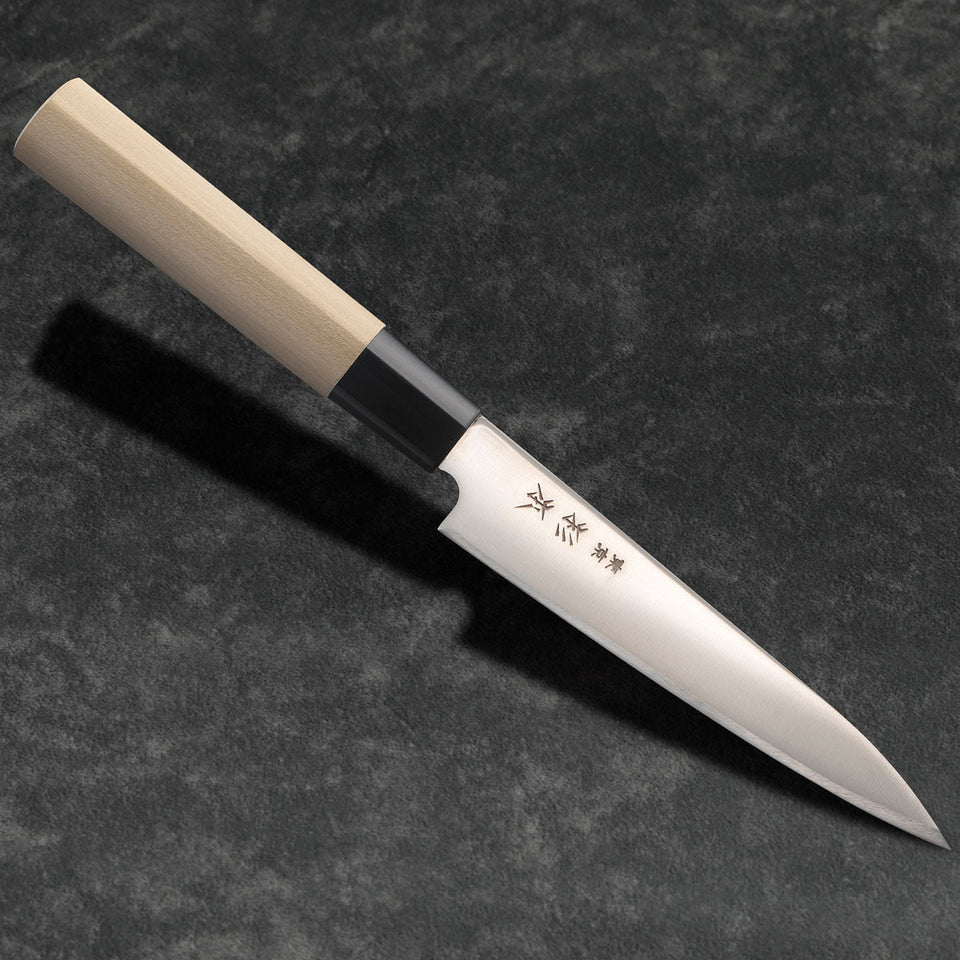
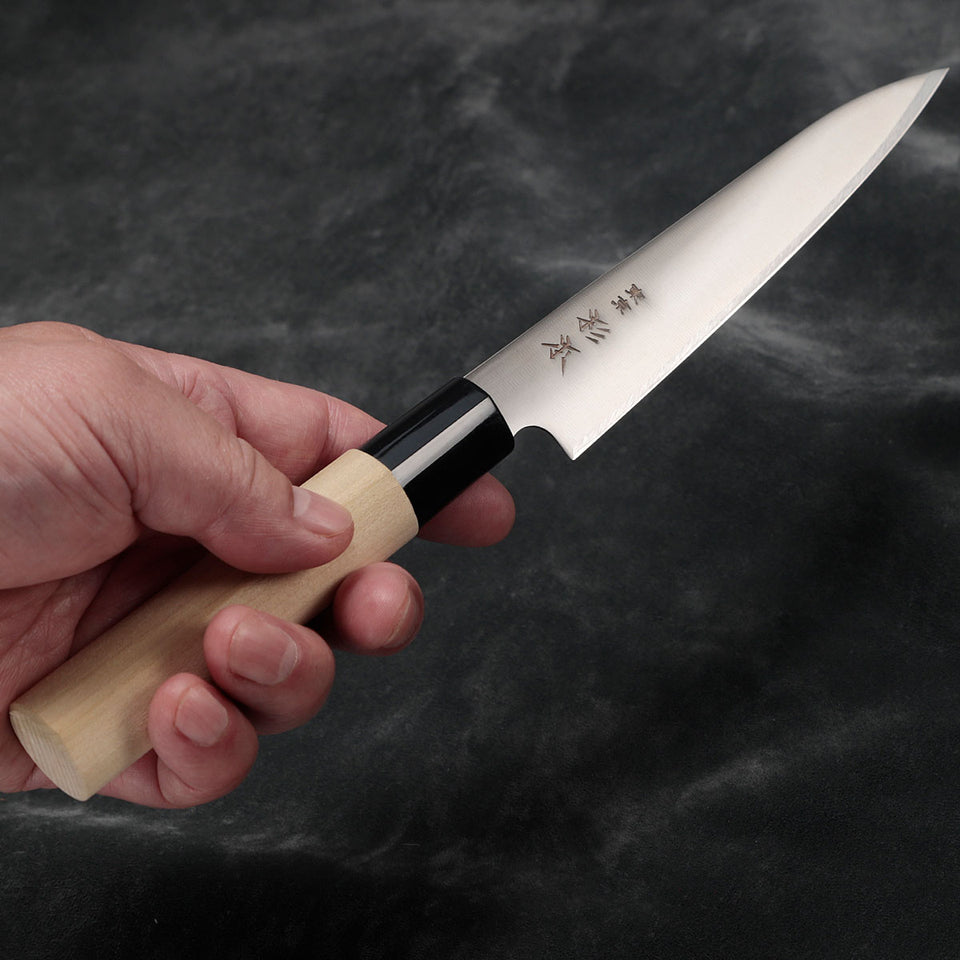
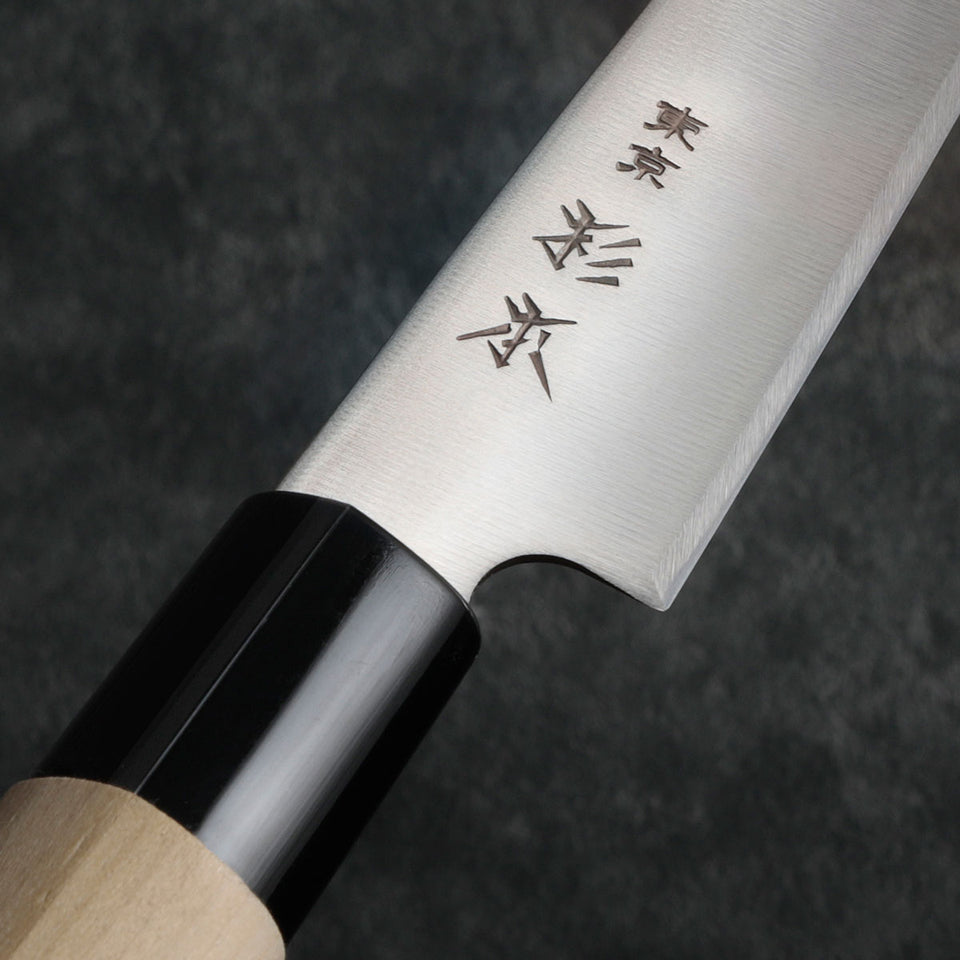
Petty Knife with Japanese Handle - Premium Artisanal Knife




Get Free Bonus Books

Sign up for free to the Japanese Knife Club to get advice and exclusive articles about how to choose Japanese Knives, and tips and tricks for using Japanese knives.
About the author

Kei Nishida
Author, CEO Dream of Japan
Certifications: PMP, BS in Computer Science
Education: Western Washington University