Skip to content

Choosing Sharpening Stones for Japanese Knives

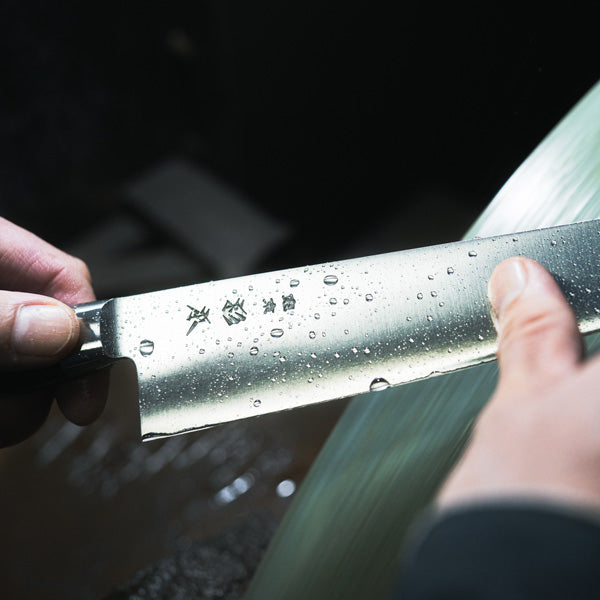
Japanese knives are known for their incredible sharpness and precision, and using the right sharpening stones can help maintain their edge for optimal performance. However, it will be better to learn how to sharpen these knives, so your knives will not break and, at the same time, can be used for a long time.

There are several types of sharpening stones/whetstones used for Japanese knives, but we will discuss these three types of Japanese sharpening stones:

1. Arato

This is a rough or coarse-grit stone used for initial sharpening or repairing chips in the blade.

2. Nakato

This medium-grit stone is used for sharpening and refining the blade after using the Arato stone.

3. Shiageto

This is a fine-grit stone used for honing and polishing the edge to achieve a razor-sharp finish.

It's important to note that different Japanese knives may require different grit stones, depending on their hardness and blade type. Some Japanese knife sharpeners may also prefer using different grit sequences, such as a finer grit stone before a medium grit stone.

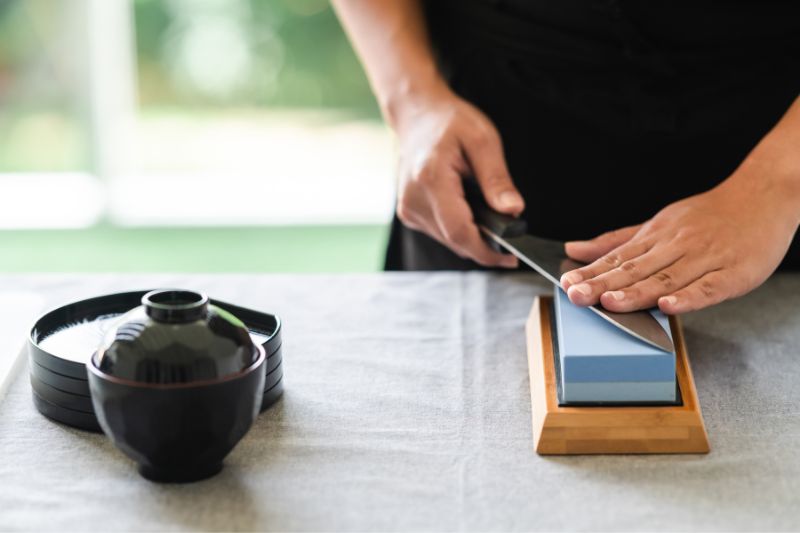
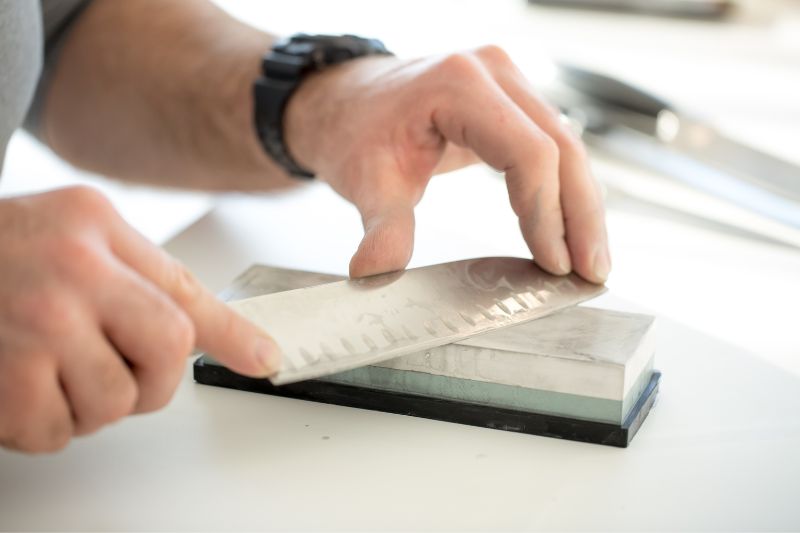
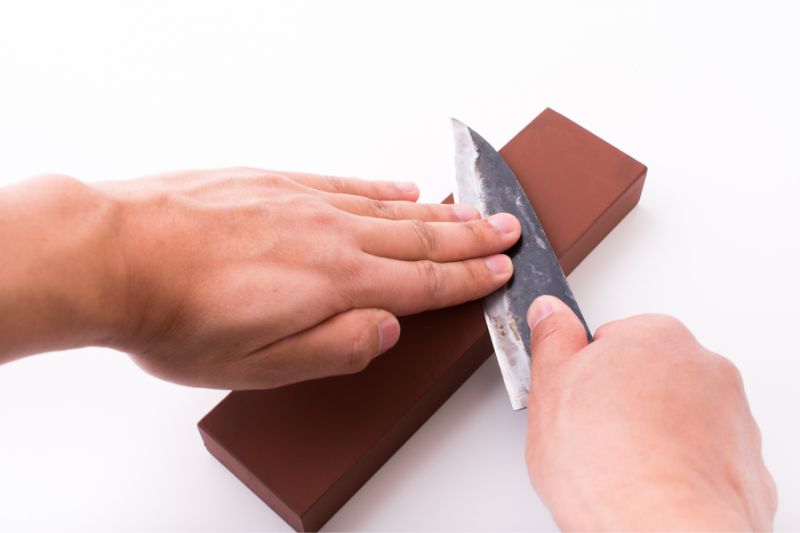
sharpening knife using stone

The right Sharpening stone or Whetstone material for your Japanese knife

Now we know the three types of sharpening stones, and choosing the suitable sharpening stone material for your Japanese knife is important for achieving the

best sharpening results. Here are some tips for matching sharpening stones to different types of Japanese knives:

1. Single-bevel knives

Sharpening stones for single-bevel knives such as Yanagiba and Usuba are typically wider and flatter than those used for double-bevel knives, and are available in various grits.

Here are some recommended sharpening stones for single-bevel knives:

  • Natural whetstones: Single bevel-like Yanagiba knives are often sharpened using natural whetstones, such as Arashiyama or Ohira stones. These stones are made from natural materials and have a high hardness, making them ideal for sharpening Yanagiba knives.
  • Water stones: These stones provide a smooth and consistent sharpening experience and are available in various grits, ranging from coarse to fine.
  • Ceramic sharpening stones: Ceramic stones are another good option for sharpening Yanagiba knives. They are hard and durable, making them ideal for sharpening a hard and narrow blade like the Yanagiba.

    2. Double bevel knives

    Double bevel knives such as Gyuto and Santoku can be sharpened with a wider range of sharpening stones, including water stones, oil stones, and diamond stones. Double bevel knives typically require finer grit stones for honing and polishing the edge but may also require coarser grit stones for repairing chips and reshaping the edge.

    3. Harder steel knives

    Japanese knives made from harder steel, such as VG-10 or high carbon steel, may require finer grit stones for sharpening, as coarser grit stones may cause excessive wear to the stone or damage the knife.

    Here are some recommended sharpening stones for VG-10 knives:

    • Ceramic sharpening stones: Ceramic stones are very hard and can be used to sharpen VG-10 knives effectively. They are also long-lasting and require less maintenance than other sharpening stone types.
    • Diamond sharpening stones: Diamond stones are also tough and can be used to sharpen VG-10 knives quickly and effectively. They are also long-lasting and don't require as much maintenance as other types of stones.
    • Water stones: Water stones are popular for sharpening Japanese knives because they provide a smooth and consistent sharpening experience. For VG-10 knives, it's best to choose a water stone with a high grit, such as a 3000-8000 grit stone, to achieve a razor-sharp edge.

      4. Softer steel knive

      Japanese knives made from softer steel, such as AUS-8 or 440C may be sharpened with coarser grit stones, as the softer steel will wear away more quickly and require more frequent sharpening.

      It's important to note that specific sharpening needs of your Japanese knife may vary depending on the manufacturer, the steel type, and the intended use. 

      When you purchase Japanese Knives from our site (Japanese Knife Co.), you will be presented to add-on the correct sharpening stone for the type of knife you are buying.

      Choosing Sharpening Stones for Japanese Knives — Frequently Asked Questions
      If I can only buy one whetstone, which grit should it be?

      A 1000-grit stone — sometimes called the "workhorse" grit. It's coarse enough to actually re-cut a dulled edge but fine enough to leave the blade meaningfully sharp afterward. You'll spend most of your sharpening life on a 1000-grit stone. A 6000- or 8000-grit polishing stone is the natural second purchase to make the edge keener; a 220–400-grit stone is the third, and only if you've started chipping edges and need to repair them. Skip "knife sharpening kits" with five stones — most of them are too small to be useful. Our whetstone tutorial walks through the technique on the 1000-grit.

      How to Sharpen a Knife Using a Whetstone
      How to Sharpen a Knife Using a Whetstone

      What's the difference between a "soaker" stone and a "splash-and-go" stone?

      Water absorption. A soaker stone needs to sit in a tub of water for 5–15 minutes before you sharpen — air bubbles rise out, and the stone becomes saturated. Use it dry and you'll gouge the surface. A splash-and-go stone (Shapton, some Naniwa lines) only needs water sprinkled on top during use; the binder doesn't absorb water. Most beginner combination stones are soakers, which is fine — just build the soak time into your sharpening routine. If you sharpen frequently and want zero prep time, splash-and-go stones are worth the slightly higher price.

      Are natural Japanese stones (tennen-toishi) worth the high price?

      For most home cooks, no. Natural Japanese sharpening stones — quarried from a small number of hillsides near Kyoto — produce the absolute finest edge on a single-bevel knife and are prized by professional sushi chefs. But they cost $300–$3,000+, the quality varies wildly between stones, and the grit isn't labeled in numeric terms. Synthetic stones from Naniwa, Shapton, King, and others give 95% of the cutting performance for under $100 and are far more consistent. Buy natural stones only after you've been sharpening on synthetic for a few years and know exactly what you want.

      How do I know when to replace a whetstone?

      When it's worn down to about 1 cm thick, or when the surface is so dished that you can't flatten it back. A 25 mm starting stone, used regularly, lasts a home cook 5–10 years easily; you'll resurface it (with a flattening stone or sandpaper on glass) maybe once a year to keep it flat. Cracks running through the stone mean replace immediately — sharpening on a cracked stone risks cutting your hand. Most cooks never wear out a stone fully; they upgrade to a different grit or brand long before that.

      Do I need a flattening stone, or is that overkill for home use?

      You need one if you sharpen more than a few times a year. Whetstones wear into a slight curve (called "dishing") with use because you naturally apply more pressure at the middle than the ends. A dished stone produces an inconsistent bevel angle — sharpness suffers and you can't feel the burr properly. A diamond flattening plate ($30–60) re-flattens any synthetic stone in 60 seconds. Without one, you can use 80-grit wet/dry sandpaper on a piece of glass, but the diamond plate is so much faster it pays for itself the first time. Browse our Japanese knife collection for the knives the stones go with.

      Related products
      1 review

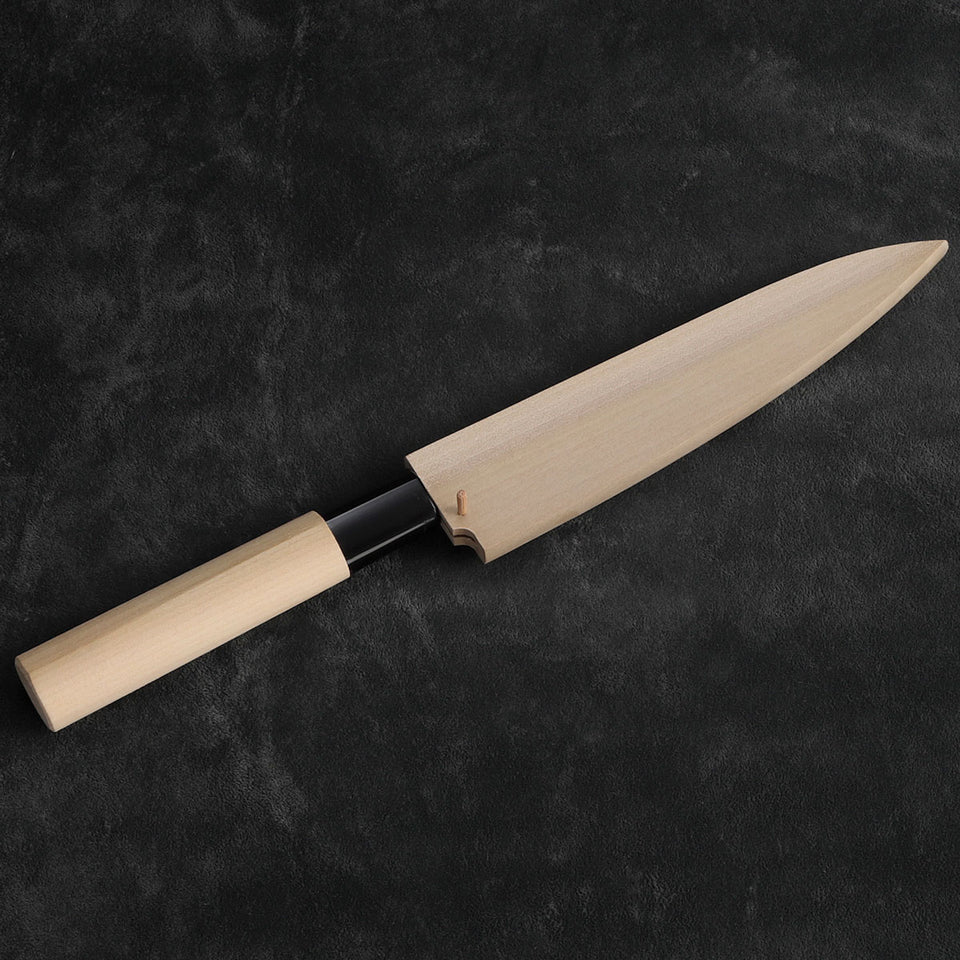
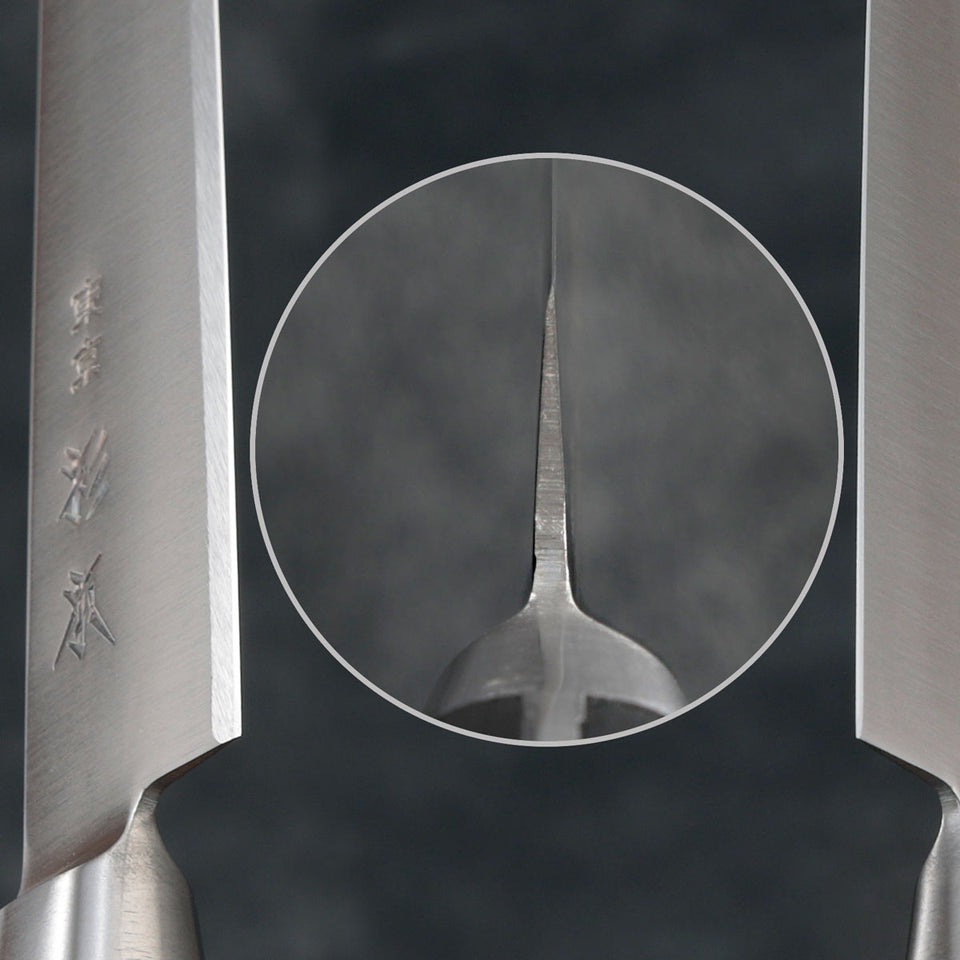
      Gyuto Knife with Japanese Handle - All-purpose Premium Japanese Artisanal Knife

      $360.00
      Quick view

      The Japanese Gyuto knife is the ultimate multi-purpose blade, perfect for everyone from beginner home cooks to seasoned chefs. As the Japanese counterpart to the Western chef’s knife—only thinner, lighter, and sharper—it excels at chopping, slicing, and dicing almost anything in the kitchen with effortless precision. This variation features a beautiful maple-wood handle that not only adds a natural, elegant aesthetic but also provides a smooth, earthy texture for enhanced control and comfort. Crafted with CM stainless steel, it offers exceptional sharpness, durability, and rust resistance, ensuring years of effortless slicing. With a blade length of 180mm (7.1 inches) and a double bevel edge, this handmade, hand-braided, and hand-sharpened Gyuto is a versatile and essential tool that elevates both the appearance and taste of your culinary creations. This product is available for shipping within the USA only.

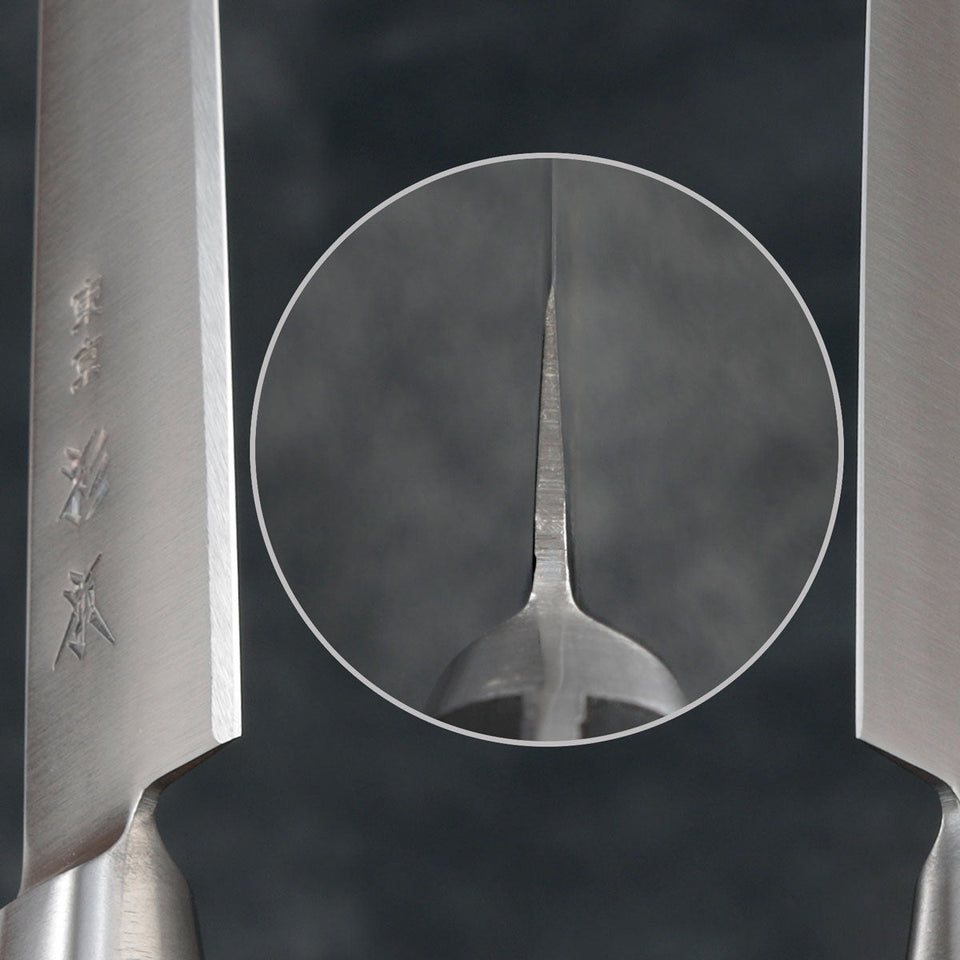
      Santoku Knife - Premium Japanese Artisanal Knife

      $250.00
      Quick view

      The Santoku knife is revered for its control, precision, and sharpness, making it the master of slicing, mincing, and dicing in both professional and home kitchens. Traditionally favored for high-precision tasks like sushi and sashimi preparation, its versatility extends to cutting meat, fish, and vegetables with ease, supported by a comfortable, easy-to-control handle. Handmade by master bladesmiths using techniques passed down through generations, each Santoku offers extraordinary quality that elevates every slice. Named after the "Three Virtues"—meat, vegetables, and fish—the Santoku’s shorter, thicker, straight-edged blade with a sheep foot-shaped tip enhances the appearance, taste, and texture of your food while delivering exceptional performance with minimal maintenance, thanks to its CM stainless steel and Western-style handle. With a blade length of 170mm (6.7 inches), it is the ultimate daily knife for any cooking enthusiast.

      1 review

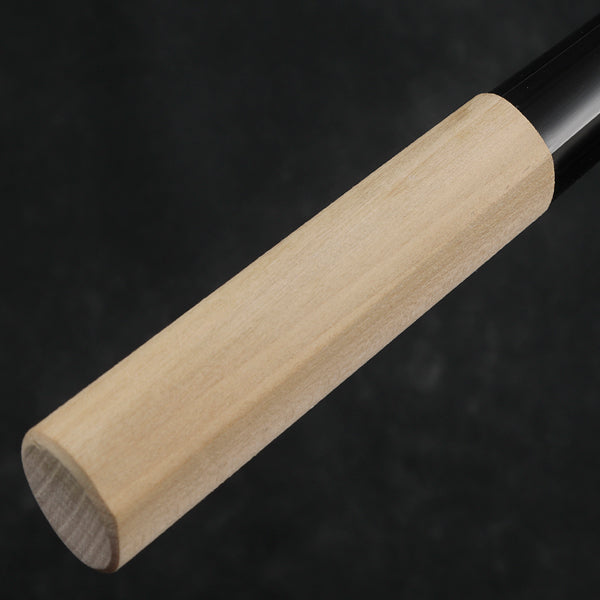
      Petty Knife with Japanese Handle - Premium Artisanal Knife

      $179.00
      Quick view

      The Japanese-style Petty Knife is a premium artisanal blade designed for maximum control and precision, perfect for peeling, slicing, shaping, and trimming in tight spaces. Its fine-tipped 150mm (5.9 inches) blade unlocks new levels of creativity in shaping and presentation, helping elevate the beauty of every dish you create. Featuring a traditional maple-wood handle, it offers a smooth, natural texture that feels as good as it looks, making it a joy to use. Handmade and sharpened by master bladesmiths, this knife guarantees prolonged sharpness, durability, and effortless slicing for years, making it an essential tool for passionate home cooks and professional chefs who take pride in every cut. Crafted from CM stainless steel for rust resistance and low maintenance, the Japanese Petty Knife blends beauty, functionality, and lasting performance into one exceptional kitchen companion.

      1 review

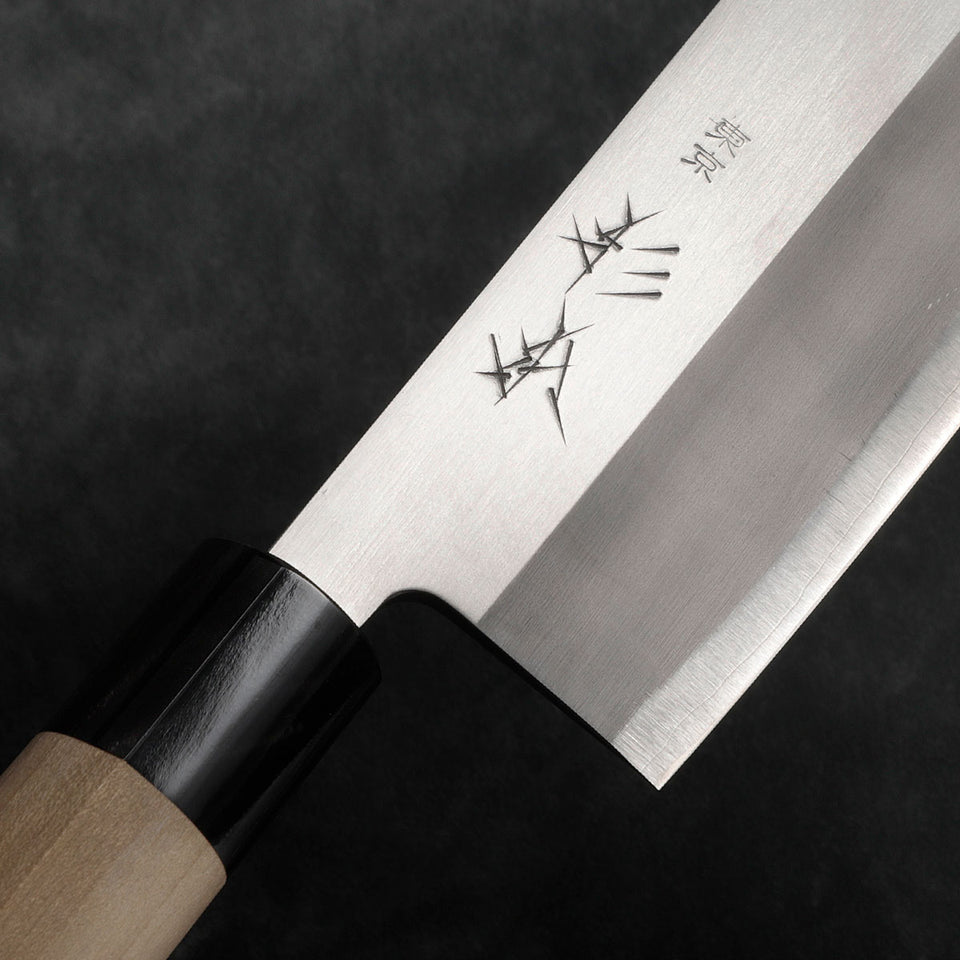
      Nakiri Knife - Vegetable Cutting/Slicing/Mincing Premium Japanese Artisanal Knife

      $290.00
      Quick view

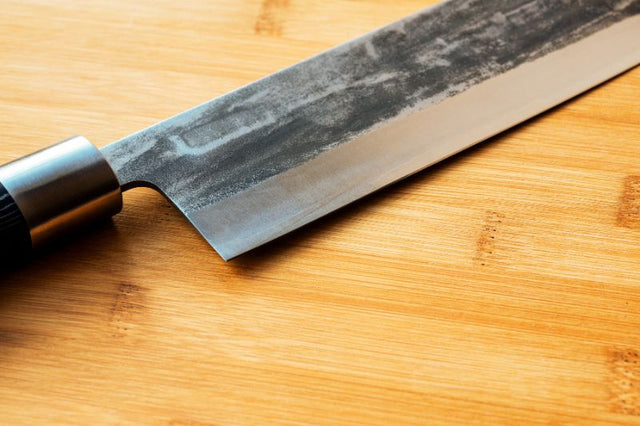
      The Nakiri knife (菜切包丁) is a highly versatile and efficient tool, traditionally used in Japan for cutting vegetables with supreme speed and precision. Its thin, lightweight rectangular blade allows for quick, clean, and effortless slicing without the need for a rocking motion, keeping your knuckles safely away from the cutting board while delivering beautifully thin, even slices every time. Perfect for delicate vegetables and even light filleting tasks, the Nakiri offers incredible control and minimizes damage to ingredients, preserving their flavor and texture. Handmade and sharpened by master bladesmiths, this 165mm (6.5 inches) knife features a traditional Japanese magnolia wood handle with a plastic collar and is available with either CM Stainless for easy maintenance or Kasumi Superlative Carbon Steel for a more traditional sharpening experience. With its unparalleled usability from tip to tail, the Nakiri is an invaluable asset for anyone seeking speed, consistency, and elegance in their kitchen work.


      Related Articles You May Be Interested

      Difference Between Sharpener and Whetstone
      Difference Between Sharpener and Whetstone
      How to Sharpen a Knife Using a Whetstone
      How to Sharpen a Knife Using a Whetstone
      Everything You Need to Know about Japanese Knife Materials
      Everything You Need to Know about Japanese Knife Materials
      How Can I Prevent My Japanese Knife From Getting Rusty After Each Use?
      How Can I Prevent My Japanese Knife From Getting Rusty After Each Use?
      How Often Should I Bring a Knife for Sharpening
      How Often Should I Bring a Knife for Sharpening

      Get Free Bonus Books

      Join Japanese Knife Club

      Sign up for free to the Japanese Knife Club to get advice and exclusive articles about how to choose Japanese Knives, and tips and tricks for using Japanese knives.

      Unsubscribe anytime. It’s free!

      About the author

      Kei Nishida

      Kei Nishida

      Author, CEO Dream of Japan

      info@japanesegreenteain.com

      Certifications: PMP, BS in Computer Science

      Education: Western Washington University
      Kei Nishida is a passionate Japanese green tea connoisseur, writer, and the founder and CEO of Japanese Green Tea Co., a Dream of Japan Company.

      Driven by a deep desire to share the rich flavors of his homeland, he established the only company that sources premium tea grown in nutrient-rich sugarcane soil—earning multiple Global Tea Champion awards.

      Expanding his mission of introducing Japan’s finest to the world, Kei pioneered the launch of the first-ever Sumiyaki charcoal-roasted coffee through Japanese Coffee Co. He also brought the artistry of traditional Japanese craftsmanship to the global market by making katana-style handmade knives—crafted by a renowned katana maker—available outside Japan for the first time through Japanese Knife Co.

      Kei’s journey continues as he uncovers and shares Japan’s hidden treasures with the world.

      Learn more about Kei

      Related Posts

      How to Choose Your First Japanese Knife
      How to Choose Your First Japanese Knife

      Learn about the craft of Japanese knifemaking and find your ideal fit. You can browse the many types and features with t

      Read More
      Houchoushiki - A ceremony that celebrates the art of Japanese Knives
      Houchoushiki (庖丁式) - A Ceremony that Celebrates the Art of Japanese Knives

      The Houchoushiki ceremony is a beautiful celebration of Japan's knife culture. Originating from Edo period, it honors th

      Read More
      1 comment on Choosing Sharpening Stones for Japanese Knives
      • Paul
        PaulJune 30, 2023

        Looking forward to learning how to maintain my knives Thank you for the info

      Leave a comment

      Your email address will not be published..

      Your cart is currently empty.

      Start Shopping

      Select options