Skip to content

What are Santoku knives used for?

Santoku knives are Japanese knives primarily used for slicing, dicing, and chopping vegetables, fruits, and boneless meats. The word "santoku" means "three virtues" or "three uses," referring to the knife's ability to handle three types of cutting tasks: chopping, slicing and dicing.

Santoku knives can also be used for more delicate tasks such as mincing herbs or garlic, and some models even have a granton edge (small oval-shaped indentations on the blade) that helps prevent food from sticking to the blade.

Santoku knives are versatile and valuable tools in the kitchen, particularly for those who enjoy preparing Japanese or Asian-style cuisine.

The Santoku knife was created in response to changes in the Japanese diet, which was becoming increasingly influenced by Western cuisine. Unlike traditional Japanese knives designed for specific tasks, the Santoku knife was developed as a general-purpose kitchen knife that could perform a wide range of tasks. It was intended to be a more versatile alternative to the Japanese vegetable knife, known as the Nakiri, which is primarily used for chopping vegetables.

The design of the Santoku knife combined the features of a Western chef's knife, such as a wider blade and a curved cutting edge, with the traditional Japanese knife design.

The Santoku knife quickly became popular in Japan and began to gain popularity in other parts of the world in the 1980s and 1990s. Today, it is considered a staple in many home and professional kitchens around the world.

In recent years, various knife makers have adapted and modified the Santoku knife, resulting in a wide range of styles, sizes, and materials. However, the basic design principles of the Santoku knife remain true to its origins as a versatile and efficient kitchen tool.

What Santoku knife looks like?
What are Santoku knives used for?

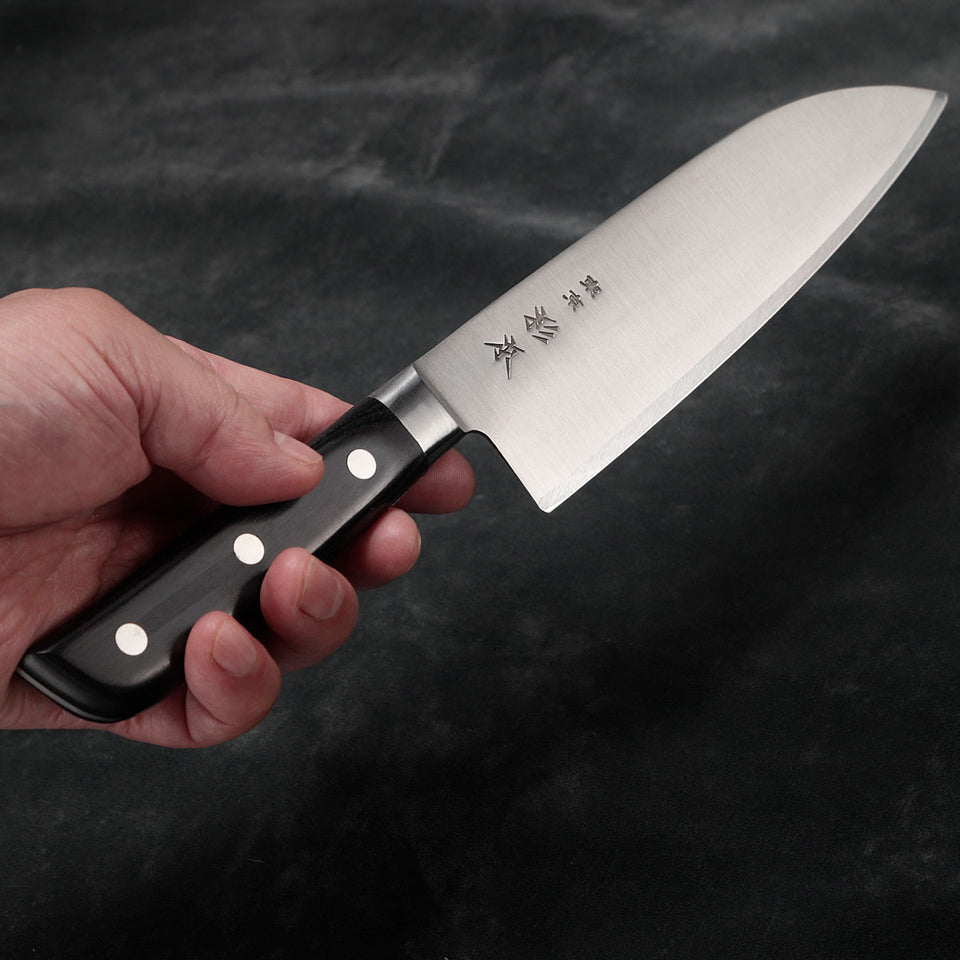
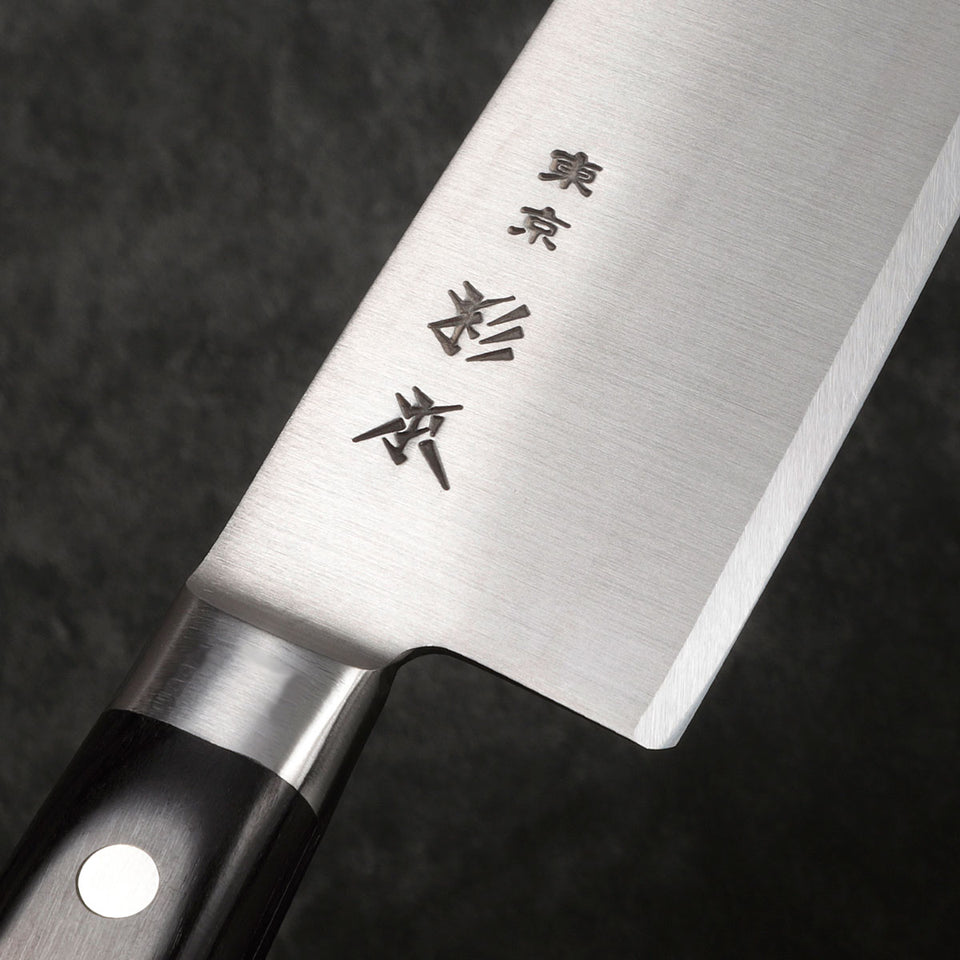
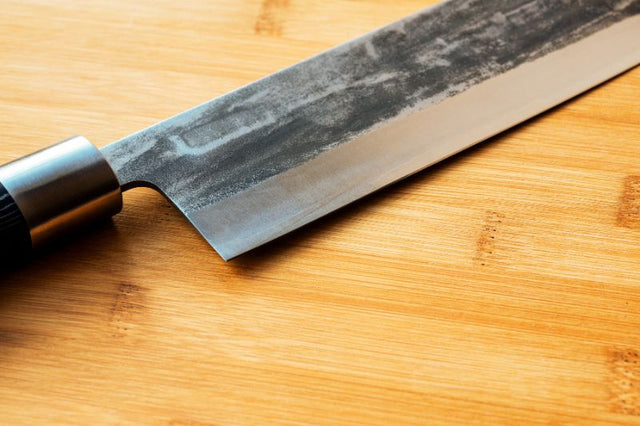
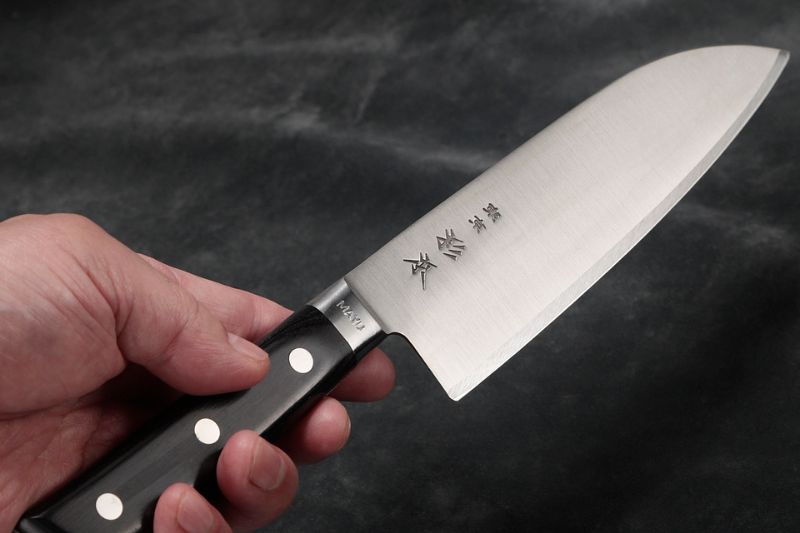
A Santoku knife typically has a distinctive, wide blade with a straight cutting edge and a flat spine that curves down to meet the sharp, angled tip. The blade is typically shorter than a traditional Western chef's knife, usually around 5 to 8 inches long.

The blade of a Santoku knife is typically thinner and lighter than a Western chef's knife and is made of high-quality, hard steel. Some models may also feature a granton edge, a row of small, oval-shaped indentations along the blade that help prevent food from sticking to the blade while cutting.

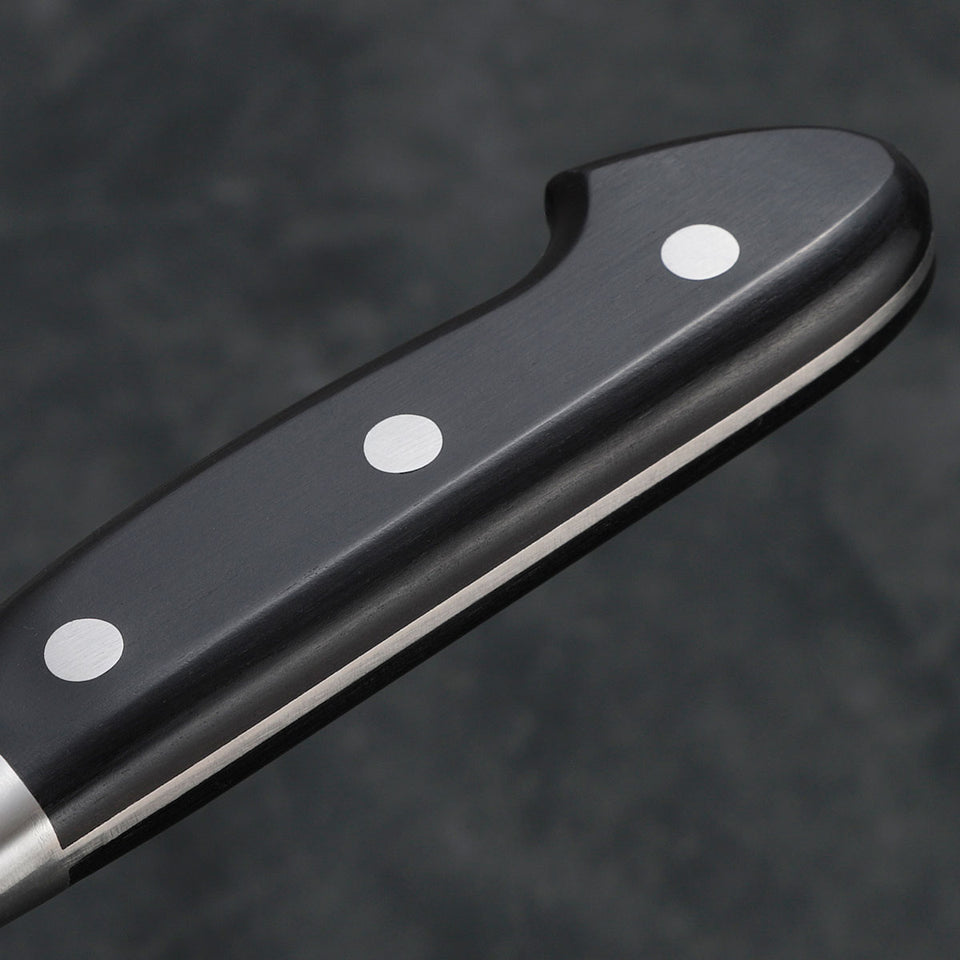
The handle of a Santoku knife may be made of wood, plastic, or composite materials, and is typically designed to provide a comfortable grip and balance in the hand. Some models may also feature a full tang, where the blade extends through the handle, providing added strength and stability.

Buying a Santoku knife

When choosing a santoku knife, there are several factors to consider. First, look for a high-quality blade made from a durable material such as high-carbon stainless steel. The blade should be sharp and maintain its edge well.

You'll also want to consider the handle of the knife. Look for a comfortable grip that feels secure in your hand, as you'll use the knife for extended periods.

Finally, consider the size of the knife. Santoku knives typically come in sizes ranging from 5 to 7 inches, so choose a size that feels comfortable and well-balanced for your hand and the tasks you'll be using it for.

Overall, a well-made santoku knife can be a valuable addition to any kitchen, providing versatility and precision for various cooking tasks.

What are Santoku knives used for? — Frequently Asked Questions

What does the "three uses" in santoku actually refer to?

The "three uses" or "three virtues" — the literal meaning of santoku — refers to the three categories of food the knife handles well: meat, fish, and vegetables. It's a deliberate naming choice. Older Japanese kitchen knives like the deba (fish) and nakiri (vegetables) were single-purpose; the santoku was designed in the 1940s as a household answer to the Western chef's knife, meant to do all three jobs adequately rather than specialize. The name signals that breadth, and it's why the santoku became Japan's most common home kitchen knife — one knife for everyone in the family, regardless of what they're cooking.

Can a santoku replace my chef's knife?

For most home cooking, yes. A santoku handles vegetables, boneless meat, fish fillets, herbs, and fruit comfortably. The two areas where it falls short of a Western chef's knife: long slices of large items (a whole roast beef, a watermelon) where the chef's knife's extra length helps, and rocking-motion cooking — the santoku's flatter edge favors push-cuts. If you're used to rocking your chef's knife and don't want to learn a new motion, a gyuto is a closer Japanese match. If you're open to push-cutting, the santoku is more comfortable in smaller hands. See our gyuto guide for the alternative.

Everything You need to know about Gyuto Knife

Is a santoku good for cutting meat?

Boneless meat, yes — chicken breast, pork loin, beef strip, fish fillets, all very comfortable. The santoku's thin blade glides through muscle fiber cleanly without tearing, and the moderate length (165-180 mm) is enough to cut a strip in one stroke without sawing. What it can't do well: anything with bones (chicken thighs with bone, pork chops, lamb on the bone). For those, you'd want a heavier knife or a cleaver. Trying to chop through a chicken bone with a santoku is one of the most common ways people chip the edge.

How to minimize edge chipping on Japanese knives

How is a santoku different from a nakiri?

Both are short, blocky-looking Japanese knives, but they're built for different jobs. A nakiri is purely a vegetable knife — perfectly flat edge, square tip, no curve, lighter weight. A santoku is a generalist — slight curve toward the tip, rounded "sheepfoot" shape, slightly thicker spine to handle meat and fish too. If you cook vegetables only, the nakiri is faster (the flat edge doesn't miss spots when you push-cut). If you cook a mix, the santoku is more useful as a single knife. Browse our Japanese knife collection for the comparison.

What is a Nakiri knife?

What size santoku is best for home use?

For most home cooks, a 165-180 mm santoku. The 165 mm is the most popular Japanese household size — it fits all but the very largest hands, suits a normal home cutting board, and is light enough to use comfortably for an hour of meal prep without fatigue. The 180 mm version gives you a little more cutting length for things like cabbage and pork shoulder. Below 165 mm starts to feel too short for most adults; above 180 mm and you're essentially in gyuto territory. Most beginners are happiest with 165 mm.

Buy Santoku Knife

Santoku Knife - Premium Japanese Artisanal Knife

$250.00
Quick view

The Santoku knife is revered for its control, precision, and sharpness, making it the master of slicing, mincing, and dicing in both professional and home kitchens. Traditionally favored for high-precision tasks like sushi and sashimi preparation, its versatility extends to cutting meat, fish, and vegetables with ease, supported by a comfortable, easy-to-control handle. Handmade by master bladesmiths using techniques passed down through generations, each Santoku offers extraordinary quality that elevates every slice. Named after the "Three Virtues"—meat, vegetables, and fish—the Santoku’s shorter, thicker, straight-edged blade with a sheep foot-shaped tip enhances the appearance, taste, and texture of your food while delivering exceptional performance with minimal maintenance, thanks to its CM stainless steel and Western-style handle. With a blade length of 170mm (6.7 inches), it is the ultimate daily knife for any cooking enthusiast.


Related Articles You May Be Interested

Japanese Single Bevel Knife vs Thai Cleaver
The Differences Between the Gyuto, Santoku, and Bunka
Japanese Single Bevel Knife vs. Chinese Cleaver (Cai Dao) – 5 Battles You Don’t Want to Miss
Everything You Need to Know About Santoku Knives
5 Best Japanese Chef Knives for Plant-Based and Vegetarian Kitchens: Featuring Opinions from real-life experts on Japanese knife

Get Free Bonus Books

Join Japanese Knife Club

Sign up for free to the Japanese Knife Club to get advice and exclusive articles about how to choose Japanese Knives, and tips and tricks for using Japanese knives.

Unsubscribe anytime. It’s free!

About the author

Kei Nishida

Kei Nishida

Author, CEO Dream of Japan

info@japanesegreenteain.com

Certifications: PMP, BS in Computer Science

Education: Western Washington University
Kei Nishida is a passionate Japanese green tea connoisseur, writer, and the founder and CEO of Japanese Green Tea Co., a Dream of Japan Company.

Driven by a deep desire to share the rich flavors of his homeland, he established the only company that sources premium tea grown in nutrient-rich sugarcane soil—earning multiple Global Tea Champion awards.

Expanding his mission of introducing Japan’s finest to the world, Kei pioneered the launch of the first-ever Sumiyaki charcoal-roasted coffee through Japanese Coffee Co. He also brought the artistry of traditional Japanese craftsmanship to the global market by making katana-style handmade knives—crafted by a renowned katana maker—available outside Japan for the first time through Japanese Knife Co.

Kei’s journey continues as he uncovers and shares Japan’s hidden treasures with the world.

Learn more about Kei

Related Posts

How to Spot a Fake Japanese Knife

With the help of our in-depth tutorial, learn how to identify fake Japanese knives. Make sure you receive the genuine ar

Read More
How to Choose Your First Japanese Knife

Learn about the craft of Japanese knifemaking and find your ideal fit. You can browse the many types and features with t

Read More
Leave a comment

Your email address will not be published..

Your cart is currently empty.

Start Shopping

Select options