Skip to content

Japanese Knives vs French Thiers Knives

With regard to the global cream of the crop in terms of cutlery, two European regions stand out for their reputation as mass producers of high-quality knives: Solingen in Germany and Thiers in France. While these two used to dominate the market when it came to Western-style knives, this is no longer the case as the Japanese have presented competition with their excellent selection of Western-style knives.

French Thiers Knives

Still, the German and French knife brands are rooted in tradition and reputation. The Thiers knives indeed maintain their stature in the industry.

When it comes to tradition, Thiers has it in spades. Its medieval blacksmiths left a long-lasting legacy. Sometime between the 13th and 15th centuries, Thiers, a commune of Auvergne in central France, started crafting the fine kitchen, table, and pocket knives that the town is known for today.

In modern times, Thiers is considered a major historical center of knife manufacturing, serving as headquarters to around a hundred companies as well as a cutlery museum. To be a Thiernois cutler is a proud occupation involving 700 years of knowledge and craft.

In the early 1990s, Thiers cutlers united to create a knife that symbolized and reflected the mastery of their town, and thus were Le Thiers knife and the Brotherhood of Le Thiers knife born.

In the more than 20 years that Le Thiers knife has stood as the emblematic knife of French cutlery, it has become available in many versions. Although these are created by different companies that belong to the brotherhood, they are produced in careful accordance with the established specifications of their organization.

Le Thiers knives can be in the form of pocket, table, or kitchen knives. You can identify a Le Thiers knife by the recognizable logo with the distinctive T right on the blade. It would state Le Thiers followed by “par *the brand that manufactured it,” e.g. Le Thiers par Neron.

Japanese Knives

Japan is also a country recognized for its historical knife craftsmanship. The Japanese have their own traditional knives, but since the inclusion of Western-style knives among their products, they have also established a reputation for being an excellent source for these.

The Japanese put their own mark in their version of Western-inspired knives. For instance, while they also make double-beveled blades like French Thiers knives, they have engineered an uneven style that achieves an outstanding sharpness similar to their traditional single-edged design.

Double and Single Bevel

Click here to learn more about the differences between single vs double bevel articles I wrote here.

The Japanese Western-style knives may look very closely like European-produced knives, but they bear subtle dissimilarities that make a world of difference. What are these?

The Main Distinctions

Both the Japanese knives and French Thiers knives are known for their quality and craftsmanship. Both types of knives are used by professional chefs and home cooks alike, but there are some key differences between them.

The Kind of Steel

One of the main differences between Japanese knives and French Thiers knives is the steel used to make them. Japanese knives are typically made from high-carbon steel, which is known for its sharpness and ability to hold a fine edge.

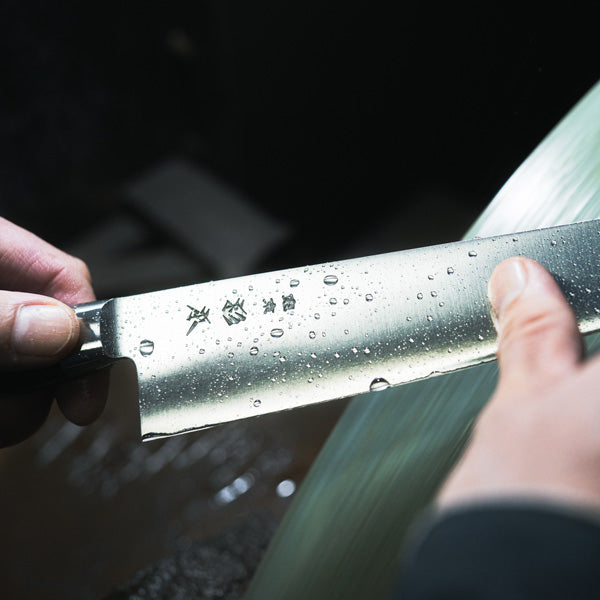
There's a caveat, though. As a rule, the harder the steel, the more prone it is to breaking. The lower flexibility more easily results in damage from the wrong movement. Also, harder steel is more difficult to sharpen. Generally, Japanese knives are better honed with a ceramic sharpening stone instead of a honing steel.

Nonetheless, science and art back this choice of harder steel. The asymmetrical angled edged design cannot be held by a softer kind of steel. Attempting the sharpness achieved by these angles would crack or chip a lower-grade steel.

On the other hand, French Thiers knives are typically made from a softer, more flexible stainless steel. This steel is more durable as well as resistant to rust and corrosion, but it is less sharp than high-carbon steel. While it's purported to be longer-lasting and more versatile, it also calls for more frequent honing.

Although traditional Japanese knives are made of carbon steel, many Japanese knives are now made with various materials similar to stainless steel, like French Thiers. An example is our CM Rust-Resistant Stainless Special Alloy Steel.

The Blade Edge

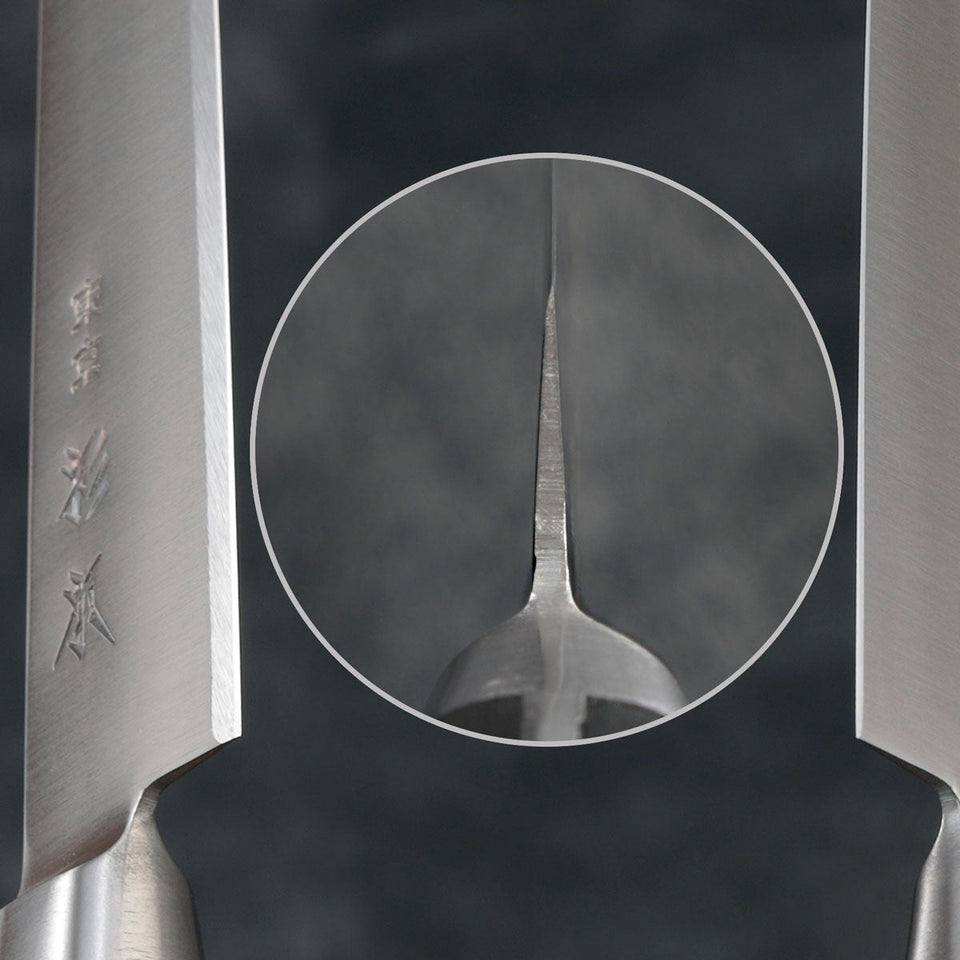
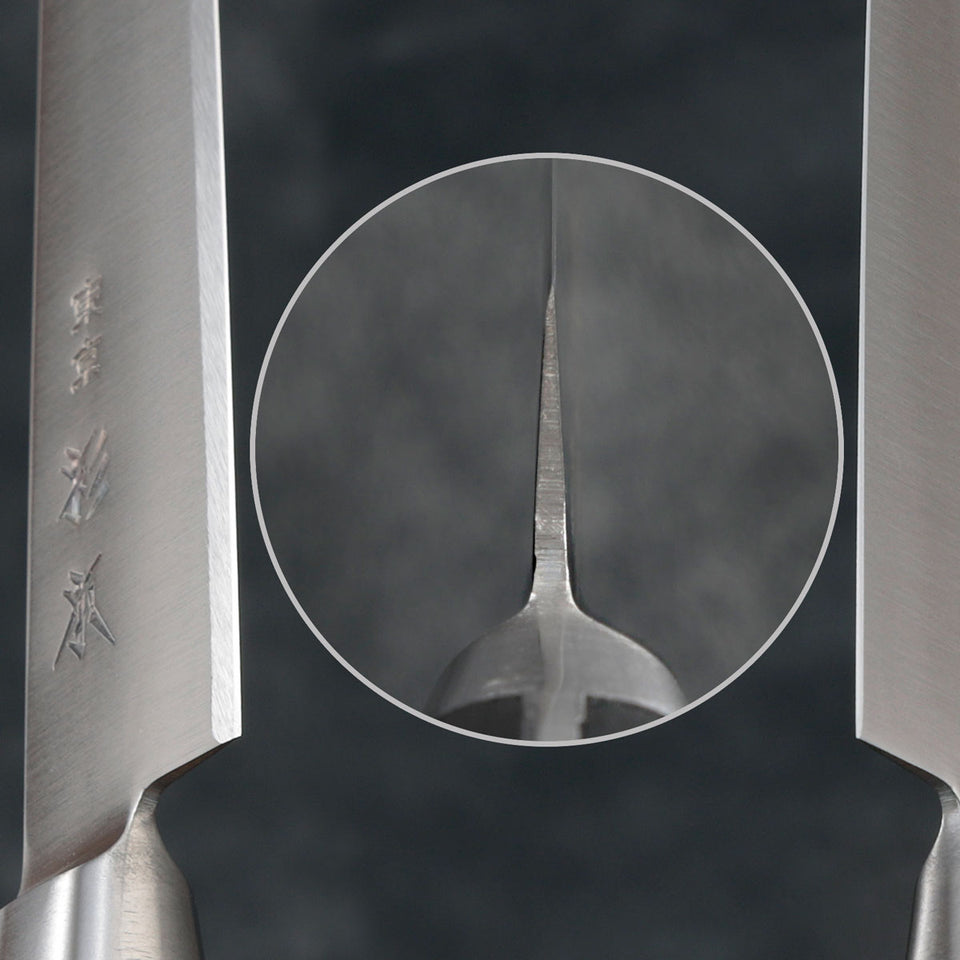
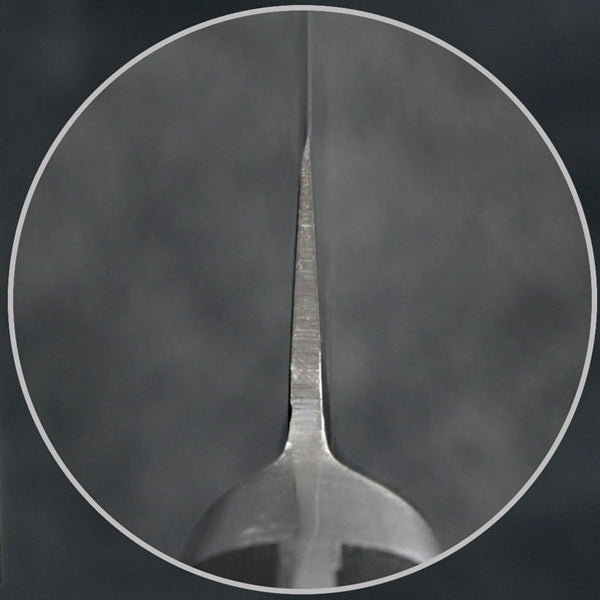
As mentioned, an important difference between these two types of knives is the way they are sharpened. Japanese knives are sharpened at a much steeper angle than French Thiers knives. This makes them sharper and more precise but also more delicate and prone to chipping if not executed with Japanese knife-making mastery.

On the other hand, French Thiers knives are sharpened at a shallower angle, making them more durable and resistant to chipping but also less sharp. This means that you encounter more resistance during use.

This V-shaped blade may not be as sharp, but it’s more convenient to resharpen. A 50:50 edge is easy to achieve. It is also easily manageable no matter the user’s dominant hand. This is not the case for Japanese blades, which are designed for right-handed users. However, many manufacturers produce Japanese Western-style models that can be re-ground for left-handed users like us.

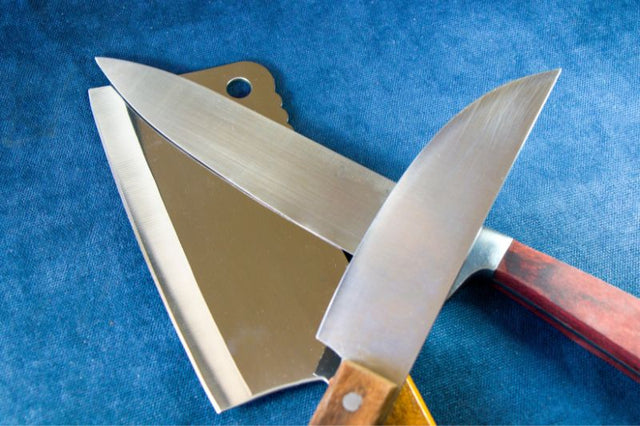
Compared to other European chef's knives, the French version often has a straighter blade edge along the heel, but it curves up toward the point, creating a more triangular shape. Japanese knives could manifest a similar profile to French knives but would be thinner in the cross-section.

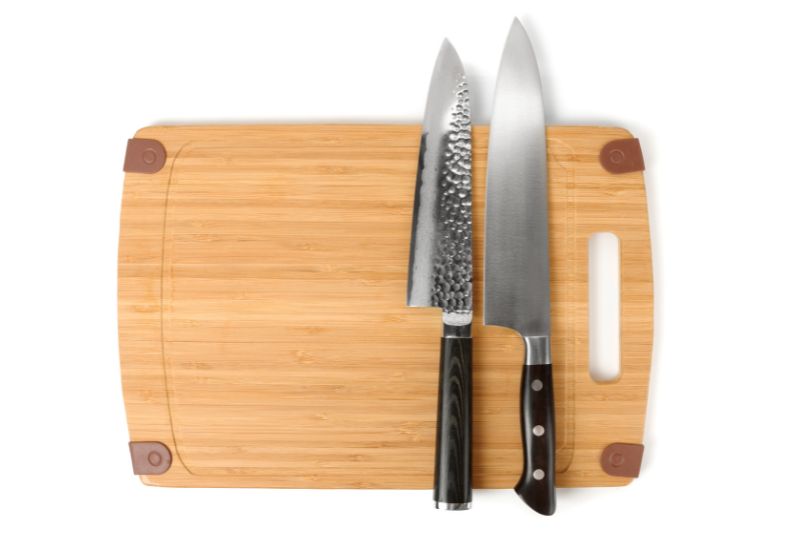
German Knife, French Knife, and Japanese Knife

french knife and Japanese knife

A Japanese gyuto (chef’s knife) on the left and a French chef’s knife on the right

The Knife Handle

In terms of design, Japanese knives have a more minimalist and traditional look, with a simple, straight handle and a long, thin blade. On the other hand, French Thiers knives have a more ornate and traditional look, with a curved handle and a thicker, more robust blade. They also boast a full-tang construction.

The tang is the steel part that extends from the blade and secures itself into the handle. Full tang means that the steel of the blade runs all the way to the other end of the knife, following the shape of the handle as well.

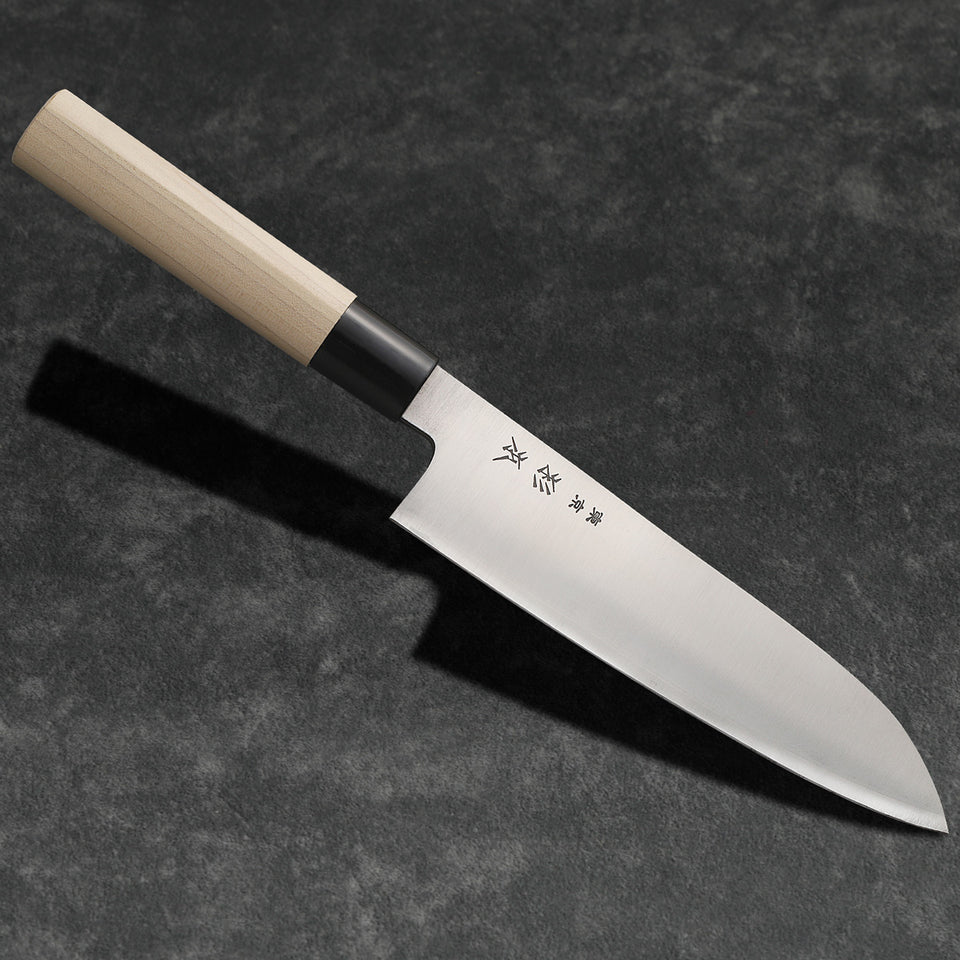
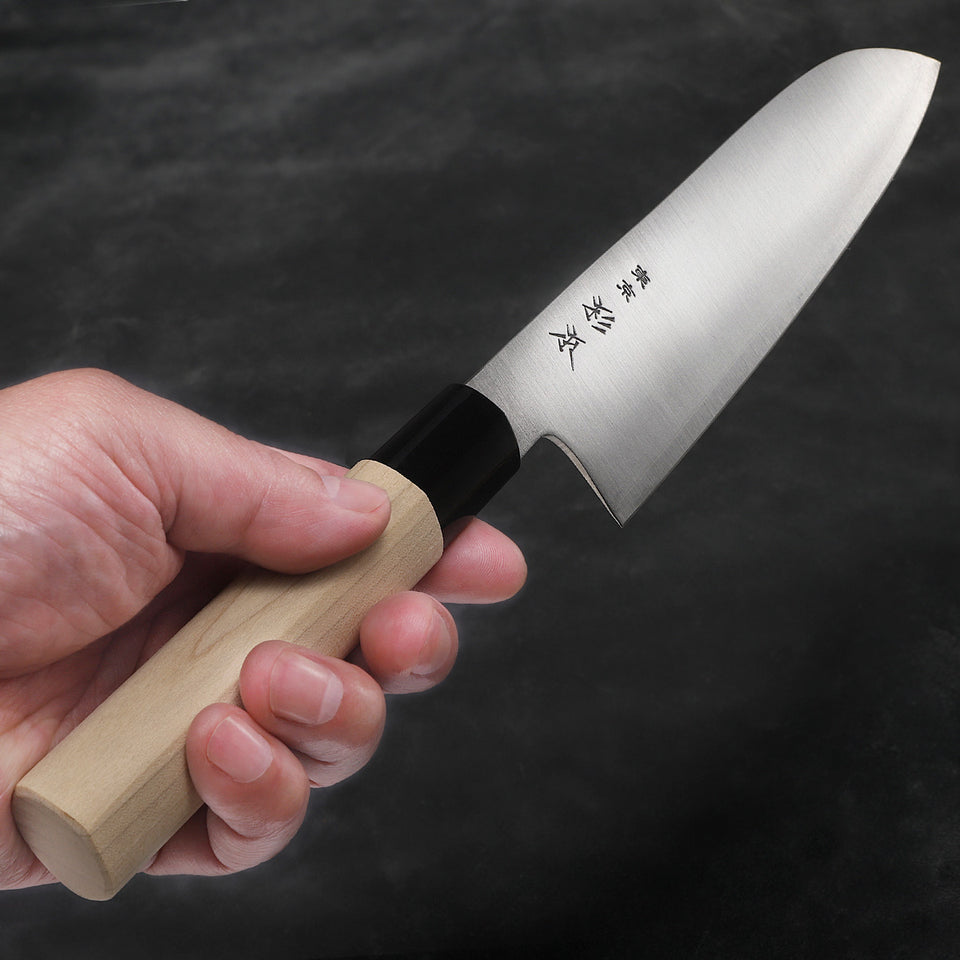
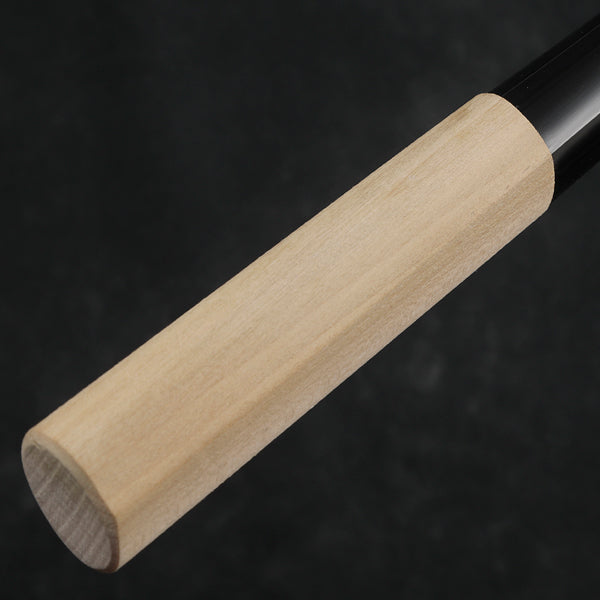
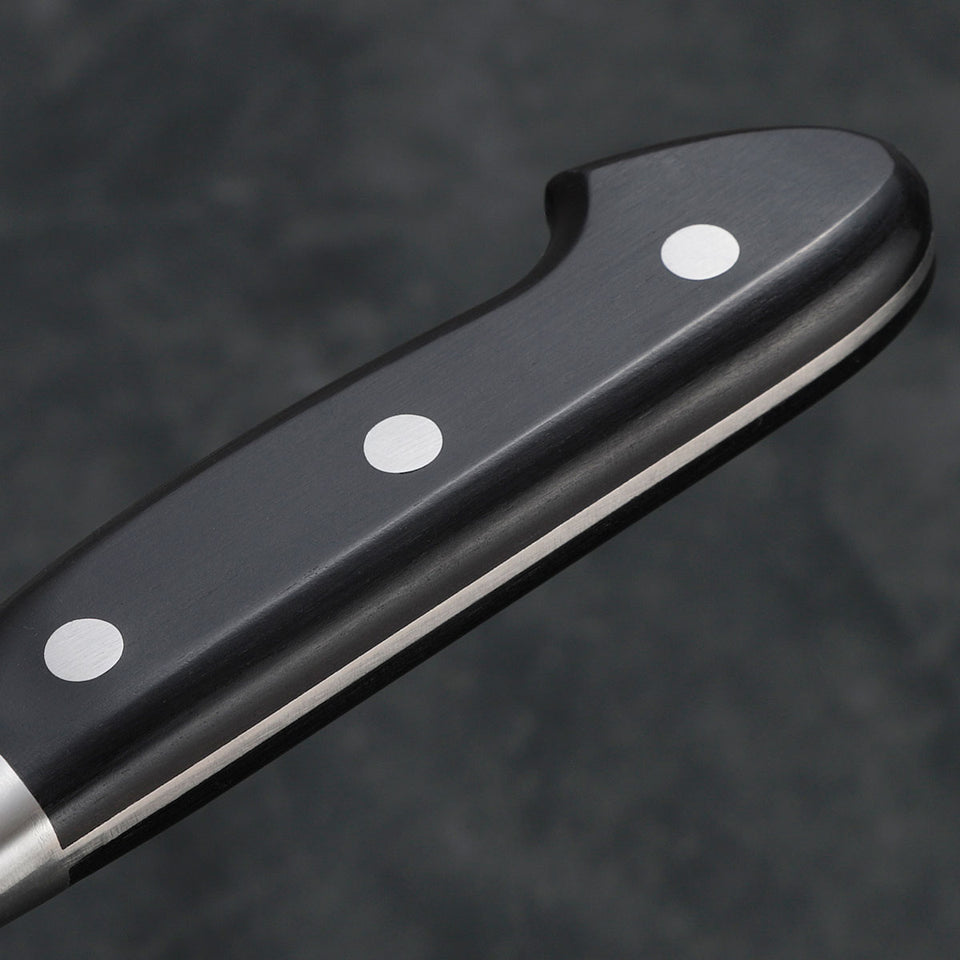
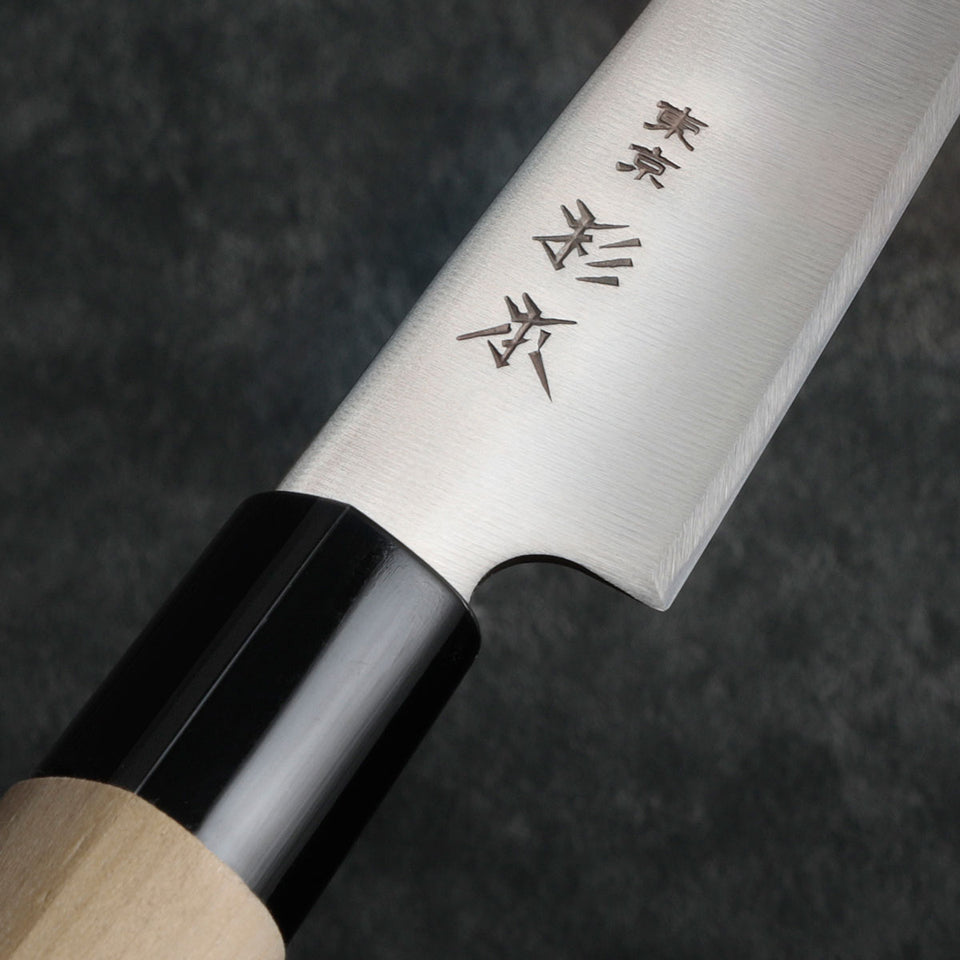
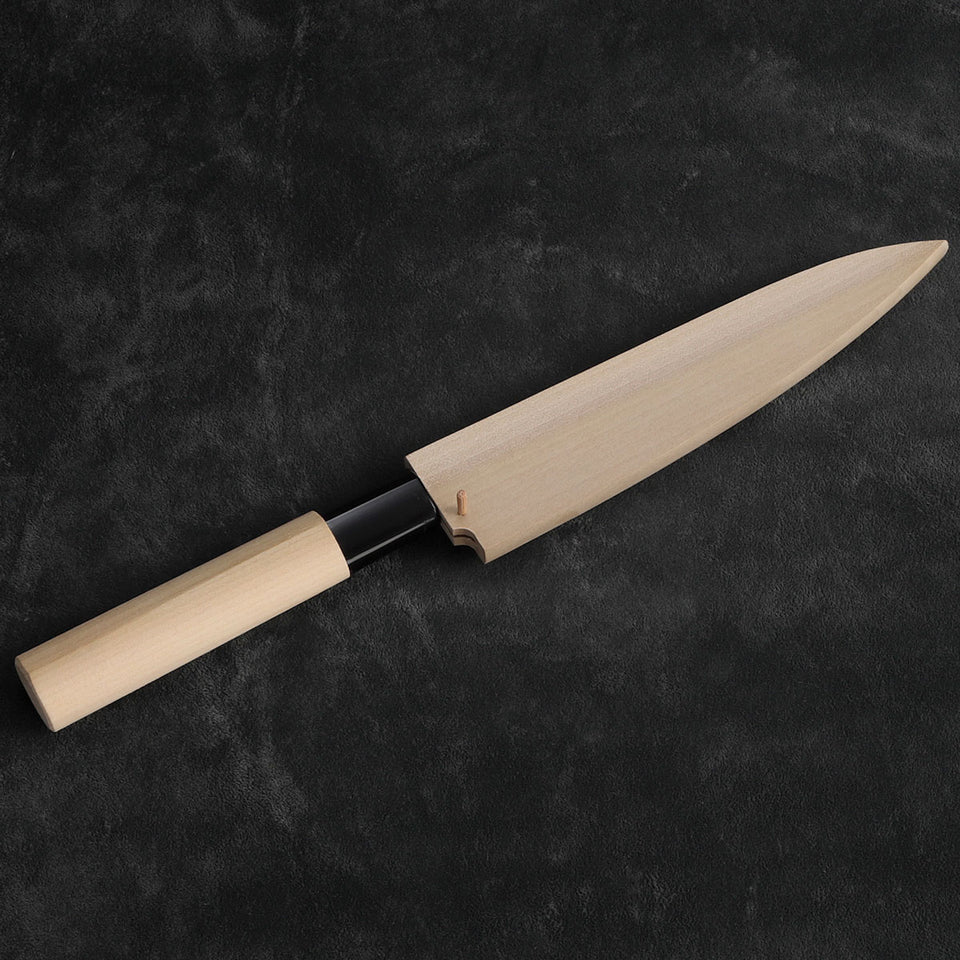
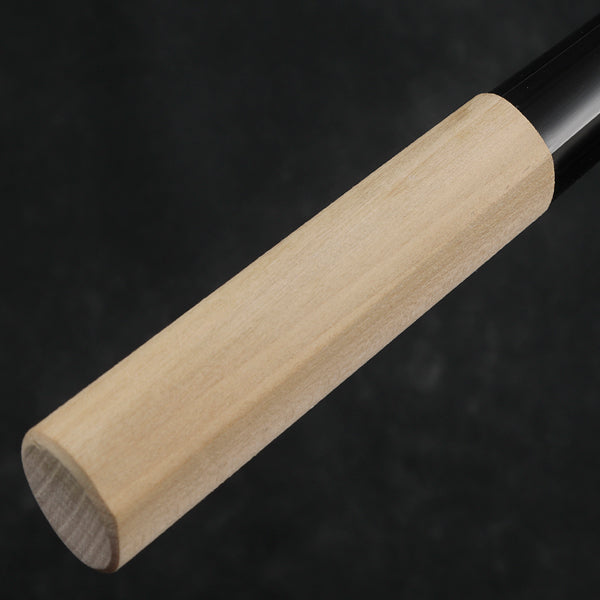
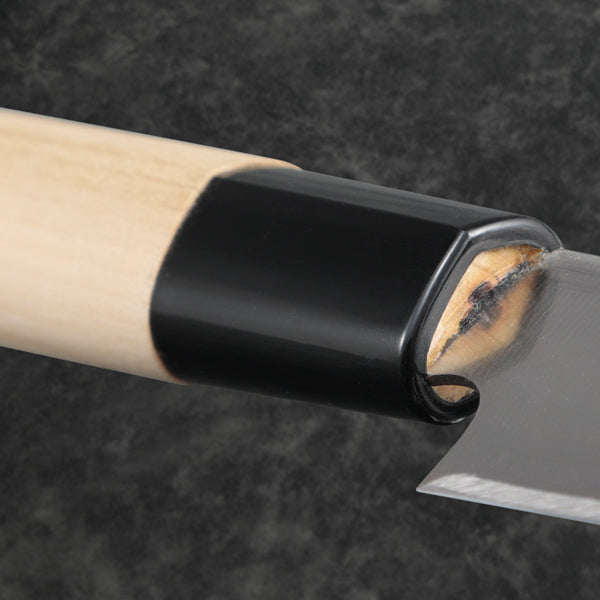
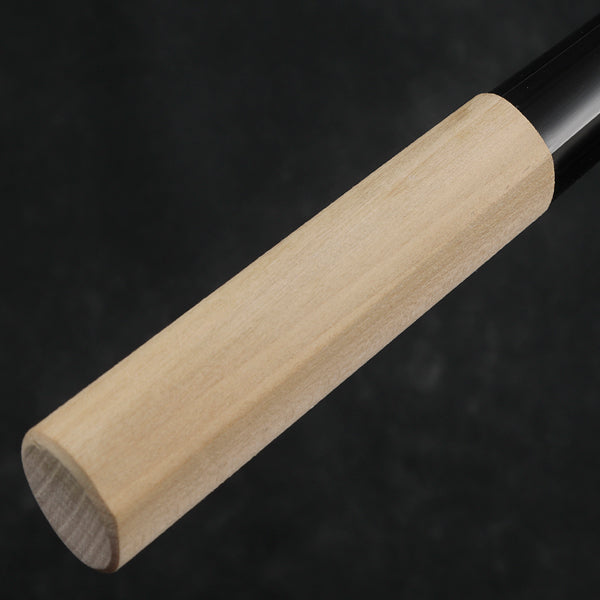
Japanese knives typically have a hidden-tang construction, meaning the steel is embedded only partway into the handle. In the past, Japanese Western-style knives were also made with Western-style handles, but they have since adopted the lighter hidden-tang design. Japanese kitchen knives usually also come with a wooden handle, which needs to be maintained with oil or wax treatment. On the other hand, French Thiers knives come in a wider variety of handle materials.

French Le Thiers chef’s knife with a full tang handle
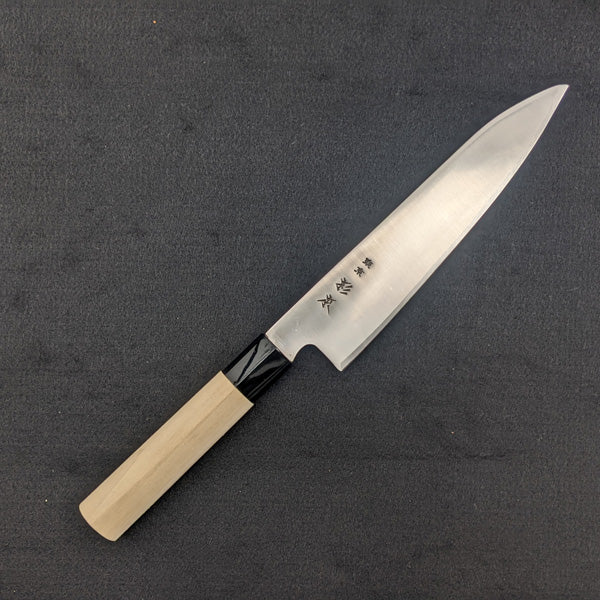
Japanese chef’s knife with a hidden tang handle

The Overall Weight

Considering the combination of their different features (thinner blade, hidden tang, etc.), Japanese knives are typically lighter in weight than French Thiers knives. This makes them easier to handle and maneuver but also less durable and more prone to damage. Meanwhile, French Thiers knives are typically hardier but slightly more challenging to handle and utilize for its heavier weight.

The Usage

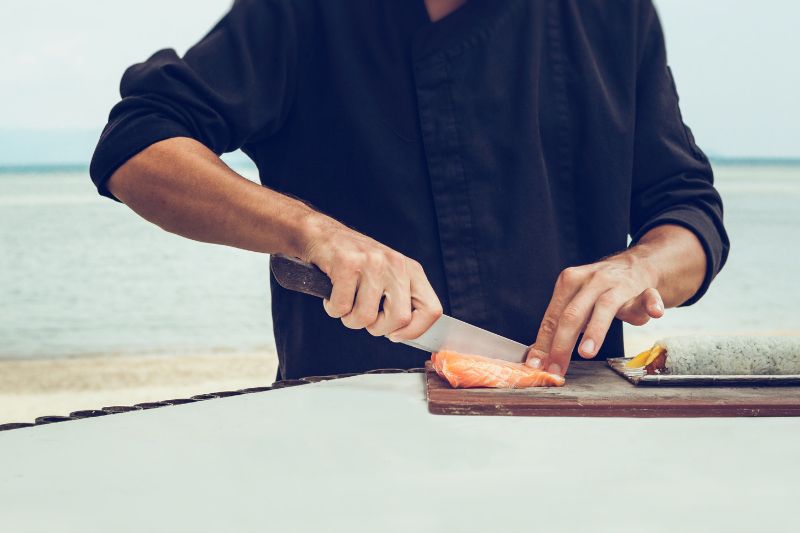
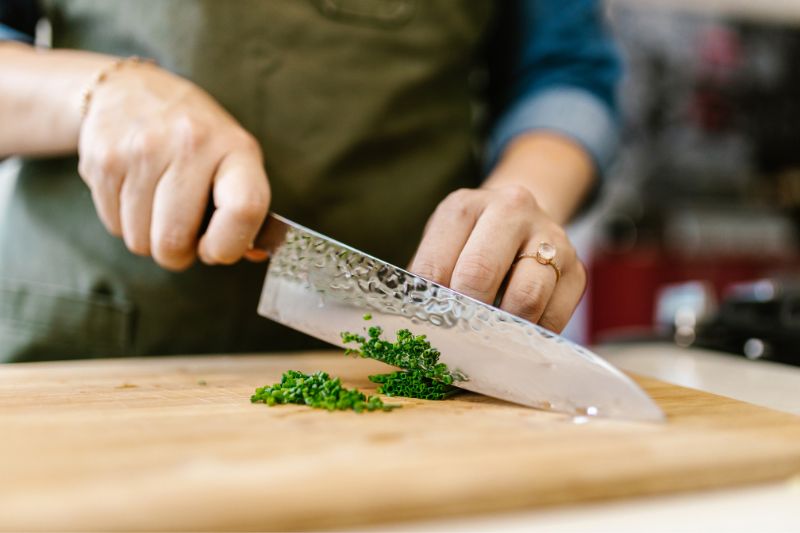
In terms of purpose, Japanese knives are frequently used for slicing and cutting raw fish and meats, while French Thiers knives are primarily used for chopping meat and crushing fruits, vegetables, and herbs.

Many chefs and home cooks find it worthwhile to invest in a combination of both. For instance, you may use a French knife for hard chopping and cutting beef and a Japanese knife for slicing and portioning fish if you want to optimize the best attributes of each kind.

Summary

In conclusion, Japanese and French Thiers knives are both high-quality, making them well-regarded worldwide. However, some notable differences exist between them, including steel type, design, and weight. In addition, each type of knife has its own unique set of characteristics that make it better suited for certain tasks, and it ultimately comes down to personal preference.

Japanese Knives vs French Thiers Knives — Frequently Asked Questions

How do I tell a real Thiers knife from a knockoff?

Real Thiers knives carry the "Thiers" appellation mark — a protected geographical indication similar to Champagne for wine — and are made by one of the certified workshops in the Thiers region of central France. The blade is usually marked with the maker's name (Laguiole, Goyon-Chazeau, Forge de Laguiole) plus "Thiers" or "Made in France." Knockoffs from outside France often use the word "Laguiole" (which is not legally protected) without specifying Thiers as origin. Check for the maker's mark and a credible price ($80+) before buying.

Which has harder steel — a French Thiers knife or a Japanese knife?

Japanese, almost always. Thiers makers use traditional French stainless steels (often Sandvik 12C27 or X50CrMoV15) hardened to about 56–58 HRC, similar to German Solingen blades. Japanese kitchen knives use harder steels (VG-10, blue paper, white paper, SG2) hardened to 60–63 HRC, which means they hold a sharper edge for longer. The trade-off is the Japanese edge is more brittle. For pure cutting performance, a Japanese gyuto outperforms a Thiers chef's knife of the same price; for tradition, craftsmanship history, and table-knife elegance, Thiers wins. Read our Japanese vs German guide for the closest analog.

Are Thiers knives sharpened at a different angle than Japanese ones?

Yes — Thiers chef's knives are usually sharpened at 18–22 degrees per side, the typical Western angle. Japanese kitchen knives run 12–15 degrees per side, which is much shallower. The shallower Japanese angle creates a sharper edge but makes the blade more vulnerable to chipping on hard impacts. If you bring a Thiers knife to a Japanese sharpener, ask whether they'll keep the Thiers angle or take it down to Japanese specs — the wrong choice changes the knife's behavior.

What cuisines is a Thiers knife really designed for?

Classical French cuisine — long bone-in cuts of meat, dense root vegetables (carrots, celeriac, parsnips), and the kind of brunoise and macédoine vegetable prep that French technique demands. The slightly heavier blade and more obtuse edge angle handle dense produce and bone-in cuts without chipping. For Japanese cuisine, vegetable-forward cooking, or fish work, a Japanese knife suits the cuisine better. Most kitchens using Thiers knives also keep a Japanese petty or yanagiba alongside.

Why are Thiers knives so much more expensive than mass-market French knives?

Same reason real Japanese knives cost more than mass-market knives: protected origin, hand-finishing, and small workshop scale. A Thiers maker forges, grinds, and hand-finishes each blade in a workshop that produces maybe a few thousand knives a year — comparable to the better Japanese workshops. Mass-market French knives (Opinel, Sabatier "International") cost less because they're factory-produced at much higher volumes with cheaper steel and fully automated grinding. The Thiers price premium reflects the same artisan economics as Japanese hand-finished blades. Browse our Japanese knife collection for the Japanese-side comparison.

Related products
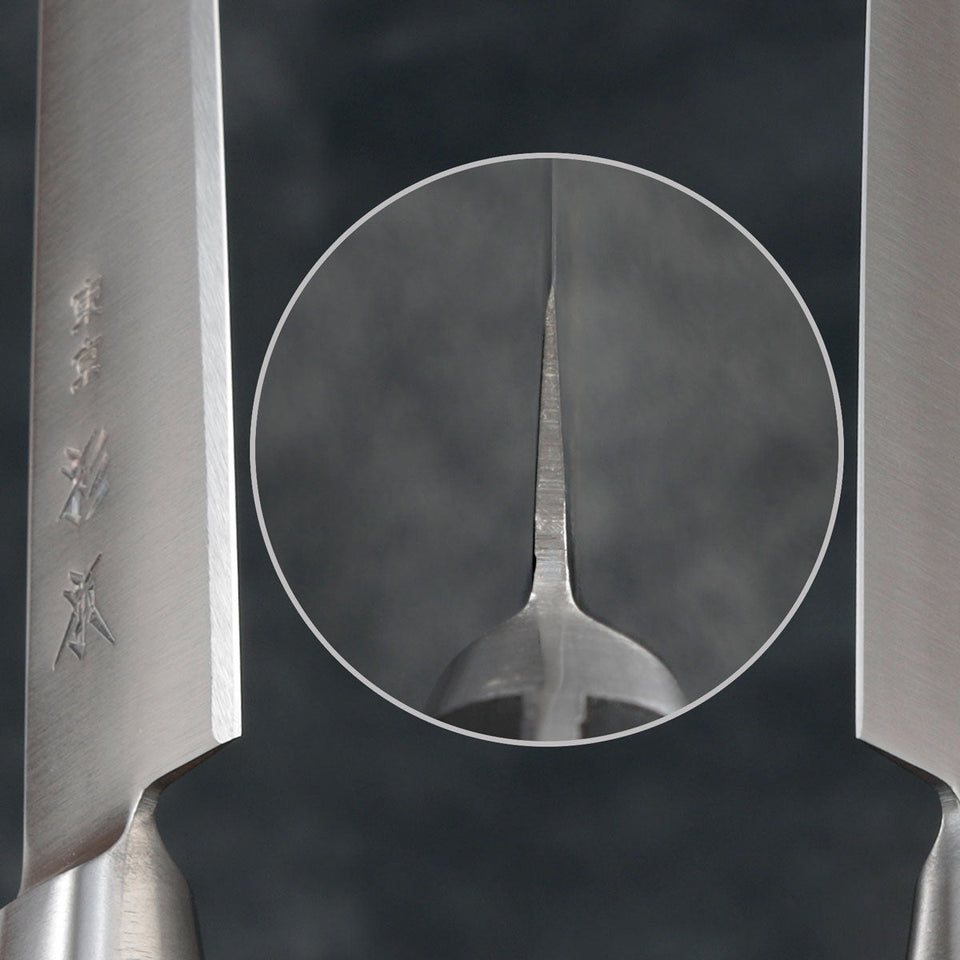
1 review

Gyuto Knife with Japanese Handle - All-purpose Premium Japanese Artisanal Knife

$360.00
Quick view

The Japanese Gyuto knife is the ultimate multi-purpose blade, perfect for everyone from beginner home cooks to seasoned chefs. As the Japanese counterpart to the Western chef’s knife—only thinner, lighter, and sharper—it excels at chopping, slicing, and dicing almost anything in the kitchen with effortless precision. This variation features a beautiful maple-wood handle that not only adds a natural, elegant aesthetic but also provides a smooth, earthy texture for enhanced control and comfort. Crafted with CM stainless steel, it offers exceptional sharpness, durability, and rust resistance, ensuring years of effortless slicing. With a blade length of 180mm (7.1 inches) and a double bevel edge, this handmade, hand-braided, and hand-sharpened Gyuto is a versatile and essential tool that elevates both the appearance and taste of your culinary creations. This product is available for shipping within the USA only.

Santoku Knife - Premium Japanese Artisanal Knife

$250.00
Quick view

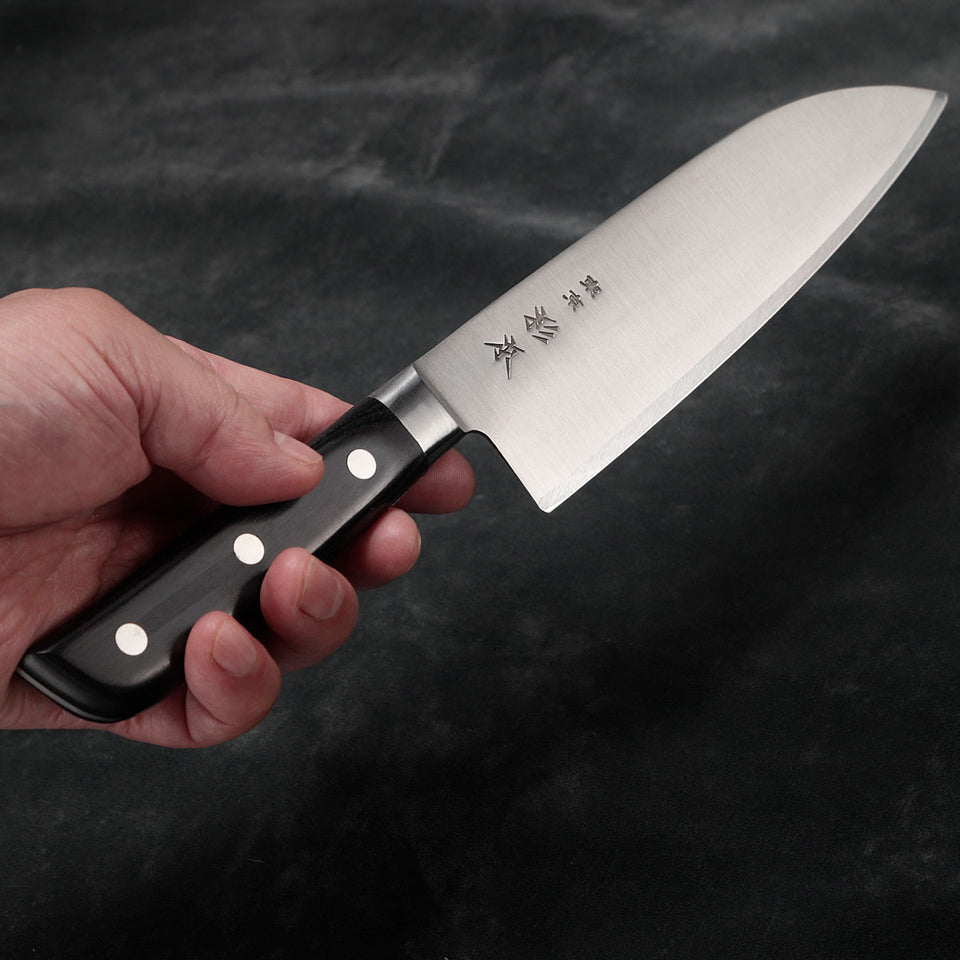
The Santoku knife is revered for its control, precision, and sharpness, making it the master of slicing, mincing, and dicing in both professional and home kitchens. Traditionally favored for high-precision tasks like sushi and sashimi preparation, its versatility extends to cutting meat, fish, and vegetables with ease, supported by a comfortable, easy-to-control handle. Handmade by master bladesmiths using techniques passed down through generations, each Santoku offers extraordinary quality that elevates every slice. Named after the "Three Virtues"—meat, vegetables, and fish—the Santoku’s shorter, thicker, straight-edged blade with a sheep foot-shaped tip enhances the appearance, taste, and texture of your food while delivering exceptional performance with minimal maintenance, thanks to its CM stainless steel and Western-style handle. With a blade length of 170mm (6.7 inches), it is the ultimate daily knife for any cooking enthusiast.

1 review

Nakiri Knife - Vegetable Cutting/Slicing/Mincing Premium Japanese Artisanal Knife

$290.00
Quick view

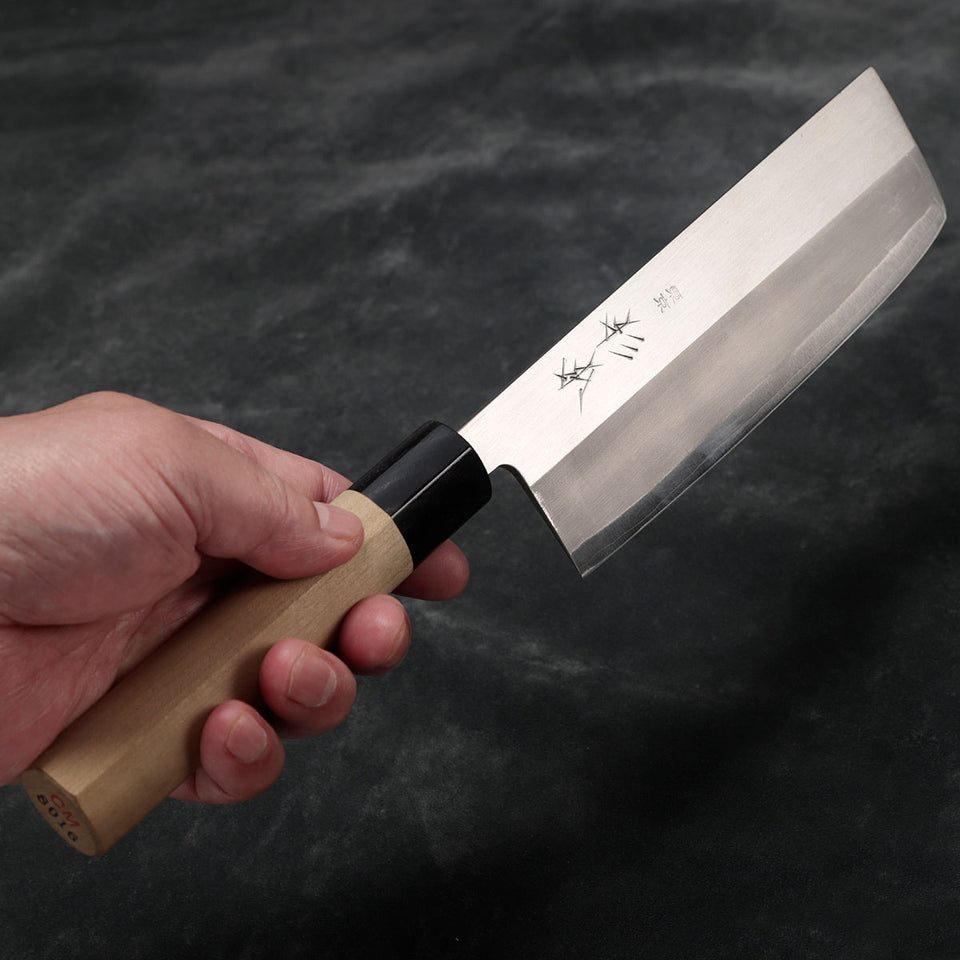
The Nakiri knife (菜切包丁) is a highly versatile and efficient tool, traditionally used in Japan for cutting vegetables with supreme speed and precision. Its thin, lightweight rectangular blade allows for quick, clean, and effortless slicing without the need for a rocking motion, keeping your knuckles safely away from the cutting board while delivering beautifully thin, even slices every time. Perfect for delicate vegetables and even light filleting tasks, the Nakiri offers incredible control and minimizes damage to ingredients, preserving their flavor and texture. Handmade and sharpened by master bladesmiths, this 165mm (6.5 inches) knife features a traditional Japanese magnolia wood handle with a plastic collar and is available with either CM Stainless for easy maintenance or Kasumi Superlative Carbon Steel for a more traditional sharpening experience. With its unparalleled usability from tip to tail, the Nakiri is an invaluable asset for anyone seeking speed, consistency, and elegance in their kitchen work.

1 review

Petty Knife with Japanese Handle - Premium Artisanal Knife

$179.00
Quick view

The Japanese-style Petty Knife is a premium artisanal blade designed for maximum control and precision, perfect for peeling, slicing, shaping, and trimming in tight spaces. Its fine-tipped 150mm (5.9 inches) blade unlocks new levels of creativity in shaping and presentation, helping elevate the beauty of every dish you create. Featuring a traditional maple-wood handle, it offers a smooth, natural texture that feels as good as it looks, making it a joy to use. Handmade and sharpened by master bladesmiths, this knife guarantees prolonged sharpness, durability, and effortless slicing for years, making it an essential tool for passionate home cooks and professional chefs who take pride in every cut. Crafted from CM stainless steel for rust resistance and low maintenance, the Japanese Petty Knife blends beauty, functionality, and lasting performance into one exceptional kitchen companion.

Damascus Santoku Knife with Japanese Handle - All-purpose Premium Japanese Artisanal Knife

$1,199.00
Quick view

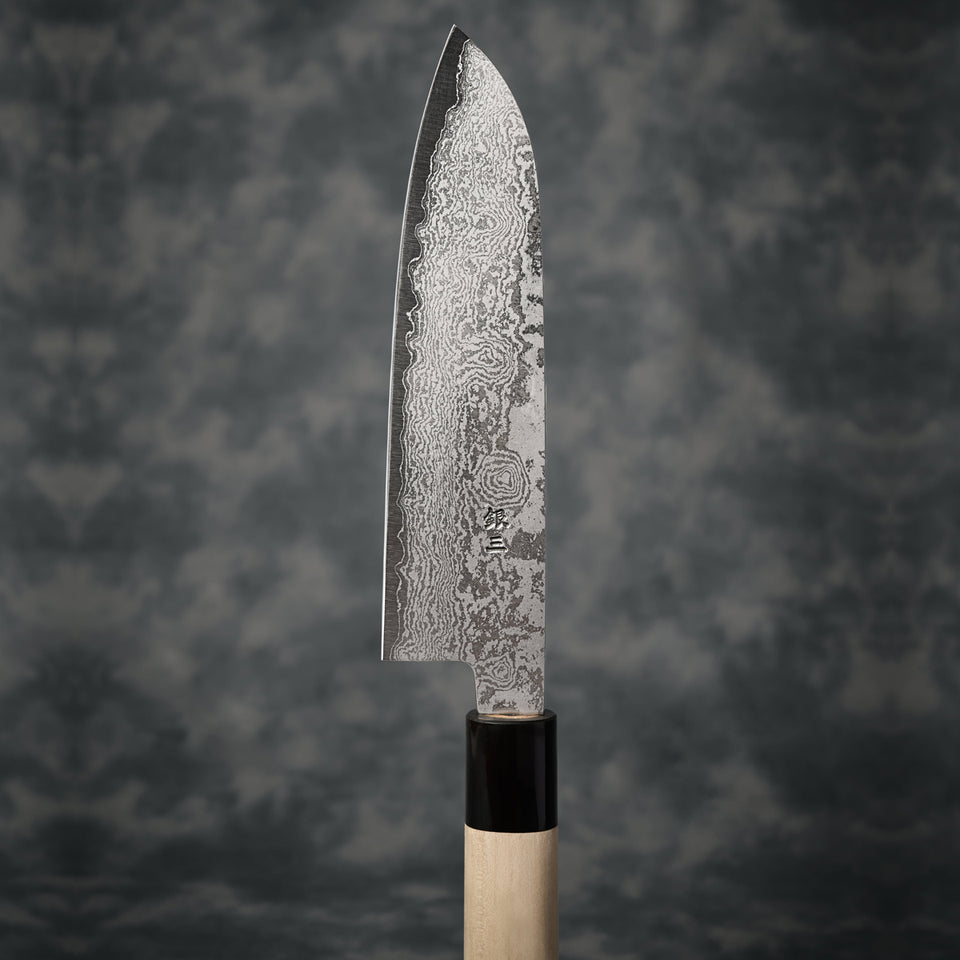
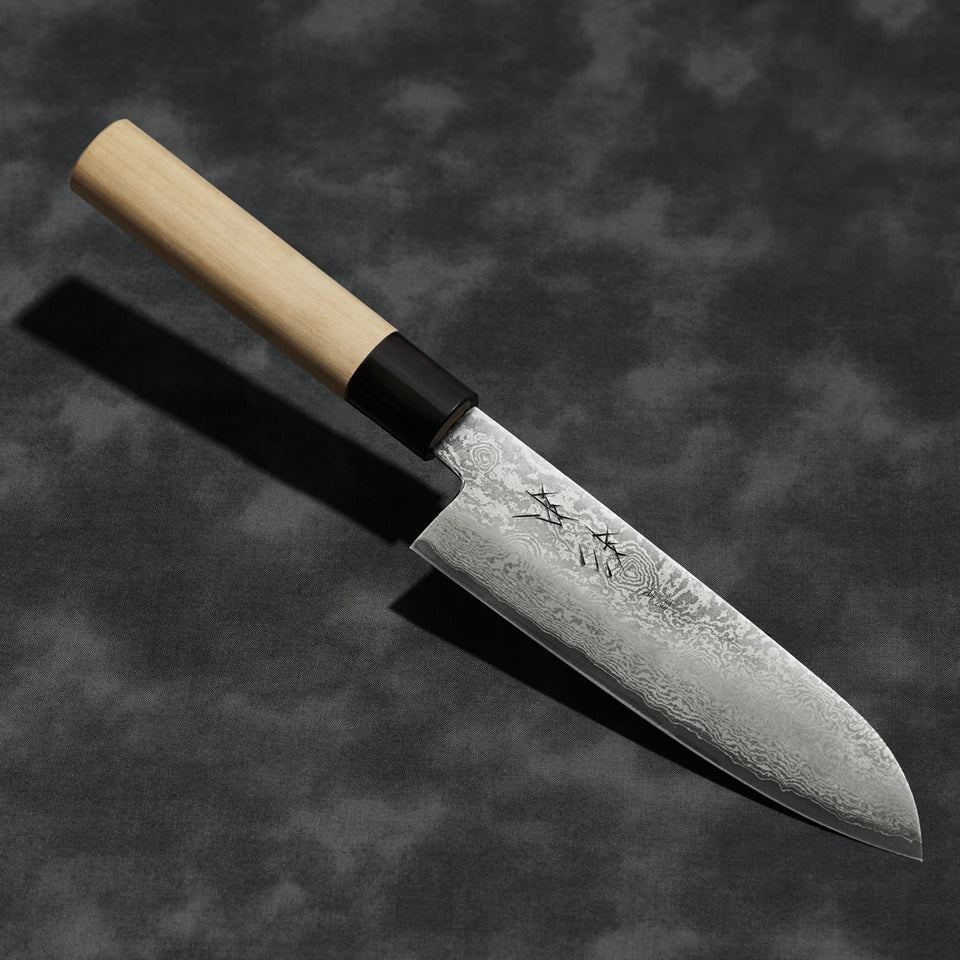
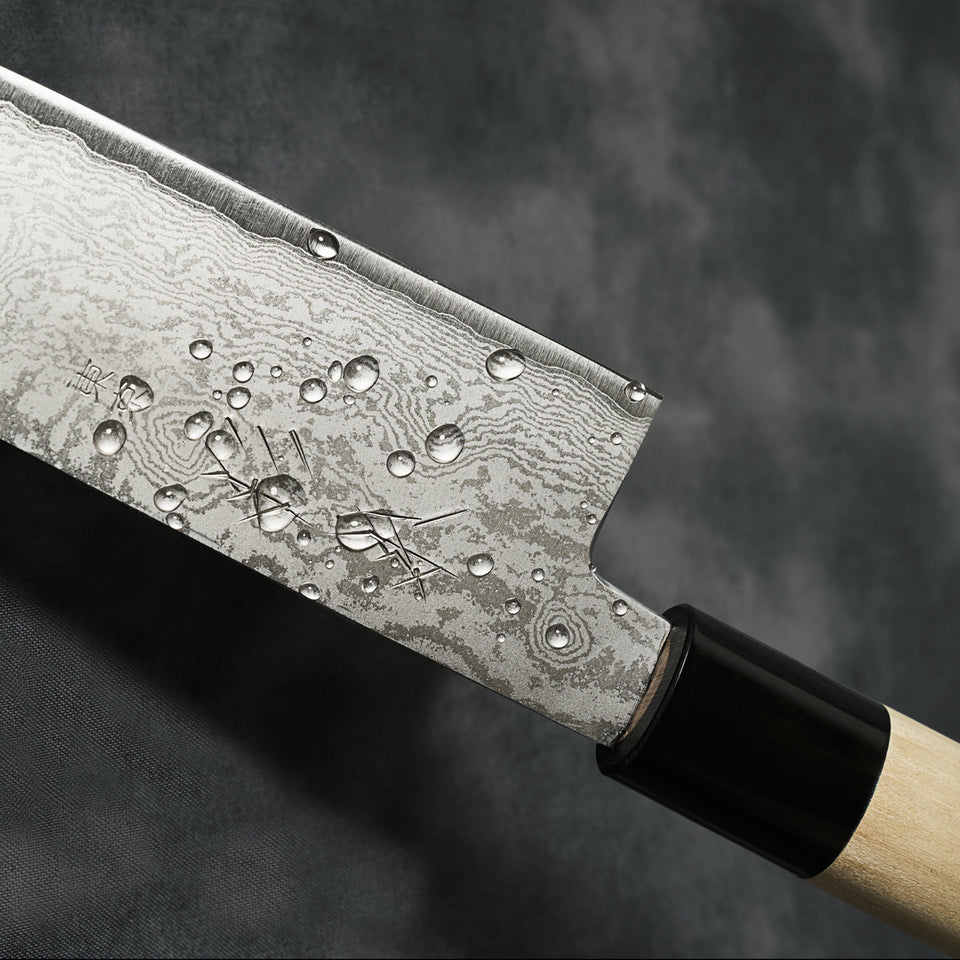
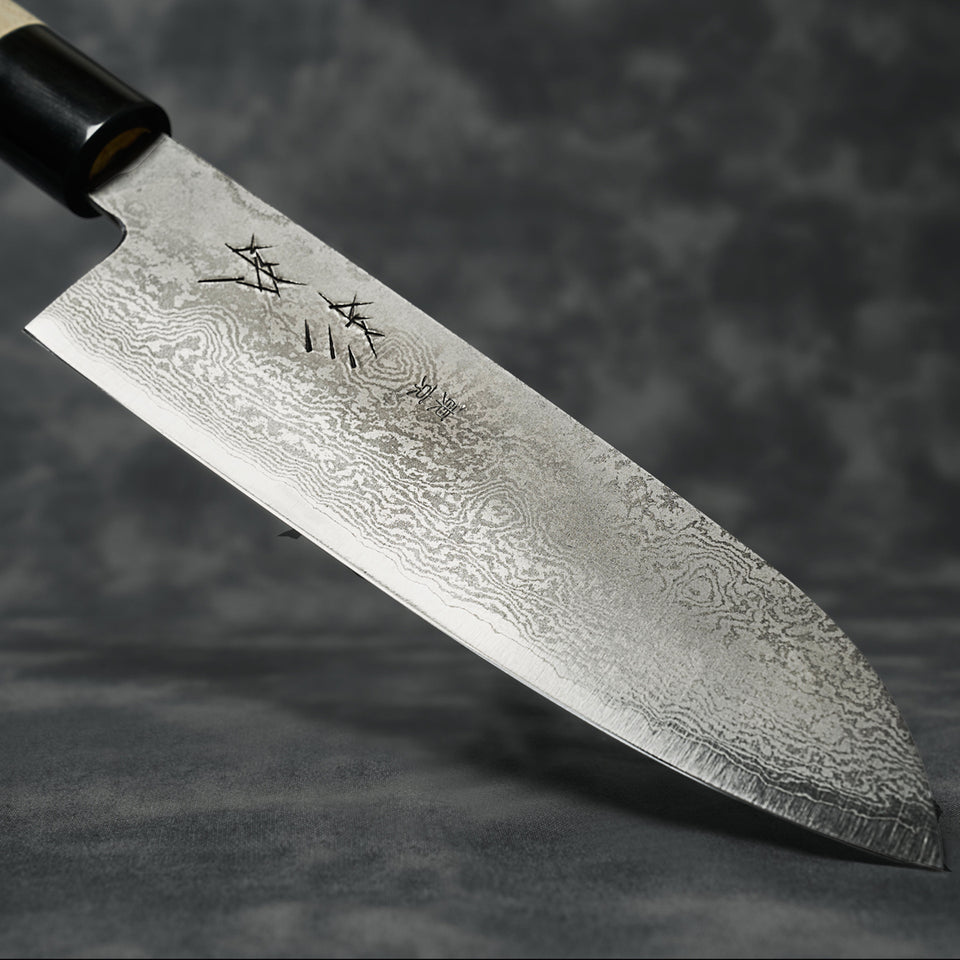
A true masterpiece of craftsmanship, our Japanese Damascus Santoku knife beautifully unites exquisite patterns with exceptional performance. Crafted entirely in Japan by skilled artisan bladesmiths, each blade showcases the iconic wave-like Damascus patterns, symbolizing timeless Japanese aesthetics and superior quality. Unlike mass-produced imitations with printed patterns, our genuine Damascus blade is meticulously forged through the traditional layering and folding process, requiring over 200 hours of expert dedication to create a knife of remarkable strength, flexibility, and beauty.

This premium Santoku, embodying the revered "three virtues," excels at slicing vegetables, meat, and fish with precision and ease, making it the perfect daily companion for both home cooks and professional chefs. Made from CM stainless steel for rust resistance and low maintenance, the knife features a high-quality magnolia wood handle, available with either a plastic or buffalo horn collar. With a blade length of 180mm (7.1 inches) and a double bevel edge, this limited-production Santoku offers unmatched versatility, durability, and artistry—bringing both function and tradition to your kitchen.


Related Articles You May Be Interested

Japanese Knives vs. German Knives
The Difference Between Western and Japanese Knives
Blade styles - Western vs. Japanese Knives
Is Single Bevel Only Japanese?
Single Bevel vs Double Bevel Knives

Get Free Bonus Books

Join Japanese Knife Club

Sign up for free to the Japanese Knife Club to get advice and exclusive articles about how to choose Japanese Knives, and tips and tricks for using Japanese knives.

Unsubscribe anytime. It’s free!

About the author

Kei Nishida

Kei Nishida

Author, CEO Dream of Japan

info@japanesegreenteain.com

Certifications: PMP, BS in Computer Science

Education: Western Washington University
Kei Nishida is a passionate Japanese green tea connoisseur, writer, and the founder and CEO of Japanese Green Tea Co., a Dream of Japan Company.

Driven by a deep desire to share the rich flavors of his homeland, he established the only company that sources premium tea grown in nutrient-rich sugarcane soil—earning multiple Global Tea Champion awards.

Expanding his mission of introducing Japan’s finest to the world, Kei pioneered the launch of the first-ever Sumiyaki charcoal-roasted coffee through Japanese Coffee Co. He also brought the artistry of traditional Japanese craftsmanship to the global market by making katana-style handmade knives—crafted by a renowned katana maker—available outside Japan for the first time through Japanese Knife Co.

Kei’s journey continues as he uncovers and shares Japan’s hidden treasures with the world.

Learn more about Kei

Related Posts

How to Spot a Fake Japanese Knife

With the help of our in-depth tutorial, learn how to identify fake Japanese knives. Make sure you receive the genuine ar

Read More
How to Choose Your First Japanese Knife

Learn about the craft of Japanese knifemaking and find your ideal fit. You can browse the many types and features with t

Read More
Leave a comment

Your email address will not be published..

Your cart is currently empty.

Start Shopping

Select options