The Nakiri Knife
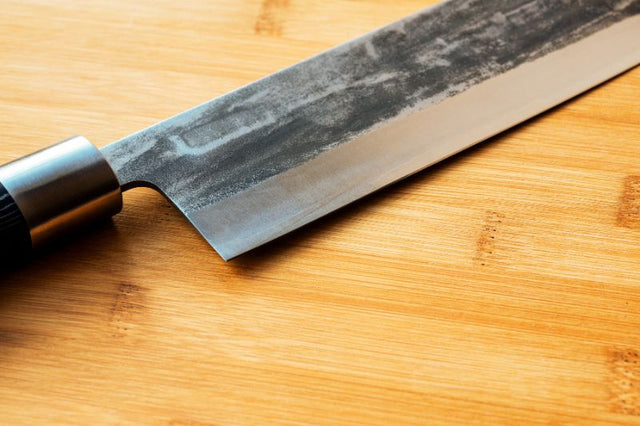
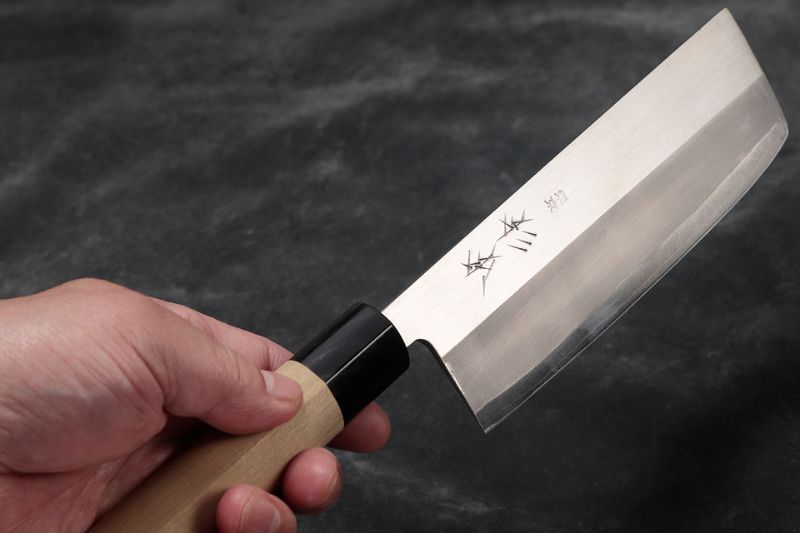
One of the most perplexing-looking knives to come from Japan is the Nakiri (菜切). To many, it seems like a Chinese meat cleaver, but its purpose is precisely the opposite: it's a dedicated vegetable chopper. Its rectangular shape and lack of a pointed tip may make the Nakiri confusing to people from outside of Japan. However, as you will soon discover, this design is practical and astonishingly clever.
The Trinity of Knives: The Structure of This Article
The Nakiri is part of a trio of knives: the Nakiri, Deba and Yanagiba. In this article I’ll begin by giving you a brief history of the Nakiri and these fellow knives. (If you want to read more in-depth about Japanese knife history, read my previous articles about the Gyuto, Petty or Deba.) Then, I’ll focus on the design of the Nakiri and techniques for using it effectively.
The History of the Nakiri
Its Beginnings Take Place During the Peaceful Edo Period
Japan has had a long history of sword-making but the Edo period (1603-1867 CE) was an unusually peaceful time of economic prosperity. As one might imagine, under such conditions, Japanese swordmakers were selling fewer weapons than they previously had been in the tumultuous early periods of Japan's history. Therefore, to make a living, they refocused their efforts on creating dedicated kitchen knives.
Swordsmiths Then Designed the Knives That We Know and Use Today
Of course, it's not as though the Japanese didn't have kitchen knives earlier. But, before, many Japanese knives looked a little like miniature samurai swords, particularly ceremonial ones, and had yet to be perfected for cooking. As swords became more regulated, many swordsmiths shifted to knife making completely. Then, in the Edo period, knives like the Nakiri, Deba, and Yanagiba appeared, made with specific kitchen tasks in mind.
The Nakiri, Deba, and Yanagiba Were Made With the Japanese Diet in Mind
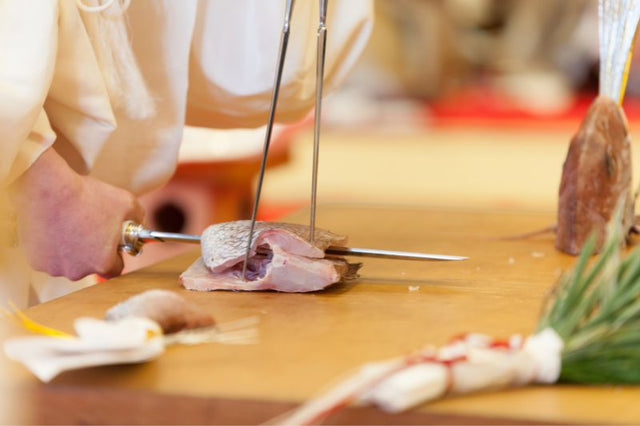
There's a reason that these three knives became popular in every Japanese household. With a diet of mainly vegetables and seafood, the Japanese needed knives for these two tasks. The Deba was first used to cut up and fillet whole fish. Then the Yanagiba was used to make thin slices from the fillets. Finally, the Nakiri was used for chopping (and even peeling) all vegetables. These three knives did everything that the Japanese required at the time.
The Nakiri and Its Fellow Knives Are Still in Use Today
Although these knives fell out of favor with the introduction of multi-purpose knives such as the Gyuto and Bunka, they have always remained an essential part of Japanese cooking culture. These days they're making a big comeback as people realize that having single-purpose knives is beneficial; they can make cooking faster and quickly do things that generalist knives struggle to do.

Features
A Distinctive Blade Unlike Any Other
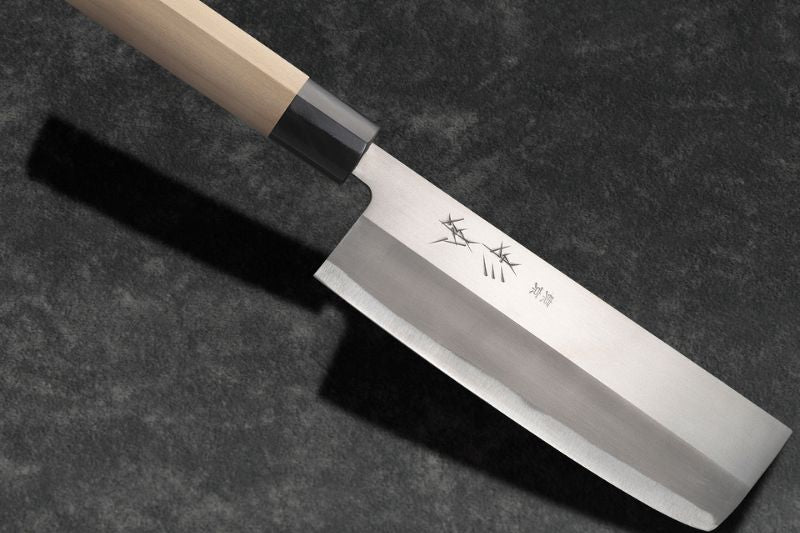
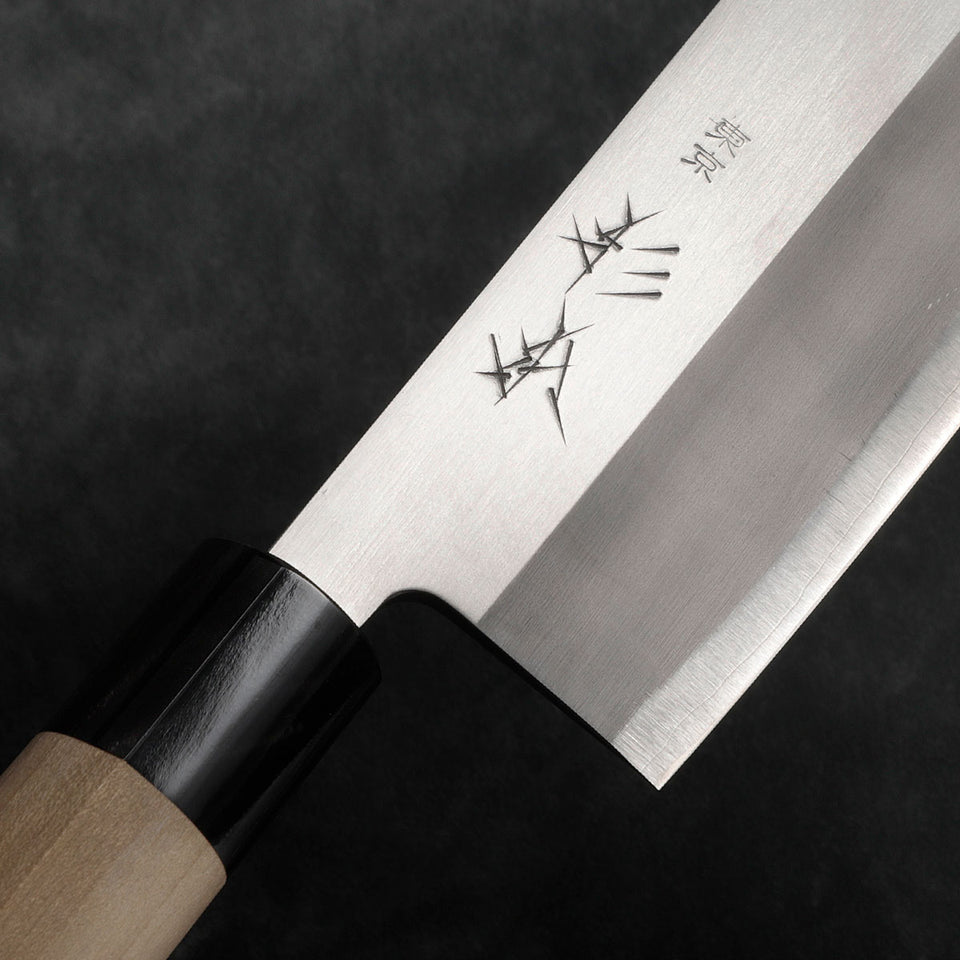
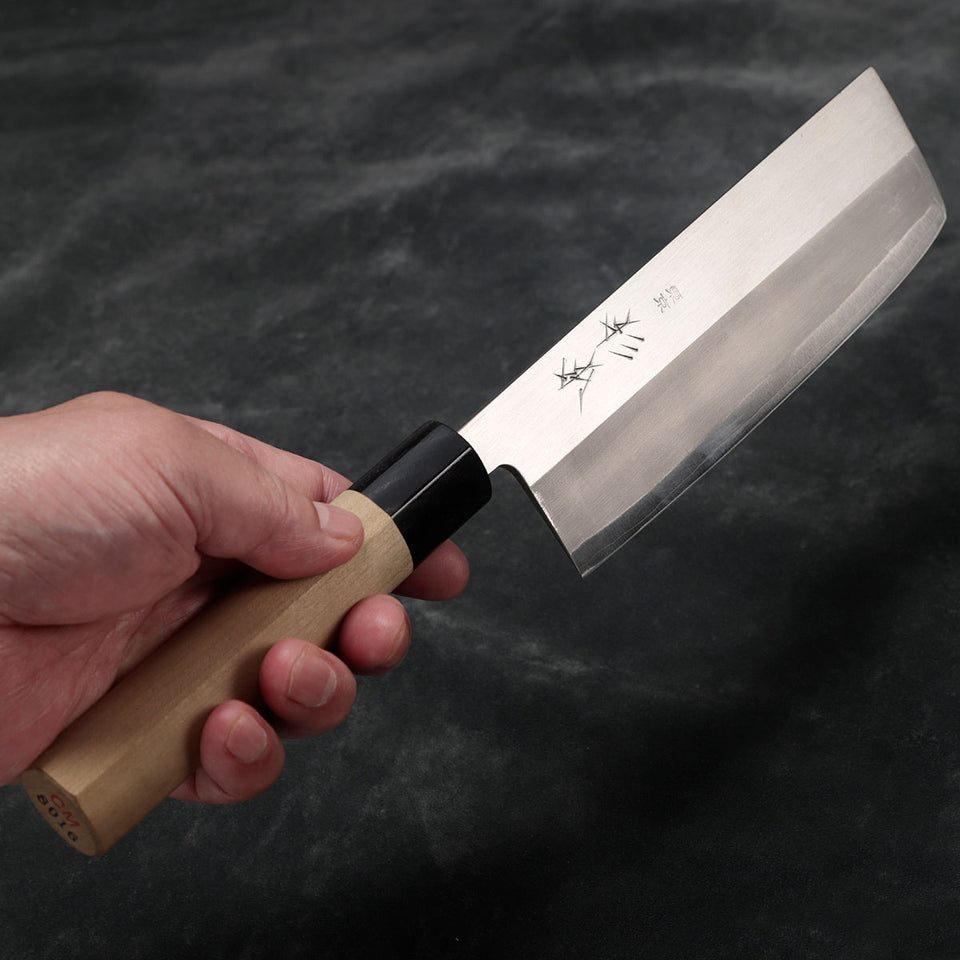
The Nakiri can come in sizes as small as 120mm and some as large as 240mm (we sell them in lengths of 150mm and 165mm, suitable for most people and tasks.) Its blade is large and thin. Its wide profile is great for scooping up chopped vegetables and makes it reasonably safe to use, having a low risk of accidentally cutting your fingers or knuckles.
The Nakiri Has a Long and Flat Edge
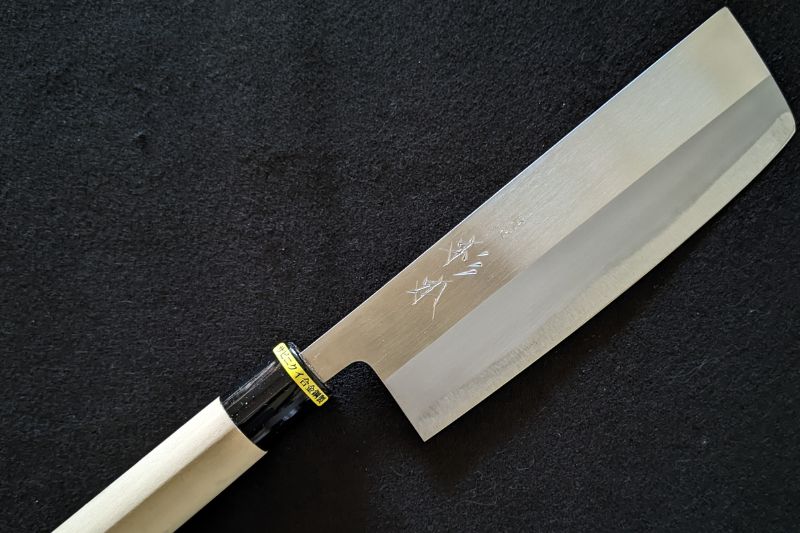
The long and flat edge allows for even chopping. If you've wondered how some chefs get perfectly uniform strips of vegetables, they might have used a Nakiri. And, because the nearly flat blade makes good contact with the board, you'll rarely find pieces of vegetables that don't cut off completely.
Rounded Tip for Safe Use
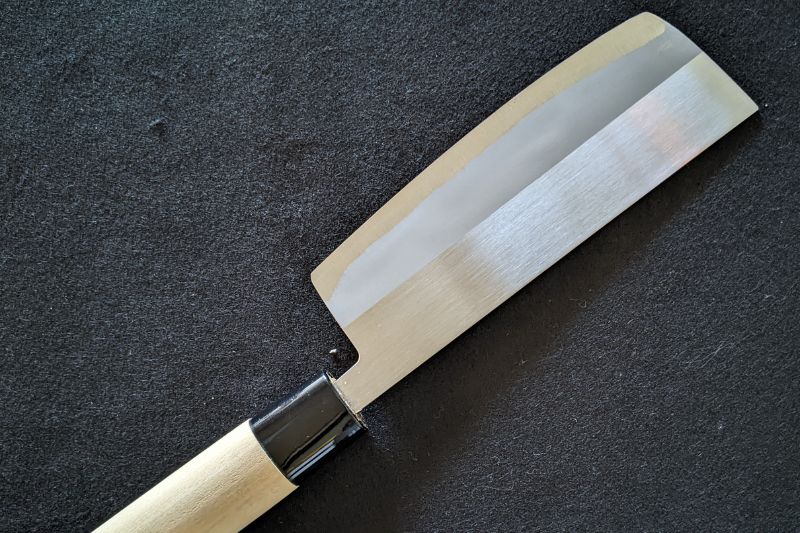
A question many people have about the Nakiri is, "why does it have a rounded tip?" Well, because it's made for vegetable chopping, it doesn't need a pointed tip. Additionally, this stops the tip from getting stuck in your chopping board when you use it, avoiding damage to the blade. Another bonus of this feature is that carrying a Nakiri around the kitchen is much safer than a pointed knife.
How to Use a Nakiri
The Master of Push-Cuts, Use Your Nakiri to Chop in a Downward Motion
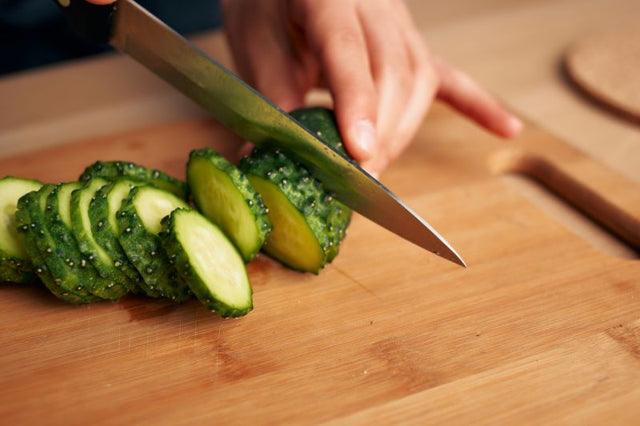
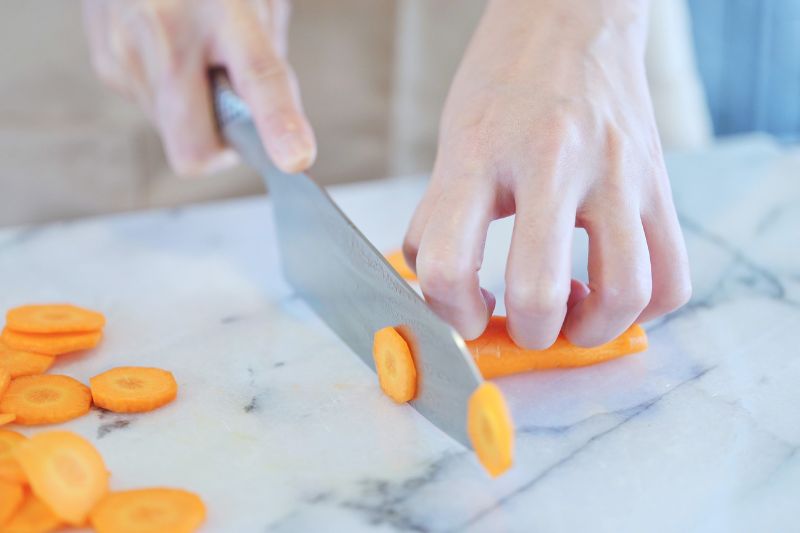
Push-cutting is what it sounds like; you raise the knife entirely off the board and then push it down and forward through food. Because of its flat edge, the Nakiri is best at push-cutting rather than rocking (although it can do this a little bit). This technique is a very efficient way to cut vegetables. You'll find that it's faster than rocking and a lot easier on the wrist too.
Quickly Move Chopped Vegetables Around the Board by Scooping and Scraping
There’s nothing more annoying than trying to get a bunch of tiny vegetable pieces into a pan with your hands. You don’t have to worry about this with a Nakiri. Because of its wide profile and thin blade, you can use it to scoop vegetables off the board and into the pan.
Use It to Make Perfectly Even Vegetables
Not only a lot faster than other knives for cutting vegetables, but the Nakiri is also amazingly precise. Because of its length and shape, you can cut food in a consistent size. In addition, the length allows you to get unique shapes that other knives struggle to achieve. For example, you can make long strips of green onion or carrot, perfect for a salad or topping ramen.
Should I Buy a Nakiri?
A Vegetarian’s Dream Knife
For some, this decision is going to be a no-brainer. No doubt, you will enjoy having a dedicated vegetable knife if you're a vegetarian. Because you don't need to cut meat, the Nakiri can be your everyday knife. However, I suggest you consider getting a Petty knife for those times when you may need a sharp tip - but it isn't entirely necessary.
Cut Down Your Prep Time
Even if you aren't a vegetarian, most cooking preparations are made up of chopping vegetables. Hence, having a knife that can quickly blitz through vegetables like onions and garlic will make cooking much faster. You may even find that you use it as much as your primary knife.
The First Step Towards a Traditional Japanese Knife Set
Budding sushi chefs should consider getting the traditional trio: Nakiri, Deba, and Yanagiba. If you're a real enthusiast and want to learn how to cook in a classic Japanese style, then you need all three of these knives. Learning to use these knives effectively will elevate the artistic presentation of your dishes, and they work together amazingly well.
Buy Nakiri Knife



Get Free Bonus Books

Sign up for free to the Japanese Knife Club to get advice and exclusive articles about how to choose Japanese Knives, and tips and tricks for using Japanese knives.
About the author

Kei Nishida
Author, CEO Dream of Japan
Certifications: PMP, BS in Computer Science
Education: Western Washington University